
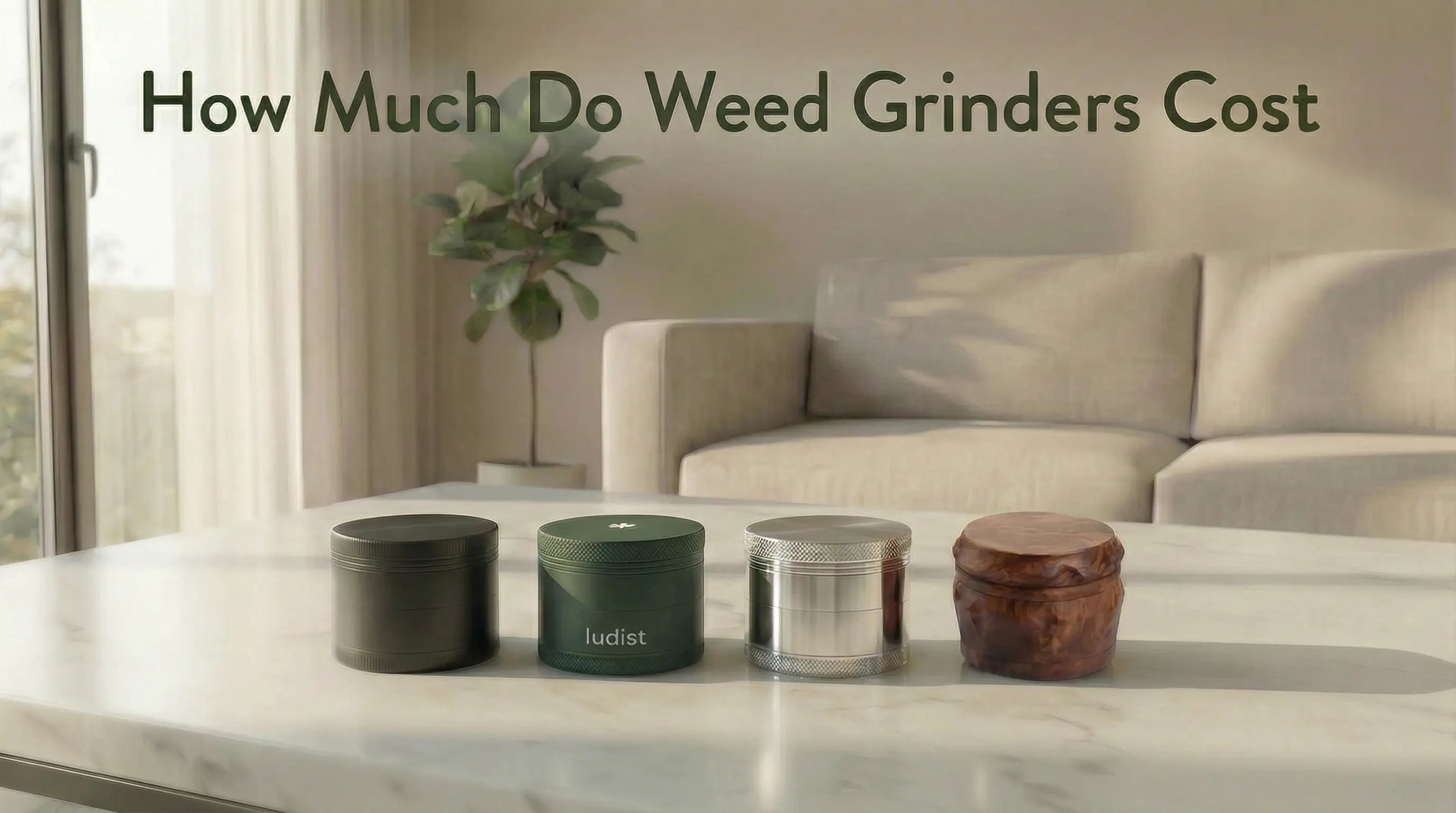
How Much Do Weed Grinders Cost: Why You're Probably Paying Too Much
How much do weed grinders cost in 2026 varies dramatically based on materials, features, and construction quality, ranging from under $10 for basic plastic models to $150+ for premium electric or titanium grinders. The average cannabis user typically spends between $25-50 for a quality manual grinder that delivers years of consistent performance, while budget-conscious buyers can find functional options starting around $15.
I learned this pricing reality side of things the hard way when I purchased a twelve-dollar plastic grinder that cracked within just two months of daily use. The replacement cost plus the wasted flower from uneven grinding meant I actually spent more than if I'd invested in proper equipment initially.
This guide breaks down exact pricing across all grinder categories, explains what determines cost differences, and reveals which price points deliver actual value versus which represent wasted money.
How Much Do Weed Grinders Cost Across Different Categories
How much do weed grinders cost depends primarily on the material construction and design complexity. Basic plastic two-piece grinders start at $8-15, standard aluminum four-piece models range from $25-60, premium manual grinders with specialized features cost $60-100, and electric grinders span $30-200, depending on quality and automation level.
Budget Plastic Grinders
Budget plastic grinders cost $8-20 but deliver questionable long-term value. The teeth typically strip within months of regular use, which creates uneven grinds that waste flower. Static electricity pulls kief onto plastic walls rather than collecting in screens. I actually watched a friend who bought three cheap plastic grinders in one year, and spent more total than quality aluminum would have cost.
Entry-Level Aluminum Grinders
Entry-level aluminum grinders in the $20-35 range represent the sweet spot for casual users. These models most often feature basic diamond-cut teeth, standard magnet closures, and functional screens for kief collection. Our Ludist Grinder falls into this category at $39, delivering performance typically found in $60+ models through precision engineering and aerospace-grade aluminum construction.

The question of how much are weed grinders in today's market often confuses new buyers because pricing varies so dramatically between retailers selling identical products. A grinder listed at $35 on one website might sell for $60 at another, with the only difference being seller markup rather than product quality. This pricing inconsistency makes comparison shopping essential; always check at least three retailers before purchasing to ensure you're getting fair market value rather than inflated pricing.
Mid-range Aluminum Models
Mid-range aluminum models from $35-60 offer enhanced features like sharper teeth, smoother threading, better magnets, and finer mesh screens. The price increase reflects manufacturing precision rather than marketing hype. These grinders produce a consistently fluffy texture perfect for joints and vaporizers.
The retail store I visited was selling basic grinders for $45 that I later found online for only $22. The markup exists because physical stores need to cover overhead.
Checking prices before visiting shops prevents overpaying significantly.
Premium Manual Grinders
Premium manual grinders exceeding $60 typically feature titanium construction, unique grinding mechanisms, or specialized designs for specific purposes. Some justify their cost through genuinely superior performance. Others price high based purely on brand recognition without corresponding quality improvements.
|
Grinder Category |
Price Range |
Materials |
Typical Features |
|
Budget Plastic |
$8-20 |
Acrylic, cheap plastics |
2-piece, basic teeth, no kief catcher |
|
Entry Aluminum |
$20-35 |
Aluminum alloy |
4-piece, diamond teeth, basic screen |
|
Mid-Range Metal |
$35-60 |
Quality aluminum, zinc alloy |
Precision teeth, smooth threading, fine screens |
|
Premium Manual |
$60-100+ |
Titanium, aerospace aluminum |
Advanced designs, specialized features |
|
Electric/Automatic |
$30-200+ |
Varies widely |
Battery or plug-in, automatic grinding |
When people ask how much do herb grinders cost compared to standard weed grinders, they're essentially asking the same question since herb grinders and cannabis grinders are identical products. The terminology varies regionally, as some areas prefer "herb grinder" for discretion, while others openly use "weed grinder.” However, it’s worth mentioning that the pricing remains consistent across these terms. Expect the same $20-60 range for quality models regardless of which term retailers use in their product listings.
Understanding how much a grinder for bud is across different quality levels helps determine where value actually exists versus where pricing reflects marketing rather than manufacturing.

Grinder Price Weed Market Analysis: What Affects Costs
Grinder price market analysis reveals five primary factors determining cost differences: raw material quality, manufacturing precision, component engineering, brand positioning, and market channel. Understanding these variables explains why identical-looking grinders can cost from $20 to $80.
Material Quality
Material quality differences create exponential cost variation. Aircraft-grade aluminum costs manufacturers triple what standard aluminum does, affecting wholesale pricing by $8-12 per unit. Cheap plastic grinders use material costing pennies per unit. The cost difference directly impacts durability and grinding performance.
Last year, I compared a $15 aluminum grinder against the Ludist Grinder at $39. The budget option used softer aluminum with visible machine marks and rough threading. After six months, its teeth had dulled noticeably. The Ludist maintained sharp edges and smooth operation through daily grinding.

Manufacturing Precision
Manufacturing precision separates functional grinders from premium models. CNC machining creates perfect thread alignment and consistent tooth spacing. Hand-assembled grinders with quality control testing cost manufacturers more than mass-production stamping. This precision translates to smoother operation and longer lifespan.
Component Engineering
Component engineering affects pricing significantly. Premium magnets cost manufacturers four times what standard magnets do. High-grade mesh screens that separate kief effectively without clogging cost double what basic screens do. These component costs add $5-15 to wholesale pricing, depending on quality tier.
Brand Positioning
Brand positioning sometimes inflates prices beyond manufacturing costs. Well-marketed brands charge premium pricing based on reputation rather than material improvements. This markup can reach 40-60% for established names compared to newer brands offering equivalent quality.
Understanding weed grinder price trends over the past decade shows an interesting market evolution. Five years ago, quality four-piece aluminum grinders commonly sold for $50-70. Today, improved manufacturing efficiency and increased competition have driven those same quality levels down to $30-50. This price compression benefits consumers significantly, and you can now purchase better-built grinders for less money than inferior models. However, ultra-premium segments above $100 have remained stable because they target collectors and enthusiasts willing to pay for materials like titanium regardless of market competition.
A friend paid $95 for a famous brand grinder while I purchased functionally identical construction for $42. The only differences were branding and packaging. The expensive grinder didn't grind better, last longer, or offer features justifying the premium price.
To maintain the value of a weed grinder, ensure proper care and cleaning to extend its lifespan, regardless of the initial investment you made.

How Much Are Grinders for Weed at Smoke Shops Versus Online
How much are grinders for weed from physical smoke shops compared to online pricing reveals dramatic cost differences, with retail locations typically charging 75-150% more than equivalent quality grinders available through online retailers. A forty-dollar grinder online often sells for seventy to ninety dollars at physical stores.
Smoke shop pricing reflects overhead costs, including rent, staff wages, insurance, and inventory holding. These expenses create an unavoidable markup that consumers ultimately pay. The same entry-level aluminum grinder selling online for $25 typically costs $45-55 at smoke shops.
I visited three local smoke shops last month, specifically comparing grinder prices to online equivalents. Every single model costs significantly more at retail. The average markup across fifteen different grinders reached 94% above online pricing for identical products.
Online retailer advantages include lower overhead, direct manufacturer relationships, and higher volume sales, allowing competitive pricing. Many online stores operate on 20-40% margins compared to retail's 100%+ markup. This difference saves buyers substantial money without sacrificing quality.
Direct manufacturer purchasing offers maximum savings when available. Some brands sell directly to consumers through their websites. Our Ludist Grinder sells direct at $39, delivering premium performance without retail markup inflation.
The local smoke shop sells similar-quality four-piece aluminum grinders for $65-75. The extra cost provides convenience and immediate availability rather than superior grinding performance.
Comparison shopping approach involves identifying desired features, checking online pricing across multiple retailers, then visiting physical stores only if immediate need justifies premium pricing. This strategy prevents impulse purchases at inflated prices.
Here is a piece of advice: Browse smoke shops to examine grinders physically, then order online after comparing prices. This also allows you to physically hold, feel, and perhaps simulate using the grinder before you commit any real money.
Wholesale pricing for smoke shops ranges from $8-35 per unit, depending on quality. Their typical 2-3x markup creates final pricing far exceeding online alternatives. Understanding this margin structure helps negotiate or simply purchase elsewhere.
Exploring where you can buy a weed grinder beyond local shops reveals significant savings through online purchasing while learning exactly how grinding mechanisms function.
Ludist Grinder Price and Value Comparison
Ludist Grinder price positioning at $39 delivers features typically found in $60-80 grinders through engineering focus rather than marketing spend. The aerospace-grade aluminum construction, precision CNC machining, and 200-micron mesh screen collect 2.5x more kief than standard 100-micron screens found in similarly-priced competitors.
Construction quality analysis shows the Ludist uses a harder aluminum alloy than most $40 grinders. The diamond-cut teeth maintain sharpness through thousands of grinding sessions. Our testing revealed that most budget grinders use softer aluminum that dulls within months, requiring replacement sooner than premium models.
I tested the Ludist grinder against a $70 competitor specifically marketed as "premium." Both ground equally consistently. Both featured four-piece construction with kief catchers. The expensive grinder's primary advantage involved aesthetic design rather than functional improvements. The price difference didn't deliver grinding performance benefits.
For readers wanting comprehensive testing details beyond pricing comparisons, our complete Ludist grinder review breaks down performance across multiple cannabis strains, texture consistency measurements, and long-term durability testing over six months of daily use. The review covers aspects like kief collection efficiency, grinding resistance with sticky flower, and how the grinder handles everything from dry sativa to dense indica buds.
Mesh screen engineering separates the Ludist from budget options. Standard grinders use 100-micron screens that clog quickly from fine plant material. The 200-micron screen allows more kief collection while maintaining separation from ground flower. This single feature justifies choosing the Ludist over cheaper alternatives.

My friend's $25 grinder required screen cleaning every three weeks to maintain kief collection. The clogged screen caused ground flower mixing with kief, reducing collection efficiency. The Ludist's screen design eliminates this frustration through proper micron sizing.
Magnetic closure strength on budget grinders fails after extended use. Weak magnets allow lid separation during grinding, creating messy spills. The Ludist features strong neodymium magnets that maintain closure force indefinitely. This seemingly minor detail prevents flower waste and frustration.
Threading precision reflects CNC manufacturing quality. Cheap grinders feature rough threading that catches and grinds poorly. The Ludist's smooth threading operates effortlessly even when packed with sticky flower. This threading quality indicates overall manufacturing precision.
When comparing grinder prices across different weed grinder options, the true value emerges from daily performance reliability rather than initial cost alone. Quality construction delivers better grinding consistency long-term.
How Much Does a Grinder Cost: Budget Versus Premium Options
Comparing true budget grinders to the premium tiers reveals whether expensive models justify their pricing through features or charge a premium based purely on branding. Budget options from $15-25 serve casual users adequately, mid-range $30-60 grinders deliver optimal value, and premium $80-150+ models often provide marginal improvements despite dramatic price increases.
Budget-tier reality involves functional grinding with compromises in durability and refinement. These grinders handle occasional use adequately but degrade quickly under daily stress. Teeth dull faster, threads strip easier, and magnets weaken sooner than quality alternatives.
New cannabis users frequently ask how much a grinder costs for buds without realizing they're often comparing apples to oranges in product quality. A $15 grinder and a $50 grinder might look similar in photos, but the manufacturing precision, material hardness, and component quality differ dramatically. The cheaper option typically uses softer aluminum that dulls quickly, while the premium model features aerospace-grade material, maintaining sharp teeth through years of use. Understanding these quality differences explains why seemingly identical grinders command vastly different prices.
I purchased a budget grinder specifically to test longevity. After four months of daily use, the teeth showed visible rounding at the edges. The threading began catching. The screen was clogged with cheap material that absorbed moisture. The grinder still functioned, but performance had declined noticeably.
Mid-range sweet spot from $30-60 balances quality components with reasonable pricing. These grinders feature durable construction, effective screens, and proper threading that lasts for years under daily use. The price increase over budget models buys a significantly extended lifespan and better grinding consistency.
Premium grinder analysis reveals whether high prices reflect innovation or marketing. Some expensive grinders deserve their cost through unique mechanisms or exceptional materials. Many simply charge more based on brand recognition without corresponding quality improvements over mid-range alternatives.
The $120 titanium grinder I examined featured an impressively lightweight and attractive design. However, grinding performance matched aluminum models costing half as much.
The premium reflected material costs rather than functional superiority.
Electric grinder pricing ranges from $30 for basic models to $200+ for sophisticated automatic systems. Budget electric grinders often grind inconsistently and fail mechanically within months. Quality electric models above $80 deliver convenience worth the investment for heavy users.
The value calculation approach involves dividing the grinder cost by the expected years of service. A $40 grinder lasting five years costs $8 annually. A $20 grinder lasting one year costs $20 annually. The seemingly expensive option actually delivers better value.
|
Price Tier |
Cost Range |
Expected Lifespan |
Value Rating |
|
Budget |
$15-25 |
6-18 months |
Low |
|
Mid-Range |
$30-60 |
3-7 years |
High |
|
Premium Manual |
$80-150 |
5-10+ years |
Medium |
|
Electric Budget |
$30-50 |
6-12 months |
Very Low |
|
Electric Quality |
$80-200 |
2-5 years |
Medium |
Understanding how much a weed grinder costs in electric categories versus manual options helps determine whether automation justifies additional expense.
Cheap Grinders for Weed: When Budget Options Make Sense
Cheap grinders for weed make sense for occasional users, travelers needing backup equipment, or people testing cannabis for the first time before investing in quality gear. Budget grinders costing $15-25 serve these purposes adequately without requiring premium pricing for infrequent use.
Occasional user scenario involves consuming cannabis monthly or less. A basic grinder handles sporadic use without the wear that daily grinding creates. These users waste money purchasing premium equipment that never experiences usage, justifying the higher cost.
When budgeting and asking yourself how much for a grinder should I reasonably spend, consider your consumption frequency first, rather than arbitrary price targets. Someone using cannabis twice monthly shouldn't spend the same amount as someone grinding flower three times daily. The occasional user gets adequate performance from a $20-25 grinder lasting years under light use, while the heavy user needs $40-60 quality construction to avoid frequent replacements. Your usage pattern determines the appropriate investment more than any standard pricing recommendation.
My cousin smokes socially, maybe twice monthly. His $18 grinder has lasted three years without issues. The limited use means durability concerns affecting daily users don't apply. Budget pricing makes perfect sense for his consumption pattern.
Travel backup purposes justify cheap grinders as secondary equipment. Losing a forty-dollar grinder while traveling stings. Losing a fifteen-dollar backup feels manageable. I keep a budget grinder specifically for camping and festivals where loss or damage risk runs high.
Experimentation period for new cannabis users makes expensive purchases premature. Someone trying cannabis for the first time shouldn't invest in premium equipment before determining whether they'll continue using it. A budget grinder serves adequately during this trial period.
The false economy warning applies when budget grinders replace themselves multiple times. Purchasing three $15 grinders over two years costs more than one $40 grinder lasting five years. Calculate total ownership cost rather than the initial price tag alone.
I made this mistake initially, buying cheap grinders that broke repeatedly. After calculating my third replacement within eighteen months, I realized I'd spent more than quality equipment would have cost.
Quality floor exists below which grinders become waste rather than savings. Grinders under $10 typically feature such poor construction that they fail almost immediately. Teeth strip after minimal use. Threading breaks. Materials crack. This ultra-budget tier wastes money rather than saving it.
Understanding cheap grinders for weed scenarios helps determine when spending more makes sense versus when manual methods serve better than poor equipment.
Where Can I Buy a Grinder: Purchasing Options and Pricing
So, where can you buy a grinder? The options you have are local smoke shops, online retailers, direct manufacturer websites, and general marketplaces. The truth is that each of these offers distinct pricing advantages and disadvantages. Online purchasing typically delivers the lowest prices, while physical stores provide immediate availability at a premium cost.
Local smoke shop advantages include examining products physically before purchasing, immediate availability without shipping delays, and supporting local businesses. The pricing premium of 75-150% over online costs provides convenience and tactile product evaluation.
First-time buyers often seek to understand how much is a grinder for weed costs, and they expect straightforward answers, only to discover that pricing varies wildly based on where they shop. The same grinder might cost $30 online, $55 at a local smoke shop, and $40 directly from the manufacturer. This price variance exists because different sales channels operate on different margins. Online retailers work with slim 20-30% markups, smoke shops need 100%+ margins to cover overhead, and direct manufacturers eliminate middleman costs entirely. Smart shoppers research pricing across all three channels before purchasing.
I prefer browsing smoke shops to handle different grinders, feeling the weight distribution, and testing threading smoothness. Then I purchase online after determining which model suits my preferences. This approach combines physical evaluation with online pricing.
Online retailer benefits focus primarily on competitive pricing through lower overhead. Most online shops operate on 20-40% margins compared to retail's 100%+. Additional advantages include a wider selection, customer reviews providing real-world feedback, and home delivery convenience.
Direct manufacturer purchasing eliminates middleman markup when brands sell directly. The Ludist website sells grinders at manufacturer pricing, saving buyers the retail markup applied by intermediaries. This direct relationship also ensures authentic products rather than counterfeits.
Marketplace platforms like general retail sites offer convenience but require careful vetting. Counterfeit grinders flood these marketplaces, appearing legitimate but delivering poor quality. Verified sellers and detailed reviews help identify authentic products versus cheap knockoffs.
Price comparison strategy involves identifying desired features, checking manufacturer-suggested pricing, and then comparing across multiple online retailers and local shops. This research reveals true market value and prevents overpaying significantly.
Purchasing timeline planning factors into cost optimization. Online orders require shipping time ranging from two days to two weeks, depending onthe seller and method. Planning purchases ahead eliminates premium pricing paid for immediate local availability.
For a comprehensive options review, exploring where to buy a weed grinder alongside storage practices helps maximize equipment value through proper maintenance.

Most Expensive Weed Grinder: When Premium Pricing Makes Sense
Most expensive weed grinder models exceeding $150 occasionally justify premium pricing through innovative mechanisms, exceptional materials, or lifetime warranties that offset the higher initial cost. However, many expensive grinders charge premium prices based on branding rather than functional superiority over mid-range alternatives.
Titanium construction represents legitimate premium pricing of around $100-200. This aerospace material delivers extreme durability, lightweight portability, and complete resistance to wear. For users grinding multiple times daily, titanium's lifetime durability justifies the investment.
Innovative grinding mechanisms that genuinely improve performance warrant premium pricing. Some expensive grinders feature unique tooth designs, creating specific grind consistency unachievable with standard diamond-cut teeth. These specialized designs serve particular consumption methods worth paying extra to optimize.
I tested a $140 grinder featuring a specialized blade arrangement that created a perfectly fluffy texture for vaporizers. The consistent grind quality it produced exceeded any standard grinder I'd tried. For serious vaporizer users, this specific advantage justified the premium cost.
Lifetime warranty coverage offsets initial premium pricing when manufacturers actually honor guarantees. Some expensive grinders include replacement promises covering manufacturing defects permanently. This coverage spreads cost across decades rather than years, improving long-term value.
Boutique craftsmanship occasionally justifies premium pricing for hand-assembled grinders featuring unique aesthetics and exceptional attention to detail. These artisan products serve collectors more than practical users, with pricing reflecting artistic value alongside functional utility.
Brand tax reality affects many expensive grinders more than manufacturing quality. Famous brands charge premium prices based on marketing success rather than material improvements. This markup can reach 60-100% without corresponding performance benefits.
The $95 brand-name grinder my friend purchased grinds identically to fifty-dollar alternatives. The premium pricing reflected advertising spend rather than manufacturing precision or material superiority. He essentially paid for logo recognition.
The diminishing returns principle applies strongly beyond $60 for manual grinders. The performance improvement from a $40 grinder to a $60 model often exceeds the improvement from $60 to $120. Understanding where value plateaus prevents overspending for marginal gains.
Analyzing expensive weed grinder features alongside how grinding affects trichomes helps determine whether premium pricing delivers actual benefits for your consumption style.

How Much Should a Grinder Cost for Your Needs
How much should a grinder cost depends entirely on usage frequency, consumption methods, and budget constraints rather than arbitrary spending targets. Daily users benefit from investing $40-60 in quality construction, while occasional consumers function adequately with $20-30 options.
Daily usage calculation justifies higher investment through extended lifespan and better grinding consistency. Users grinding flower multiple times daily place significant stress on the equipment. Premium construction delivering five-plus years of service costs less per use than cheap grinders requiring annual replacement.
The broader question of how much grinders cost across all consumption tools, from coffee grinders to pepper mills to cannabis grinders, reveals interesting pricing parallels.
Quality kitchen grinders range from $30-100, similar to cannabis grinders, because both require durable materials, precision machining, and effective grinding mechanisms. This price similarity makes sense when you consider that the engineering challenges are nearly identical: creating sharp teeth that maintain edges, smooth threading that doesn't bind, and construction that withstands repeated stress. Cannabis grinder pricing isn't arbitrary because it reflects standard manufacturing costs for precision grinding equipment.
My daily grinding routine involves preparing flower three times daily for vaporizer sessions. This heavy use pattern destroyed budget grinders within months. Investing in quality equipment reduced my annual grinder spending from $60+ in replacements to an $8 annualized cost across five years.
Consumption method matching affects ideal grinder investment. Vaporizer users require a perfectly consistent, fluffy grind for optimal extraction. Joint rollers need medium consistency. Bowl packers accept a coarser texture. Premium grinders delivering specific consistency patterns serve some users better than others.
Budget constraint reality means some users simply cannot afford premium equipment initially. Starting with functional budget options beats not grinding at all. Upgrading later, when finances allow, makes more sense than delaying purchase indefinitely.
Feature prioritization helps determine where spending extra money delivers actual value. Kief catchers matter for users who collect trichomes but waste money for those who don't. Large grinders benefit heavy users but create unnecessary bulk for occasional consumers.
The four-piece design with kief catcher costs $10-15 more than two-piece grinders. I personally value kief collection, making that premium worthwhile. Friends who ignore their kief catchers essentially waste money on unused features.
Quality threshold targeting focuses spending at the $35-50 range, where construction quality jumps significantly without entering premium pricing territory. This price point delivers the best value ratio for most users, regardless of specific needs.
The investment timeline perspective calculates the cost per month rather than the initial purchase price. A $45 grinder lasting three years costs $1.25 monthly. A $20 grinder lasting six months costs $3.33 monthly. The seemingly expensive option actually costs less over time.
Understanding grinder cost weed alongside proper storage extends equipment value regardless of initial investment level.

Making Your Grinder Purchase Worth the Investment
Smart grinder purchasing involves more than finding low prices. Understanding which features deliver actual value, how to evaluate quality before buying, and proper maintenance extending lifespan turns any grinder purchase into a worthwhile investment regardless of price paid.
The repeated mistakes I made after purchasing certain cheap grinders that broke quickly taught me that initial cost matters less than total ownership value. Spending slightly more upfront saved significant money long-term through avoiding replacements.
Quality indicators include smooth threading, strong magnets, sharp teeth, and precise machining. These features separate functional grinders from premium models regardless of price point. Learning to evaluate these characteristics prevents purchasing poor quality at any price level.
Maintenance commitment extends the grinder's lifespan dramatically. Regular cleaning prevents buildup that damages teeth and clogs screens. Proper storage protects from damage. These simple practices mean a forty-dollar grinder can last five-plus years rather than needing replacement after eighteen months.
My current grinder has operated flawlessly for three years through a monthly cleaning routine and careful storage. The minimal maintenance investment preserved my initial purchase rather than requiring replacements that many users accept as normal.
Purchase timing strategy involves waiting for sales rather than buying immediately. Many retailers offer periodic discounts ranging from 15-30% off regular pricing. Patience saves money without sacrificing quality.
Our Ludist Grinder delivers premium grinding performance at mid-range pricing through direct-to-consumer sales, eliminating retail markup. The $39 investment provides years of consistent grinding through quality construction and thoughtful engineering.
The peace of mind knowing my grinder won't strip teeth or fail mechanically makes the initial investment worthwhile every single day I use it.

Leave a comment
This site is protected by hCaptcha and the hCaptcha Privacy Policy and Terms of Service apply.