
How Much Is an Ounce of Weed? 2026 Prices, Quality Tiers & Money-Saving Tips
How much is an ounce of weed depends heavily on your location, the quality of cannabis you choose, and whether you're shopping at a legal dispensary or through alternative markets. In 2026, an ounce of weed typically costs between $150 and $400, with budget-friendly states like Oregon offering quality flower around $150-$180, while high-cost markets like Washington D.C. can push prices to $500 or more for premium strains.
I watched my roommate spend $380 on an ounce in Illinois last month, then complain when our mutual friend in Colorado paid $160 for similar quality flower the same week. The price gap across state lines remains significant in 2026, and understanding what drives these differences saves money and frustration.
This guide breaks down exact pricing by state, explains the factors controlling costs, and shows you how to calculate actual value when comparing different quantities and quality levels.
The Ounce Explained: Measurements, Slang, and What You Actually Get
An ounce of weed contains 28 grams of dried cannabis flower in the cannabis industry (technically 28.3495 grams, but universally rounded to 28 grams for practical purposes). The measurement of 28.3495 grams represents the maximum legal purchase limit in most recreational states and serves as the standard unit for bulk cannabis buying.
The term "ounce" appears universally across dispensaries, but you'll also hear it called a "zip," an "O," or simply "oz" in casual conversation. The nickname "zip" originated from how an ounce perfectly fills a standard Ziploc sandwich bag, which is a visual reference that still holds true today.
When you buy an ounce, you're purchasing enough flower to roll approximately 56 standard half-gram joints or pack roughly 112 quarter-gram bowls. For most cannabis users, an ounce represents 2-8 weeks of personal supply depending on consumption frequency.
The physical appearance of an ounce varies significantly based on bud density. Dense indica strains pack tighter and appear smaller than fluffy sativa flowers, even when both weigh exactly 28 grams. Understanding how much is one ounce of weed matters, but having a proper stash jar is even more important, assuming that you want to keep your ounce fresh. Our UV-protected glass containers maintain potency and prevent the moisture loss that degrades quality within days of improper storage.

Breaking Down Weed Measurements
Cannabis measurements follow a hybrid system mixing imperial ounces with metric grams, which confuses many first-time buyers:
-
1 gram = smallest dispensary purchase, enough for 1-2 joints
-
Eighth (⅛ oz) = 3.5 grams, most popular single purchase
-
Quarter (¼ oz) = 7 grams, moderate user quantity
-
Half ounce (½ oz) = 14 grams, two-week supply for daily users
-
Ounce (1 oz) = 28 grams, maximum single purchase in most states
The price per gram decreases as quantity increases. Buying an ounce instead of eight individual eighths typically saves $40-$80, which makes bulk purchases economically smarter for regular consumers.
How Much Does an Ounce of Weed Cost Across Different States
The cost of an ounce of weed in 2026 shows dramatic variation across the United States and is primarily determined by state legalization status, local taxes, and market maturity.
Lowest-Cost States (Mature Legal Markets)
When researching how much is 1 oz of weed in Oregon, I discovered that an ounce of weed is cheap, averaging $150-$180 for quality flower. The state's oversupply from established cultivation operations drives prices down consistently.
Washington State follows at $180-$220 per ounce of pot. Colorado maintains competitive pricing at $160-$240, though Denver metro prices run $20-$30 higher than rural dispensaries.
Mid-Range States
One ounce of marijuana in California costs $200-$350, depending on location and quality tier. Los Angeles and San Francisco dispensaries charge premium rates, while Central Valley shops offer better value. State excise taxes add roughly 15% to California cannabis purchases.
Nevada averages $220-$300 per ounce. Michigan prices sit at $180-$260 for recreational purchases. Massachusetts ranges from $250-$350, with higher prices in Boston proper.
Highest-Cost Markets
Washington, D.C. charges the steepest prices, averaging $400-$500 per ounce. Limited dispensary competition and high operating costs drive these rates.
New York recreational market prices range $300-$450 as the market continues developing. Illinois averages $280-$380, with Chicago dispensaries at a higher end.
Medical marijuana cardholders often receive discounts of 10-20% on ounces in states with dual markets. The average cost of an ounce of marijuana drops significantly for patients who qualify for medical programs.
I helped a friend calculate her annual cannabis costs after she moved from Oregon to New York. Her monthly ounce went from $160 to $340, which is an extra $2,160 per year for identical consumption. She now drives to Massachusetts quarterly to stock up at lower prices, which also saves her roughly $900 annually, even with travel costs.
Price Differences Between Quality Tiers
The price of an ounce of weed varies substantially based on quality classification:
-
Budget Tier ($100-$180): Lower THC percentages (12-18%), less refined cultivation, smaller buds or shake. Functional for regular users who prioritize cost over experience.
-
Mid-Shelf ($180-$280): Quality flower with 18-24% THC, good terpene profiles, proper curing. The sweet spot for most consumers is balancing quality and affordability.
-
Top-Shelf ($280-$400+): Premium genetics, 25-32% THC, exceptional terpene preservation, hand-trimmed colas. Reserved for connoisseurs or special occasions.
Proper storage equipment protects the investment regardless of the quality purchased. Our Ludist stash box features humidity control compatibility and smell-proof seals that maintain $300 top-shelf flower as pristine as the day you bought it, preventing the $40-$60 loss from degradation that occurs in cheap and basic plastic containers.

Factors That Determine How Much an Ounce of Weed Costs
Multiple economic and biological factors influence the final price you pay for an ounce of cannabis in 2026.
Supply and Demand Economics
Market oversupply in Oregon, Washington, and Colorado keeps prices low through intense competition among thousands of licensed growers. These mature markets produce more cannabis than local populations consume, which drives down wholesale and retail costs.
Conversely, newer legal markets like New York and New Jersey face supply shortages. Limited licensed cultivation facilities cannot meet consumer demand, allowing dispensaries to maintain premium pricing without losing customers.
Seasonal fluctuations impact ounce prices predictably.
Post-harvest periods in October and November see price drops of $20-$40 per ounce as fresh flowers flood markets. Spring months typically show slight increases as inventory depletes before the next harvest.
Strain Rarity and Genetics
Common strains like Blue Dream, OG Kush, and Gelato cost less per ounce than rare genetics or limited releases.
Exotic strains with complex breeding histories command $50-$100 premiums over standard offerings.
High-demand strains from celebrity brands like Cookies, Jungle Boys, or Viola add brand premiums of $30-$80 per ounce compared to equivalent quality from lesser-known growers.
Landrace strains and heirloom genetics sometimes fetch higher prices from collectors seeking authentic genetics unavailable in mass-market cultivation.
THC Content and Cannabinoid Profiles
THC percentage directly impacts pricing. Each additional 5% THC above baseline (20%) adds approximately $20-$40 to the ounce cost. Flower testing at 30%+ THC typically costs at least $280 per ounce, even in low-cost states.
CBD-rich strains and balanced THC: CBD ratios appeal to medical users but typically cost less than high-THC equivalents. A 1:1 ratio ounce might price $40-$60 below a pure THC cultivar.
Minor cannabinoid content, including CBG, CBN, and THCV, increasingly influences pricing as consumers seek specific therapeutic effects beyond standard THC.
State and Local Taxation
Tax structures vary wildly and significantly impact how much money is spent on an ounce of weed after checkout:
-
California: 15% excise tax plus local taxes up to 10%
-
Washington: 37% retail tax
-
Colorado: 15% retail + 15% excise tax
-
Illinois: 25% tax on flower purchases
-
Oregon: 17% retail tax
A $200 pre-tax ounce in Illinois costs $250 after taxes. That same $200 ounce in Oregon costs $234 after taxes, a $16 difference from tax structure alone.
Medical marijuana patients in dual-market states typically avoid recreational taxes, which reduces costs substantially. An ounce saving $30-$60 through medical card tax exemption quickly offsets the $50-$150 annual card fee.
Cultivation Method Impact
Indoor cultivation produces premium flower but costs more per ounce due to electricity, climate control, and labor expenses. Indoor ounces typically cost $220-$400.
Greenhouse-grown cannabis offers middle-ground quality and pricing, ranging $160-$280 per ounce, with better environmental control than outdoor but lower operating costs than indoor.
Outdoor cultivation yields the cheapest flower at $100-$200 per ounce. However, outdoor bud typically shows lower THC percentages and less refined terpene profiles than indoor equivalents.
How Much Weed Is in an Ounce: Practical Breakdown
Understanding exactly how much cannabis you receive in an ounce helps assess value and plan consumption over weeks or months.
Joint and Blunt Calculations
A standard joint contains 0.5 grams of flower, which means that one ounce yields approximately 56 joints. However, the rolling technique significantly impacts this number:
-
Light half-gram joints: 56 from an ounce
-
Full-gram joints: 28 from one ounce
-
Kingsize gram-and-a-half joints: 18-19 from one ounce
Blunts typically use 1-2 grams of marijuana. An ounce produces 14-28 blunts, depending on how generously you pack them.
I tracked my own consumption over three months and discovered my "standard" joints actually used 0.7 grams despite my assumption of 0.5 grams. This meant my ounces lasted 40 joints instead of the expected 56, a 28% discrepancy that explained why I always ran out faster than calculated.
Bowl and Pipe Servings
A typical pipe bowl holds 0.25 grams, yielding roughly 112 bowls from an ounce. Bong bowls vary more widely:
-
Small bong bowl: 0.25 grams (112 per ounce)
-
Medium bong bowl: 0.5 grams (56 per ounce)
-
Large bong bowl: 0.75-1 gram (28-37 per ounce)
Proper grinding significantly impacts bowl efficiency. A quality weed grinder creates a consistent texture that burns evenly, which prevents the wasted flower from poorly broken material that either falls through or clogs airways.

Duration Expectations by Usage Frequency
How long an ounce of weed lasts varies dramatically based on consumption patterns:
-
Light Users (2-3 sessions weekly): An ounce provides 8-12 weeks of flower, potentially stretching to three months with conservative use.
-
Moderate Users (4-7 sessions weekly): Expect 4-6 weeks from an ounce, roughly a month to six weeks, depending on session size.
-
Heavy Users (1-2 sessions daily): An ounce lasts 2-4 weeks. Daily multi-session users might consume an ounce in under two weeks.
-
Very Heavy Users (3+ sessions daily): One ounce provides approximately 1-2 weeks of supply for chronic consumers.
Storage quality directly impacts effective duration. Flower stored in smell-proof containers with humidity control maintains potency for 6-12 months, while improperly stored cannabis loses 20-30% potency within the first month.

Comparing Ounce Prices to Smaller Quantities
The price per gram drops substantially when buying ounces instead of smaller amounts, creating clear economic incentives for bulk purchases.
Price Per Gram Analysis
Here's how costs typically break down across common quantities in an average mid-tier legal market:
|
Quantity |
Total Price |
Price Per Gram |
Savings vs. 1g |
|
1 gram |
$15 |
$15.00 |
Baseline |
|
Eighth (3.5g) |
$45 |
$12.86 |
$7.50 saved |
|
Quarter (7g) |
$80 |
$11.43 |
$25.00 saved |
|
Half oz (14g |
$140 |
$10.00 |
$70.00 saved |
|
Ounce (28g) |
$240 |
$8.57 |
$180.00 saved |
Buying an ounce instead of 28 individual grams saves $180 in this example, which is a 43% discount for choosing a bulk quantity.
Even comparing eighths to ounces shows significant value. Eight separate eighth purchases at $45 each cost $360, while one ounce at $240 saves $120 simply through bulk buying.
When Buying Ounces Makes Financial Sense
Ounces represent smart purchases for specific user profiles:
-
Regular consumers using 1+ grams daily benefit most from ounce purchases. The per-gram savings justify the upfront cost, and the supply lasts long enough to avoid freshness concerns.
-
Social users who share frequently or host gatherings save money stocking ounces. Buying smaller quantities repeatedly for group consumption costs 30-50% more over the same timeframe.
-
Medical patients with consistent daily dosing requirements achieve the best value through ounce purchases, especially when combined with medical tax exemptions.
-
Strain enthusiasts wanting extended time with a specific cultivar prefer ounces to ensure a consistent supply without strain availability gaps.
Ounces make less sense for casual users consuming less than 3.5 grams monthly. The flower may degrade before consumption completes, wasting money on lost potency.
Variety seekers who enjoy rotating strains frequently might prefer smaller quantities that allow more frequent strain changes without committing to 28 grams of single genetics.
Best Storage Practices for Ounce Quantities
Proper storage becomes critical with ounce purchases to maintain the quality that justified the investment:
Temperature control: Store between 60-70°F. Higher temperatures accelerate cannabinoid degradation. Lower temperatures risk moisture problems.
Light protection: UV exposure destroys THC rapidly. Dark storage or UV-blocking containers preserve potency.
Humidity regulation: Maintain 59-62% relative humidity using Boveda or Integra packs. Too dry causes trichome loss. Too wet risks mold.
Air exposure minimization: Oxygen degrades cannabinoids over time. Airtight seals prevent oxidation.
Our Ludist grinder processes ounce quantities efficiently without degrading trichome heads that contain the valuable cannabinoids you paid premium prices to preserve. The precision-machined teeth create a consistent grind texture while the integrated kief catcher collects concentrated trichomes that would otherwise stick to inferior grinders or get lost during handling.

Current Marijuana Prices and Market Trends in 2026
The cannabis market continues evolving in 2026, with pricing trends influenced by expanding legalization, market maturation, and consumer preference shifts.
Recent Price Changes
Average ounce costs have declined 15-25% since 2020 in established legal markets. Oregon's oversupply pushed some farm-direct ounces below $100, though dispensary retail rarely dips under $140.
California prices dropped 20% between 2022-2026 as cultivation licenses increased and competition intensified. However, high taxes prevent California from matching Oregon and Colorado pricing.
Newly legal states show opposite trends. New York and New Jersey ounces cost 30-40% more than mature market equivalents as limited supply meets enthusiastic demand.
Quality Improvements at Lower Price Points
Mid-tier flower quality improved substantially over the past three years. What cost $300 for top-shelf in 2020 now appears in $200 mid-tier offerings as cultivation techniques improve and genetic access expands.
Indoor cultivation technology advancement reduced operating costs while improving yield and potency. This efficiency gain translated to better flowers at lower prices across quality tiers.
Testing requirement standardization helps consumers compare products accurately. Lab-verified THC percentages and terpene profiles reduce guesswork and overpaying for inferior flower marketed as premium.
Black Market Price Comparison
Illegal market ounces typically cost 20-40% less than legal dispensary prices, ranging $120-$200 for quality flower in states with legal alternatives.
However, black market savings come with significant tradeoffs:
-
No testing for pesticides, heavy metals, or contaminants
-
Inconsistent potency with no lab verification
-
No legal recourse for product issues
-
Supporting illicit markets that fund other criminal activities
-
Legal risks, including fines and criminal records
The price gap between legal and illegal cannabis narrows in mature markets. Oregon's $150 legal ounces nearly match black market pricing while offering safety, quality assurance, and supporting legitimate businesses.
How Much Is an Ounce of Marijuana Worth for Different Strains
Not all ounces deliver equal value. Strain characteristics, effects, and intended use significantly impact practical worth beyond base pricing.
Indica vs. Sativa vs. Hybrid Pricing
Pure indica strains typically cost $10-30 less per ounce than sativa equivalents due to generally higher yields and faster flowering times that reduce production costs.
Sativa-dominant genetics often command premium pricing. The longer flowering periods (10-14 weeks vs. 8-9 weeks for indicas) increase cultivation costs that pass to consumers.
Balanced hybrid strains fall in the middle, averaging $200-$280 per ounce in mid-tier markets.
High-CBD and Medical Strain Values
CBD-rich ounces with low THC typically cost $140-$220, about 20-30% less than high-THC equivalents. The medical market drives CBD strain pricing more than recreational demand.
Balanced ratio strains (1:1 THC: CBD) average $180-$260 per ounce. These appeal to medical users seeking therapeutic benefits without intense psychoactive effects.
THCV-rich African sativa strains fetch premium prices ($280-$380 per ounce) from consumers seeking appetite suppression and energy effects unavailable in standard cultivars.
Exotic and Designer Strain Premiums
Limited-release strains from boutique growers can exceed $400 per ounce. Brands like Cookies, Jungle Boys, and Compound Genetics charge substantial premiums for sought-after genetics and carefully controlled cultivation.
Competition cup winners and award-winning strains add $40-$100 to ounce costs. For example, the marketing value of "1st Place Indica - 2024 Emerald Cup" justifies higher pricing to consumers seeking validated quality.
Cross-border genetics strains from European or South American breeders are not widely available in U.S. markets command collector premiums reaching $350-$450 per ounce for truly rare offerings.
I spent $320 on an ounce of limited-release Tropicana Cookies last year because the strain profile perfectly matched my preference for limonene-heavy cultivars. Three months later, the same genetics appeared in mass cultivation, selling for $180 per ounce. The early adopter premium cost me $140 for an identical flower, a reminder that hype pricing rarely reflects proportional quality improvements.
Understanding Ounce of Weed Cost in Legal vs. Medical Markets
Medical and recreational markets operate under different regulatory frameworks that significantly impact pricing structures and accessibility.
Medical Marijuana Card Benefits
Medical patients in dual-market states enjoy several financial advantages.
Tax exemption: Medical purchases avoid recreational excise taxes, saving 15-37% depending on state tax structure.
Higher possession limits: Medical cardholders can often possess 2-8 ounces, versus 1 1-ounce recreational limit.
Access to stronger products: Some states restrict high-potency flower to medical markets only.
Dispensary discounts: Many shops offer 10-20% medical patient discounts on top of tax savings.
A medical card costing $100-$200 annually saves $300-$800 for users buying monthly ounces in high-tax states like Illinois, Massachusetts, or California.
Recreational Market Convenience
Recreational dispensaries offer advantages beyond pricing:
-
No doctor visit required: Saves $100-$200 in medical evaluation fees.
-
Immediate purchase ability: Shop the same day without waiting for card approval.
-
Wider selection: Recreational markets often carry a wider variety of brands.
-
Tourist access: Out-of-state visitors can purchase legally without residency requirements.
The recreational premium pays for convenience and accessibility. Whether the extra cost justifies avoiding medical card processes depends on individual consumption volume and budget priorities.
Possession Limit Considerations
Understanding legal possession limits prevents costly violations when buying ounces:
Most recreational states: 1 ounce maximum outside residence, 8-10 ounces at home
Medical states: 2-8 ounces portable possession, 10+ ounces home storage for qualifying patients
Federal prohibition: Cannabis remains Schedule I federally, creating legal risks in non-legal states regardless of source
Buying multiple ounces simultaneously might violate possession limits even in legal states. Dispensaries track purchase quantities to prevent illegal amounts from leaving the premises.
Proper organization equipment helps maintain legal compliance. A lockable stash box keeps ounce quantities secure, organized, and clearly separated from amounts intended for portable possession versus home storage.

What Affects the Street Value of an Ounce of Weed
Illegal market pricing operates differently than legal dispensaries, with unique factors influencing ounce costs outside regulated systems.
Regional Availability and Risk
Prohibition states where cannabis remains completely illegal see inflated ounce prices reaching $300-$450 due to:
-
Transportation risks in legal states
-
Lack of competition from legal alternatives
-
Legal penalties create risk premiums
-
Supply chain complexity increases costs
Decriminalized but non-legal states show moderate pricing at $200-$300 per ounce. Reducing legal risks lowers the risk while maintaining illegal market structures.
States bordering legal markets often have lower illegal prices as proximity reduces transportation costs and increases supply crossover.
Quality Uncertainty
Black market ounces lack testing and verification, creating value uncertainty:
-
Unknown pesticide or contaminant presence
-
Unverified THC percentages (often inflated by sellers)
-
No terpene profiles or cannabinoid details
-
Potential cutting with dangerous additives
A $150 illegal ounce might deliver less value than a $200 tested dispensary ounce if actual potency falls 30% below claimed levels.
Relationship and Trust Factors
Long-term black market relationships often provide better pricing than random connections. Trusted sources might offer established customers $20-$40 discounts per ounce compared to new buyers.
Bulk purchase agreements in illegal markets can drop ounce costs substantially. Buying 4+ ounces simultaneously might reduce per-ounce cost by $30-$60.
However, these "savings" carry legal risks that legal market purchases eliminate entirely. A drug trafficking charge from bulk illegal purchases carries penalties far exceeding any cost savings versus legal retail.
How Many Grams in an Ounce of Weed and Why It Matters
Understanding precise gram-to-ounce conversions prevents short-changing and helps calculate actual value across different quantity offerings.
Exact Conversion Details
One ounce equals exactly 28.3495 grams. However, the cannabis industry universally rounds to 28 grams for practical purposes.
This 0.3495 gram difference means buying 8 ounces technically provides 2.8 grams free compared to a perfect metric conversion. Dispensaries generally maintain the 28-gram-per-ounce standard without microweighing the extra 0.35 grams.
Preventing Short Weight Issues
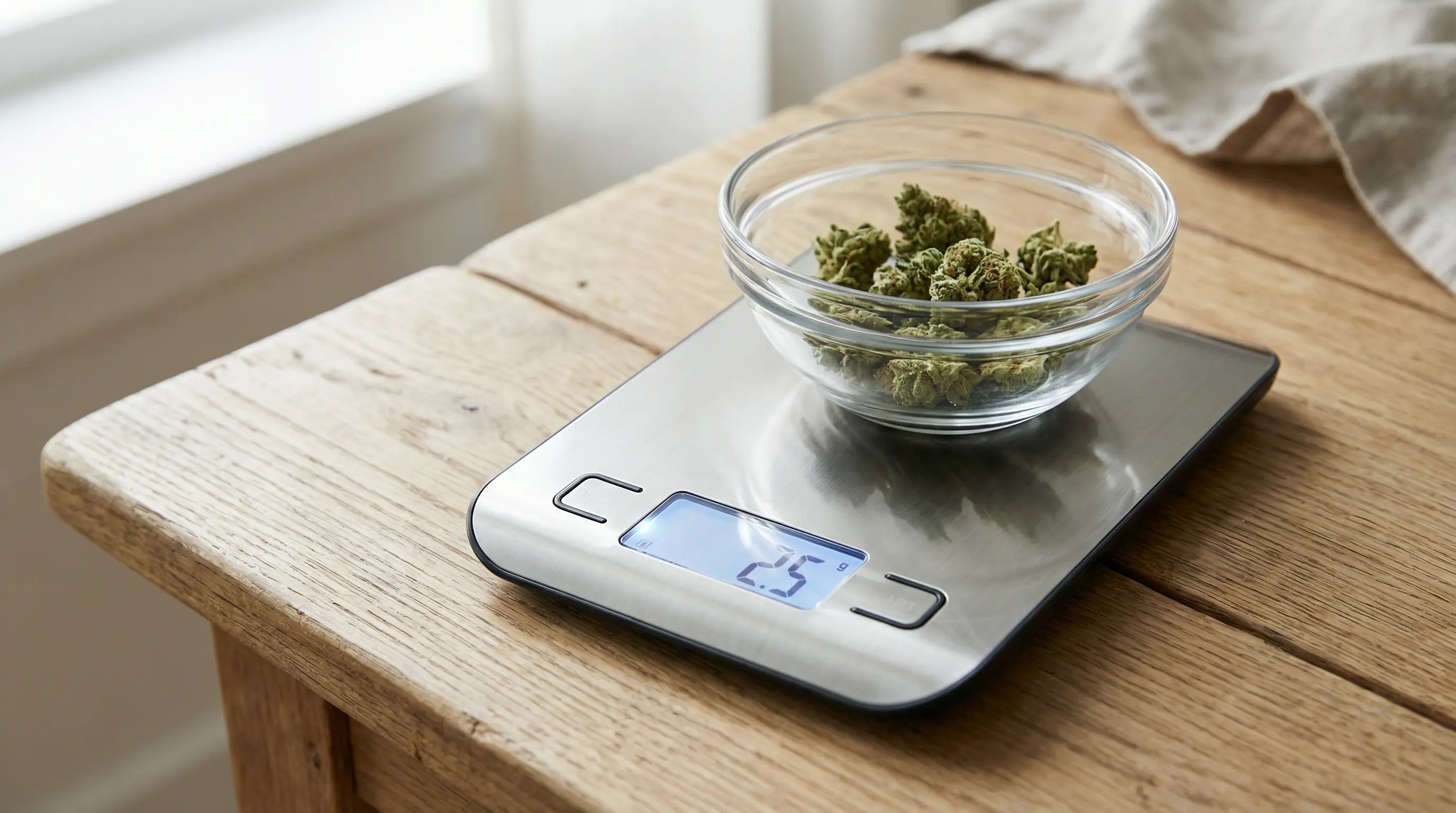
Digital scales verify purchase accuracy.
After buying an ounce, a quick scale check confirms:
-
Total weight equals or exceeds 28 grams
-
No significant stem or seed weight-inflating measurements
-
Proper moisture content (very dry flower weighs less, very wet weighs more)
Some dispensaries pre-package ounces at 28.5 grams to guarantee above-minimum weight, accounting for scale variance and moisture loss during storage.
Serious discrepancies (ounces weighing 26-27 grams) suggest either scale calibration issues or dishonest practices. Most legal dispensaries correct measurement errors immediately when customers identify problems.
Calculating Fractions and Mixed Quantities
Common fractional amounts break down as:
-
Sixteenth (1/16 oz) = 1.75 grams
-
Eighth (1/8 oz) = 3.5 grams
-
Quarter (1/4 oz) = 7 grams
-
Half (1/2 oz) = 14 grams
-
Three-quarters (3/4 oz) = 21 grams
Dispensaries selling "half ounce" deals at 13.5 grams instead of 14 grams short customers by 3.5% without obvious detection. Understanding exact measurements prevents accepting underweight packages.
Buying an Ounce of Weed: What to Look For
Smart ounce purchases require evaluating multiple quality factors beyond base price comparison.
Visual Quality Indicators
High-quality ounces display specific visual characteristics.
Trichome coverage: Heavy crystallization indicates proper maturation and high cannabinoid content. Dense frost suggests a potent flower worth premium pricing.
Color vibrancy: Rich greens, purples, or oranges signal proper nutrition and genetics. Brown or tan coloring suggests old flower, heat exposure, or poor curing.
Bud structure: Dense but not compressed nuggets indicate indoor cultivation. An extremely airy flower suggests outdoor growing or immature harvest.
Trim quality: Hand-trimmed flower shows care in processing. Excessive leaf material or machine-trimmed roughness reduces value.
Smell and Terpene Profile
Ounce quality reveals itself immediately through aroma:
-
Strong distinctive scent: Pungent, strain-specific odor indicates fresh flower with intact terpenes.
-
Weak or hay-like smell: Suggests old flower, improper curing, or degraded terpenes. Avoid ounces with minimal aroma regardless of price savings.
-
Moisture level: Properly cured flower feels slightly springy, not brittle or soggy. Overly dry bud crumbles easily, losing trichomes. Wet flowers risk mold development.
Lab Testing and Documentation
Legal ounces include lab testing verification:
-
THC and CBD percentages
-
Terpene profile breakdown
-
Pesticide screening results
-
Heavy metal testing
-
Microbial contamination checks
This data justifies pricing and confirms safety. A 28% THC ounce costs more than 18% THC equivalents for scientifically verified reasons, not marketing claims.
Reviewing terpene profiles helps predict effects. Myrcene-heavy strains deliver sedation. Limonene creates uplifting energy. Pinene improves focus. Understanding these relationships helps assess whether higher-priced exotic strains offer meaningful benefits for your specific needs.
A proper stash box with built-in storage keeps your ounce organized and accessible while preserving the trichome coverage that drives potency and effects.

Tips for Getting the Best Value When Buying Ounces
Maximizing value requires strategic shopping beyond simply choosing the lowest price.
Timing Purchases Around Sales and Promotions
Dispensaries run predictable promotional cycles:
-
4/20 sales (April 20): Expect 20-30% discounts on ounces during cannabis culture's primary holiday.
-
7/10 sales (July 10): Concentrate-focused holiday that sometimes extends to flower discounts.
-
Daily deals: Many dispensaries rotate daily specials on specific brands or quality tiers.
-
First-time customer promotions: New patient discounts ranging from 10-25% off initial purchases.
-
Loyalty program rewards: Accumulate points toward discounted or free ounces through regular purchases.
Bulk Purchase Negotiations
Some dispensaries negotiate pricing on multiple-ounce purchases:
-
2 ounces: 5-10% discount off single-ounce price
-
4 ounces (quarter pound): 10-15% discount
-
8 ounces (half pound): 15-20% discount for medical patients in states allowing larger possession
Direct-from-farm purchasing in some legal states allows even deeper bulk discounts. Washington and Oregon host cannabis farmers' markets where cultivators sell directly to consumers at wholesale-adjacent pricing.
Quality vs. Price Balance
Buying the cheapest available ounce often proves penny-wise but pound-foolish:
$120 ounce at 14% THC requires larger consumption volumes to achieve desired effects, potentially making it more expensive per effective dose than...
$220 ounce at 26% THC that delivers stronger effects with smaller amounts, extending actual use duration, and improving cost-effectiveness.
Calculate price-per-percentage-point to compare value accurately:
-
$120 ounce ÷ 14% THC = $8.57 per THC percentage point
-
$220 ounce ÷ 26% THC = $8.46 per THC percentage point
The "expensive" ounce actually costs less when accounting for potency.
When to Try New Strains vs. Sticking with Favorites
Ounce quantities represent commitment. Buying 28 grams of untested genetics risks dissatisfaction with most of your investment locked into mediocre flower.
Smart approach: buy eighths or quarters of new strains first. Once you identify favorites, commit to ounce purchases for maximum value on verified preferences.
Exception: dispensary "shake ounces" at $60-$100 provides low-risk opportunities to try multiple strains affordably. Shake (trim and small buds) lacks bag appeal but delivers nearly equivalent potency to whole flower for users unconcerned with aesthetics.
What Is a Good Price for an Ounce of Weed in Your Area
Evaluating whether an ounce offers good value requires comparing against local market averages rather than national pricing.
Researching Your Local Market
Price comparison tools help establish baseline expectations:
Use Weedmaps and Leafly to compare dispensary menus in your area to identify pricing ranges across quality tiers.
Visit online forums like Reddit for state-specific cannabis communities that discuss current pricing trends and identify best-value shops.
Also, consider a direct comparison shopping approach. Visit 3-5 dispensaries and compare identical quantity pricing across similar quality levels.
In most mature legal markets, mid-quality ounces should fall within these ranges:
-
Budget tier: $120-$160
-
Mid-shelf: $180-$240
-
Premium: $260-$320
-
Ultra-premium: $340-$400
Prices exceeding these ranges in established states suggest either extraordinary quality that justifies premium pricing or inflated costs from inefficient operations or excessive markup.
Understanding Regional Price Floors
Some cost components prevent prices from dropping below specific thresholds:
-
Cultivation costs: Even efficient operations spend $800-$1,200 per pound in production costs, setting a hard floor around $50-$75 per ounce for break-even pricing.
-
Testing requirements: Mandatory lab testing adds $10-$20 per ounce in compliance costs.
-
Retail overhead: Dispensary rent, staffing, and licensing fees require markup over wholesale costs.
Ounces priced under $100 often represent distress sales, clearing old inventory, or oversupply liquidation. While potentially good value, verify purchase dates and storage conditions to ensure quality hasn't degraded.
Recognizing Red Flags in Pricing
Suspiciously high prices might indicate:
-
Tourist area markup (especially near major attractions or airports)
-
Limited local competition allows for inflated pricing
-
Excessive branding costs are passed to consumers
-
Inefficient cultivation or distribution increases base costs
Suspiciously low prices could signal:
-
Old flower being cleared before complete degradation
-
Failed testing batches sold as-is with disclosed issues
-
Mislabeled potency or inaccurate marketing claims
-
Legal gray-market products of questionable origin
Extremely cheap ounces sometimes prove expensive after accounting for the effect of weakness from low potency despite labeled claims.
Storing Your Ounce Properly to Maintain Value
An ounce purchased today must remain high-quality for weeks or months to justify bulk buying. Proper storage prevents the $40-$100 value loss from degradation.
Optimal Storage Conditions
Cannabis degrades through four primary mechanisms:
-
Light exposure: UV radiation converts THC to CBN, which reduces potency and changes the effects from energetic to sedative. Store in complete darkness or UV-blocking containers.
-
Temperature fluctuation: Heat accelerates cannabinoid degradation. Temperatures above 77°F risk terpene evaporation and mold growth. Temperatures below 55°F create brittleness and difficult grinding.
-
Humidity extremes: Below 55% RH causes over-drying with trichome loss. Above 65% RH invites mold and mildew. Maintain 59-62% RH using humidity control packs.
-
Oxygen exposure: Oxidation gradually degrades cannabinoids over weeks. Airtight containers prevent oxygen contact that accelerates potency loss.
Storage Container Selection
Different container types offer varying preservation levels.
Glass jars with airtight seals are the best option for home storage. Prevents oxygen while maintaining visibility.
Opaque ceramic containers are excellent for light blocking with proper seals.
Purpose-built stash jars combine UV protection, airtight seals, and humidity control integration.
Avoid: Plastic bags (permeable to oxygen), metal tins (trap moisture), and cheap glass without proper seals.
Our stash jar collection includes UV-protected borosilicate glass with medical-grade seals that preserve ounce-quantity purchases for 6+ months at peak potency. The integrated humidity pack compartment maintains ideal moisture levels automatically, preventing the $30-$50 quality loss from improper storage that occurs within weeks of keeping the flower in basic containers.
Long-Term Preservation Techniques
For storage extending beyond 2-3 months:
-
Vacuum sealing: Removes oxygen completely, preventing degradation for 12+ months.
-
Refrigeration: Slows degradation significantly. Use only with vacuum-sealed flowers to prevent moisture condensation.
-
Freeze storage: Preserves indefinitely when properly vacuum-sealed. Thaw slowly at room temperature before opening to prevent condensation.
-
Avoid: Repeated opening and closing of storage containers. Each exposure introduces oxygen and humidity fluctuation. Separate ounces into smaller jars to limit exposure frequency.
Label each jar with strain name, purchase date, and THC percentage. After 6-8 months in storage, potency drops 10-20% even under ideal conditions. Knowing original potency helps adjust consumption as aging occurs.
Elevate Your Cannabis Experience with Quality Storage
Understanding how much an ounce of weed is in 2026 is far more complicated and nuanced than memorizing price ranges. Smart purchasing combines finding competitive local pricing with proper storage that maintains your investment's quality for weeks or months of optimal use.
Regardless of whether you're spending $160 in Oregon or $340 in New York, protecting that flower properly ensures every session delivers the potency and terpene profile you paid for. Cheap storage solutions that allow 20-30% degradation waste more money than the initial savings justify.
Our complete cannabis storage and preparation collection includes stash boxes, UV-protected jars, precision grinders, and organized rolling trays that transform bulk ounce purchases from risky investments into cost-effective long-term solutions. The integrated storage system preserves your $200-$400 ounce exactly as purchased, which eliminates the gradual quality loss that makes bulk buying seem wasteful to those using inadequate storage equipment.


Leave a comment
This site is protected by hCaptcha and the hCaptcha Privacy Policy and Terms of Service apply.