
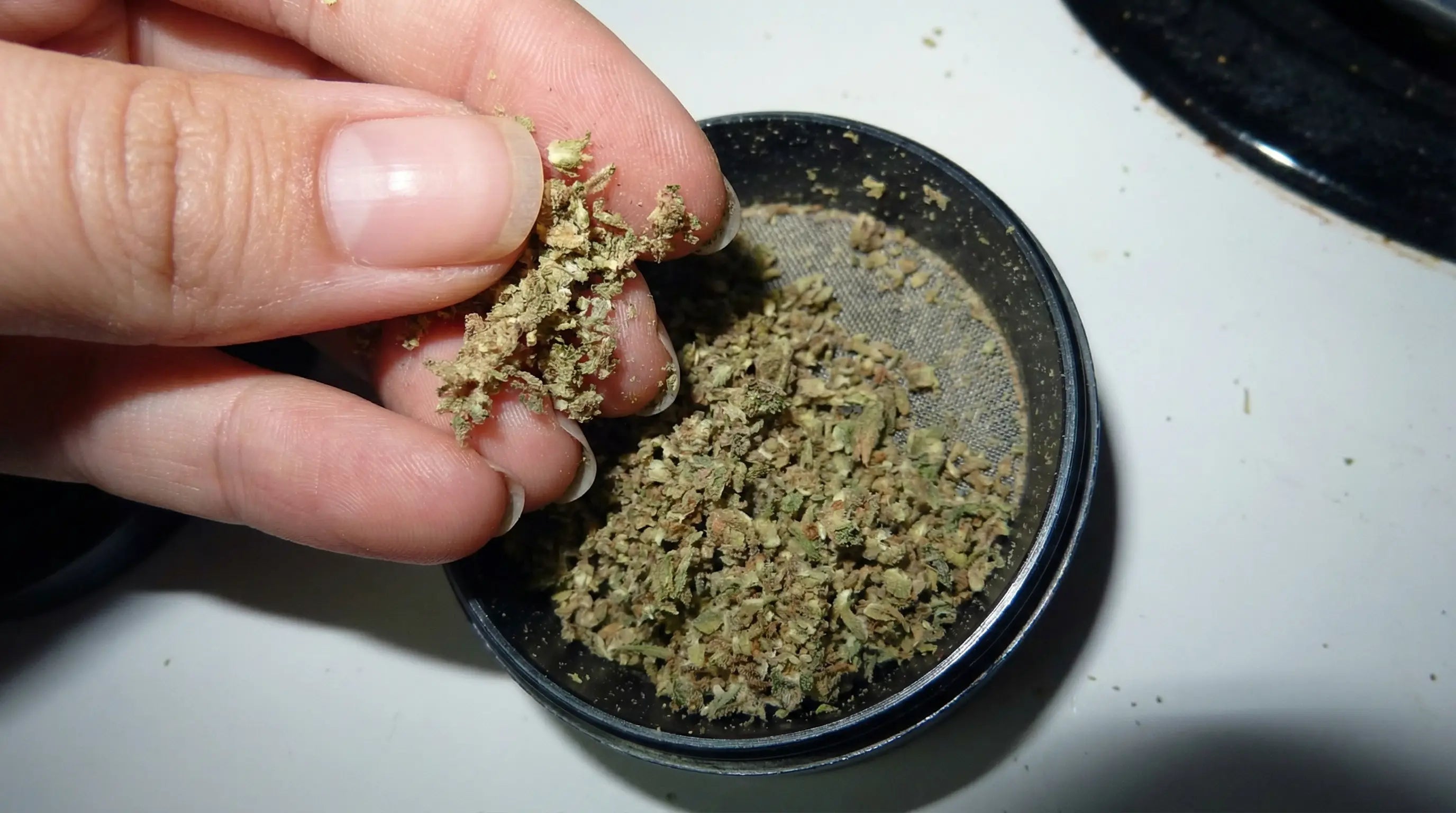
Does Grinding Weed Make It More Potent?
This question comes up constantly in cannabis circles, and for good reason. I've heard dozens of conflicting answers over the years, from people swearing grinding destroys THC to others claiming it makes weed hit harder. After three years of testing different methods and diving into the science, I can finally give you a straight answer. Grinding doesn't change the actual THC content in your cannabis, but it dramatically changes how efficiently you access that THC. The real question isn't about potency changing; it's about delivery.

This guide explains exactly how grinding affects your weed, when it helps, when it might hurt, and how to get the most from every gram you buy. You'll learn the science behind trichomes, the truth about THC loss, and practical tips that actually work.
Does Grinding Weed Make It More Potent? The Direct Answer
No. Grinding doesn't add cannabinoids to your flower. The THC percentage stays exactly the same before and after grinding.
So why does ground weed often feel stronger?
Surface area. When you grind cannabis, you create hundreds of small pieces instead of one solid nug. Each piece has exposed surfaces where heat can reach the cannabinoids directly. In a joint, this means more THC gets activated and inhaled per puff. In a bowl, it creates even burning that wastes less material and a vaporizer allows hot air to extract compounds more efficiently.
Think of it like this: a whole ice cube melts slowly, but crushed ice disappears fast. Same amount of water, different exposure to heat. The feeling of increased potency comes from better cannabinoid delivery, not more THC. You're accessing what's already there more completely. Studies on vaporizer efficiency show that finely ground cannabis can increase cannabinoid extraction by up to 30% compared to hand-broken flower.
I tested this myself last summer. I split an eighth into two portions, ground one half and left the other in whole buds. Rolling joints from each batch showed clear differences. The ground weed burned evenly for ten minutes with consistent effects throughout. The whole bud joint ran down one side, required three relights and delivered uneven effects because parts of the flower never burned completely.
Key factors that make grinding feel more potent:
-
Increased surface area exposes more trichomes to heat
-
Even particle size creates consistent burn rates
-
Better airflow allows complete combustion or vaporization
-
Efficient extraction means less wasted THC
A quality weed grinder maximizes this effect by creating uniform texture that burns cleanly without destroying the delicate trichome heads that hold your THC.

Why Do People Think Grinding Weed Makes It Less Potent?
The myth that grinding weed reduces potency comes from one legitimate concern: trichome loss. Those crystal-like structures covering your buds contain the highest concentration of THC, CBD and terpenes. When you grind, some trichomes inevitably break off and stick to the grinder walls.
But here's what most people miss: hand-breaking causes even more trichome loss. When you pull buds apart with your fingers, trichomes stick to your skin, your nails, the table and basically every surface they touch. Unless you're licking your fingers afterward (which I don't recommend), you're throwing away more cannabinoids than grinding would lose. I proved this to myself during a clumsy experiment in 2023. After hand-breaking two grams, I washed my hands in a clear bowl. The water turned cloudy green with visible resin floating on top. That sticky residue coating my hands? Pure wasted THC.
A proper grinder with a kief catcher actually preserves more cannabinoids than manual breaking. The trichomes that fall off collect in the bottom chamber instead of disappearing onto your fingers. After a month of regular use, you'll have enough kief saved up for several potent bowls.
The real potency loss happens after grinding, not during. Ground weed exposes more surface area to air, light, and moisture. These three elements degrade THC into CBN, a less psychoactive compound. Leave ground cannabis sitting out for a week and you'll notice weaker effects.
To prevent actual potency loss:
-
Grind only what you need for the session
-
Store ground weed in airtight containers immediately
-
Keep it in a cool, dark place
-
Use it within 48 hours for maximum freshness
-
Never leave ground cannabis exposed to light
The question of does grinding weed destroy trichomes deserves its own deep dive, but the short answer is: grinding itself doesn't destroy them, but careless handling and poor storage afterward definitely will.
How Grinding Affects THC and Trichome Preservation
Understanding trichomes explains everything about grinding and potency. These mushroom-shaped glands produce and store cannabinoids, terpenes and flavonoids. They're incredibly fragile. Any physical agitation knocks some off.
The key difference between grinding methods is what happens to those knocked-off trichomes. With fingers, they stick to your skin. With scissors, they coat the blades. With a quality grinder, they fall through a mesh screen into a collection chamber.
Here's what surprised me most: the grinding motion itself causes less damage than you'd think. Research shows that trichome heads can withstand moderate mechanical stress without rupturing. The stalks might break off from the plant material, but the heads stay intact and potent.
What actually degrades cannabinoids is oxidation. When THC molecules encounter oxygen, they slowly convert to CBN. This happens faster with increased surface area, which is why pre-ground weed loses potency quicker than whole buds.
Temperature also matters. Heat above 70°F accelerates THC degradation. This is why leaving your grinder in a hot car or storing ground weed on a sunny windowsill kills potency fast.
Grinding Weed vs Breaking by Hand: Potency Comparison
|
Factor |
Grinding with Quality Grinder |
Hand Breaking |
Over-Grinding (Too Fine) |
|
Trichome Loss |
Low (collected in kief catcher) |
High (sticks to fingers) |
Very High (turns to powder) |
|
Burn Consistency |
Excellent |
Poor |
Terrible (burns too fast) |
|
Time Required |
10 seconds |
2-5 minutes |
15-20 seconds |
|
Potency Preservation |
High (if used quickly) |
Medium |
Low |
|
Kief Collection |
Yes |
No |
No (lost as dust) |
Using the best weed grinder balances efficiency with trichome preservation. You want consistent particle size without pulverizing your flower into dust.
I spent six months comparing methods before settling on my current approach. Hand-breaking gave me inconsistent pieces that burned unevenly in joints. Scissors took forever and left sticky residue everywhere. A cheap plastic grinder shredded my flower into powder that fell through my bowl screen. The difference with a proper grinder was immediate. Fluffy, consistent texture. Perfect burn in joints. Dense, even hits from bowls. Plus, after a month, I had a quarter gram of kief saved up.
For those wondering about grinding weed with fingers, it works in a pinch, but you're leaving significant amounts of THC on your hands every single session.
Does Fine Grind or Coarse Grind Make Weed More Potent?
Grind consistency affects potency delivery more than most people realize. The ideal texture depends entirely on how you're consuming.

For smoking joints and blunts: medium grind works best. Too coarse and your joint burns unevenly, wasting flower. Too fine and it burns too fast, turning harsh before you're halfway through. Think fluffy, like dried oregano. Having a quality rolling tray keeps your ground flower contained during preparation, preventing waste and making the rolling process cleaner and more efficient.

For bowls and pipes: medium to slightly coarse. You need pieces large enough that they don't pull through the screen, but small enough to burn completely.
For vaporizers: this is where grind size makes the biggest potency difference. Conduction vapes need fine grind for maximum contact with heating surfaces. Convection vapes prefer medium-fine so hot air can flow through. Getting this wrong can reduce cannabinoid extraction by 40%.
For edibles: the finer the better. More surface area means more efficient THC extraction during infusion. Some people even use coffee grinders to create weed powder for cannabutter.
I learned this the hard way with my first dry herb vape. Following random internet advice, I ground my weed to a fine powder. The vape clogged constantly, produced weak vapor, and wasted expensive flower. After researching proper grinding for my specific device, I adjusted to a fluffy medium-fine consistency. Vapor production doubled, effects tripled, and my flower lasted 50% longer.
The biggest mistake? Over-grinding. Once you turn your flower into powder, you've created a nightmare. It falls through screens, clogs vapes, runs down joints and generally makes everything worse. Some of those precious trichomes literally become dust that you'll lose forever.
Signs you've ground too fine:
-
Powder consistency that puffs when you breathe on it
-
Falls through bowl and vape screens easily
-
Clogs grinder teeth
-
Burns in seconds instead of minutes
-
Tastes harsh no matter how you consume it
Quality matters here. Cheap grinders with dull teeth mash your weed instead of cutting it cleanly, creating inconsistent particle sizes and excessive dust. Sharp, well-designed teeth slice through flower precisely, preserving more trichomes while creating a uniform texture.
The Science of Surface Area and Cannabinoid Extraction
When heat hits cannabis, it converts THCA (the non-psychoactive acid form) into THC through a process called decarboxylation. This happens automatically when you smoke or vape. The more flower surface directly exposed to heat, the more complete this conversion becomes.
A whole nug has minimal surface area. Most of the interior never reaches the temperature needed for decarboxylation. You're literally smoking the outside while the inside stays inactive.
Ground weed flips this completely. Every piece has multiple exposed faces. Heat penetrates the entire mass. In a joint, oxygen flow improves dramatically, creating consistent combustion from start to finish. The result? You activate and inhale a higher percentage of the available THC.

Think about brewing tea. A whole tea leaf barely flavors water. Cut that same leaf into tiny pieces and you get strong tea from the same amount of plant material. Different delivery efficiency, not more tea.
Vaporizers demonstrate this effect most clearly. Whole buds vaporize from the outside in, leaving the center unprocessed. Ground flower vaporizes evenly throughout. Laboratory testing shows that properly ground cannabis in vaporizers produces 15-30% more cannabinoid vapor than hand-broken material.
The improved oxygen flow matters just as much. When you pack ground weed loosely, air moves freely through the material. This sustained combustion or vaporization instead of the smoldering and relighting you get with chunky pieces.
Last winter, I bought a Volcano vaporizer (expensive but worth it for the experiment). I filled one bag with hand-broken bud and another with the same strain, properly ground. The ground flower produced visibly thicker vapor that tasted better and hit harder. The ABV (already been vaped) material came out uniformly brown instead of the mix of green and black I got from whole pieces.
Does Grinding Weed Reduce Potency Over Time?
Storage matters more than grinding when it comes to long-term potency. Ground cannabis degrades faster than whole buds, but only if you store it wrong.
THC breakdown happens through three main pathways:
Oxidation: Air exposure converts THC to CBN. Ground weed has more surface area in contact with oxygen, so this happens faster. A whole nug might lose 5% potency in a month; ground flower can lose 15% in the same period if left exposed.
Light degradation: UV rays destroy cannabinoids directly. Ground weed's increased surface area means more material exposed to light damage. Studies show that cannabis stored in clear containers loses up to 50% of THC in three months under normal light conditions.
Moisture loss: As weed dries out, terpenes evaporate first, then cannabinoids start degrading. The smaller pieces in ground flower dry faster than intact buds.
I tested this directly by grinding an eighth and splitting it into three portions. One went in an airtight jar in a dark closet. One stayed in my grinder on the coffee table. One went in a clear container on the windowsill. After two weeks, the properly stored portion looked, smelled, and smoked like fresh-ground weed. The grinder portion had dried noticeably and lost some aroma. The windowsill weed turned brownish, smelled like hay, and barely got me high.
Best practices to prevent potency loss:
-
Transfer ground weed to airtight containers immediately
-
Use dark glass or metal containers to block light
-
Add a humidity pack to maintain 58-62% RH
-
Store in cool locations (60-70°F ideal)
-
Never refrigerate or freeze ground cannabis
-
Use within 2-3 days for peak potency
The popular question of can I leave weed in my grinder gets asked constantly for good reason. Technically yes, but you'll lose freshness fast. Grinders aren't airtight, and that constant exposure to air starts degrading your flower immediately.
If you must grind ahead of time, I recommend using the best stash jars with silicone seals and UV protection will keep your ground flower fresh for weeks instead of days. For complete storage organization, our Ludist Stash Box combines airtight storage, humidity control and light protection in one sleek package that preserves potency while keeping all your supplies organized.

Does Pre-Ground Weed Lose Potency?
Pre-ground weed from dispensaries raises different concerns. These products typically consist of small buds, trim, and shake ground months before you buy them. Quality varies wildly.
Some dispensaries grind fresh flower and package it immediately in nitrogen-flushed bags. This preserves potency well. Others use the leftover material that didn't sell, grind it poorly, and package it in plastic that offers zero protection from air or light.
The biggest red flag? If pre-ground weed smells like hay or barely has any aroma, the terpenes have already evaporated. Terpenes are more volatile than cannabinoids, so their absence signals that THC degradation has started too.
I bought pre-ground flower twice as an experiment. The first package came from a reputable dispensary in a vacuum-sealed foil pouch. Opening it released a strong, fresh cannabis smell. It smoked well and hit normally for the listed THC percentage.
The second came in a plastic jar with a basic pop-top lid. Opening it released almost no smell. The weed looked dull and brownish. Smoking it required twice as much material to get comparable effects to the properly packaged stuff. Understanding what does good weed look like helps you spot these quality issues before wasting money on degraded pre-ground flower.
What to look for in pre-ground weed:
-
Opaque, airtight packaging (foil pouches work best)
-
Recent grind date (within 2-3 weeks)
-
Strong, fresh aroma when opened
-
Uniform particle size without excessive powder
-
Proper moisture level (not bone dry)
Fresh-ground flower packed properly maintains potency well. Old shake ground months ago definitely won't.
Best Practices for Grinding Weed Without Losing Potency
After years of testing, I've developed a system that maximizes every aspect of grinding while preserving trichomes and potency:
1. Store whole buds properly until you're ready to use them. Keep flower in airtight containers with humidity packs at 58-62% RH. This preserves trichome integrity.
2. Grind only what you need for the session. Even perfect storage degrades ground weed faster than whole buds. Grind fresh every time.
3. Don't over-grind. Stop when you achieve a fluffy, consistent texture. Excessive grinding creates dust and damages trichomes unnecessarily.
4. Collect your kief religiously. Those fallen trichomes are pure concentrated THC. Add kief to bowls or save it for special occasions.
5. Clean your grinder monthly. Built-up resin and stuck material reduce grinding efficiency and waste flower. The cleaning process also yields potent hash.
6. Use proper storage immediately. If you must grind ahead, transfer to airtight containers instantly and keep them in dark, cool locations.
The grinder quality makes a massive difference. Cheap grinders with aluminum teeth shed metal shavings into your flower. Dull teeth crush instead of slice, destroying more trichomes. Inconsistent hole sizes create uneven particle distribution.
I wasted money on three bad grinders before investing in quality. The difference shocked me. Sharper teeth cut through sticky flower effortlessly. Precise engineering created perfectly consistent grind. The kief catcher actually worked, collecting noticeable amounts after every session.
Our Ludist Grinder review covers exactly what makes a premium grinder worth the investment, but the key factors are: aerospace-grade aluminum construction, diamond-cut teeth that stay sharp for years, and a kief screen that collects 2x more than standard grinders.

How Electric Grinders Affect Potency
Electric grinders divide the cannabis community. Some swear by them for consistency and speed. Others worry about excessive grinding and heat damage.
The truth depends on which electric grinder you're using.
High-speed blade grinders (like coffee grinders repurposed for weed) spin at 20,000+ RPM. This speed generates heat through friction, potentially degrading heat-sensitive terpenes. They also pulverize flower into powder, creating that over-ground consistency that wastes material.
Low-speed electric grinders designed specifically for cannabis work much better. They grind slowly with more torque, preventing heat buildup while creating consistent medium texture.
I tested a cheap blade coffee grinder once. It turned an eighth into powder in five seconds, made my kitchen smell like burnt plant matter, and the resulting material tasted harsh when smoked. Never again. Quality electric weed grinders use crushing plates or low-speed teeth that mimic manual grinding without heat issues. For people with arthritis or hand pain, these offer accessibility without compromising quality.
The main advantage? Consistency. Electric grinders produce identical results every time, which matters for precise vaporizer performance. The disadvantage? They're expensive, require charging or batteries, and lack the tactile feedback that prevents over-grinding in manual versions.
Does Grinding Weed Make It Stronger for Edibles?
For edibles, grinding absolutely improves cannabinoid extraction. When you infuse butter or oil, surface area determines how efficiently THC transfers from plant material to fat.
Coarsely chopped weed leaves interior cannabinoids trapped inside cell walls that never break down during infusion. Finely ground flower exposes every trichome to the fat, maximizing extraction.
Most experienced edible makers grind their decarbed weed to a fine consistency, sometimes even using coffee grinders to create near-powder texture. This isn't over-grinding for edibles; it's optimal preparation.
I make cannabutter monthly. My first attempts used hand-broken bud. The butter came out with mild effects, requiring huge doses to feel anything. After researching proper technique, I started grinding my decarbed flower finely before infusion. Same recipe, same flower, but the potency more than doubled.
For maximum edible potency:
-
Decarboxylate whole buds first (220°F for 40 minutes)
-
Grind the decarbed flower to fine consistency
-
Infuse slowly at low temperature (160-180°F for 2-4 hours)
-
Strain thoroughly, squeezing out all infused oil
-
Calculate dosing based on starting THC percentage
The science is simple: more exposed surface area equals more THC dissolved into your fat. Ground weed performs dramatically better than chunks for this application.
Grind Consistency for Different Consumption Methods
|
Method |
Ideal Grind |
Why It Matters |
Common Mistakes |
|
Joints/Blunts |
Medium, fluffy |
Even burn, good airflow |
Grinding too fine causes runs |
|
Bowls/Pipes |
Medium-coarse |
Prevents pull-through |
Too fine clogs screens |
|
Dry Herb Vapes |
Medium-fine |
Optimal vapor production |
Too coarse wastes material |
|
Bongs |
Medium |
Consistent combustion |
Over-packing with fine grind |
|
Edibles |
Fine to powder |
Maximum extraction |
Using uncleaned grinders |
Matching your grind to your consumption method makes a huge difference. I keep mental notes now: slightly coarser for the bong, medium for joints, finer for the vape. Each method has a sweet spot where everything works perfectly.
The guide on how to use a weed grinder properly covers specific techniques for achieving each consistency level, but the key is learning when to stop grinding.
Common Myths About Grinding and Potency
Myth: Grinding weed in a coffee grinder makes it more potent
False. Coffee grinders over-grind and generate heat. You lose potency to heat degradation and turn useful flower into unusable powder.
Myth: The more you grind, the stronger it gets
Completely backward. Over-grinding destroys trichomes and creates material that's harder to use effectively.
Myth: Kief is just plant matter, not actual THC
Wrong. Kief consists primarily of trichome heads, making it significantly more potent than flower. Pure kief can test at 50-80% THC.
Myth: You should freeze your grinder before use.
This actually damages trichomes, making them brittle and more likely to break off completely. Room temperature grinding preserves more cannabinoids.
Myth: Pre-grinding for the week saves potency
The opposite is true. Ground weed loses potency daily when stored improperly. Grind fresh for each session.
I believed half these myths when I started smoking. Learning the truth changed everything about how I handle my cannabis.
How Different Grinder Materials Affect Potency
The grinder material doesn't directly impact potency, but it affects how well the device works and how much kief you collect.
Aluminum grinders: Most popular for good reason. They're durable, resist sticking and feature precise threading. The only concern? Cheap aluminum sheds particles. Quality anodized aluminum avoids this completely.
Stainless steel grinders: Heavier and more expensive, but they last forever. The weight can be a disadvantage for arthritic users.
Plastic grinders: Avoid these. They dull fast, create static that wastes kief and often shed microplastics into your flower.
Titanium grinders: Premium option with perfect corrosion resistance. Expensive but potentially worthwhile for medical users with metal sensitivities.
Wood grinders: Beautiful but impractical. They absorb moisture and oils, leading to residue buildup that's impossible to clean properly.
If you're concerned about are aluminum grinders safe, quality anodized models present zero health risks and work better than any alternative.
Does Holding Ground Weed Longer Make You Higher?
The old myth about holding hits longer to increase potency gets repeated constantly. Science says it's wrong. Your lungs absorb about 95% of available THC within the first 3 seconds of inhaling. Holding smoke or vapor longer doesn't increase cannabinoid absorption. It just exposes your lungs to more tar and harmful combustion byproducts.
The perceived increase in effects from breath-holding comes from oxygen deprivation, not THC. You're getting lightheaded, not higher.
I tested this extensively because I used to hold hits for 10+ seconds, thinking I was getting more from my weed. After learning the truth, I experimented with 3-second holds versus my old method. Zero difference in effects (except for the light-headedness), but my throat felt way better with shorter holds.
For maximum efficiency:
-
Inhale slowly and deeply
-
Hold for 2-3 seconds maximum
-
Exhale completely
-
Wait 30 seconds between hits to assess effects
Grind quality matters more than holding technique. Well-ground weed in a joint produces better, more consistent effects than perfectly held hits of poorly prepared flower.
Maximizing Potency From Your Cannabis
Everything about potency comes back to preservation and efficiency. The THC is already in your flower; your job is accessing it completely while wasting as little as possible.
Storage preserves potency: Proper containers, humidity control, darkness and cool temperatures keep cannabinoids stable for months.
Grinding improves delivery: Consistent particle size creates even burning and more complete cannabinoid activation.
Consumption method matters: Vaporizers extract cannabinoids most efficiently. Joints waste more but provide a full-spectrum experience. Choose based on your priorities.
Freshness beats everything: Use your cannabis within 6 months of purchase. Even perfect storage can't prevent slow degradation.
I've learned more about maximizing my cannabis in the last three years than in the previous decade of casual use. The difference in effects, efficiency and satisfaction is remarkable. Every gram goes further. Every session delivers exactly what I want.
Making the Most of Your Cannabis Investment
Does grinding weed make it more potent? Not in THC content, but absolutely in how effectively you can access that THC. Proper grinding, storage and consumption methods transform how your cannabis performs.
The key lessons:
Grinding changes delivery efficiency, not chemical content. You're not adding THC; you're making it more accessible through increased surface area and better heat distribution.
Storage matters more than grinding technique. Ground weed degrades faster when exposed to air, light and heat. Protect it properly and use it quickly.
Match your grind to your consumption method. Fine for vapes and edibles, medium for joints and bongs, medium-coarse for bowls and pipes.
Collect your kief diligently. Those fallen trichomes are pure concentrated cannabinoids worth saving and using.
Quality tools make everything better. Cheap grinders waste material, damage trichomes and create inconsistent results.
If you're serious about getting the most from your cannabis, investing in a quality grinder pays for itself quickly. Our Ludist Grinder combines precision machining with thoughtful design, featuring razor-sharp teeth that preserve trichomes, a high-yield kief catcher, and a smooth grinding motion that makes preparation effortless. It's the kind of tool that improves every session.


Leave a comment
This site is protected by hCaptcha and the hCaptcha Privacy Policy and Terms of Service apply.