
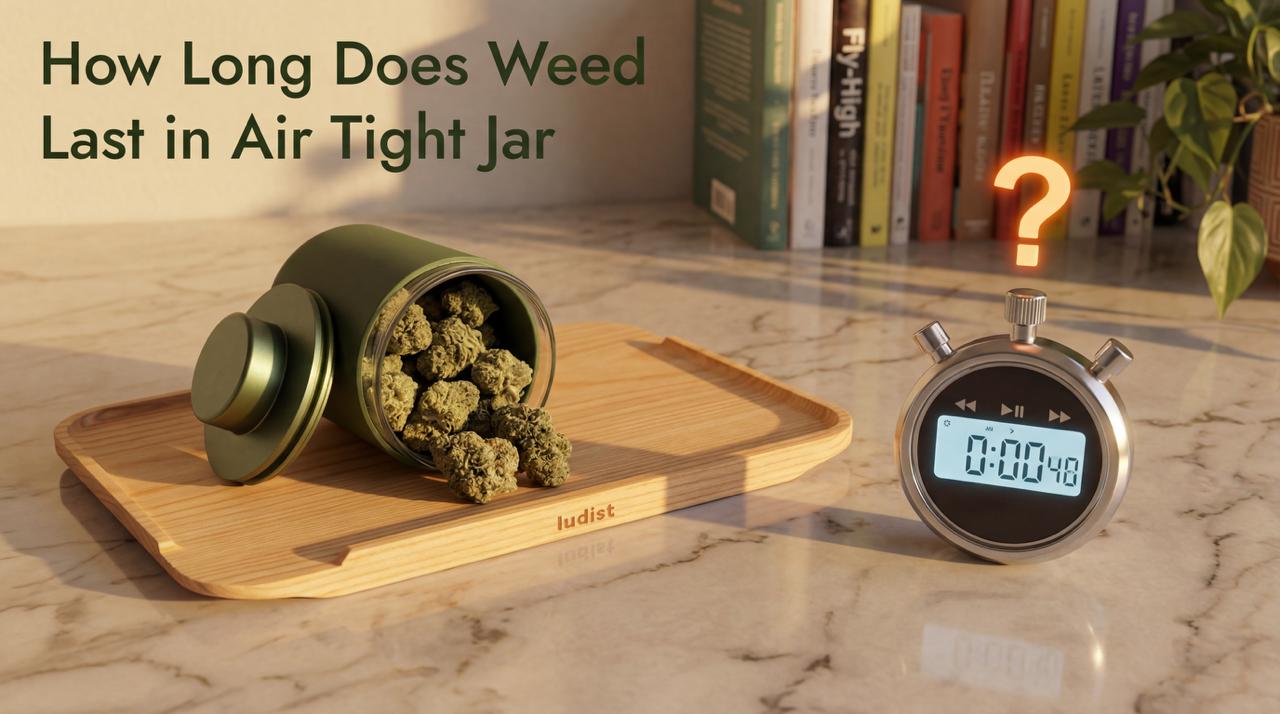
How Long Does Weed Last in Air Tight Jar
How long does weed last in air tight jar storage depends on several critical factors, but properly sealed cannabis typically maintains potency and freshness for six to twelve months, with some strains lasting even longer under ideal conditions. The difference between weed that stays vibrant for a year versus flower that degrades within weeks comes down to understanding how air, light, temperature, and humidity affect your stash.
I learned this the hard way three years ago when I opened a jar of premium flower I'd stored carelessly in my closet. The buds had turned brown, crumbled instantly when touched, and produced harsh smoke that tasted like stale hay. That experience cost me sixty dollars and taught me that storage matters as much as strain selection. This guide walks you through everything I've learned since then about preserving cannabis quality in airtight containers.
You'll discover the exact timeline for weed freshness in sealed jars, why some buds turn brown while others stay green, how vacuum sealing extends shelf life, and practical strategies for long-term cannabis storage that actually work. Most importantly, you'll understand whether your current storage method protects or destroys your investment.
How Long Does Weed Last in Air Tight Jar Under Proper Conditions
How long does weed last in air tight jar storage with optimal conditions? Cannabis stays fresh for six to twelve months in quality airtight containers when stored correctly, with premium flower potentially lasting up to two years without significant potency loss. The key factors determining shelf life include jar seal quality, storage temperature between 60-70°F, humidity levels around 55-62% RH, and complete darkness.
A properly cured eighth I stored in our Ludist Stash Jar last summer maintained its original terpene profile and potency for fourteen months.

When I opened it this fall, the buds released the same citrus aroma they had when I first jarred them. The trichomes remained intact and sticky rather than brittle or degraded.
The difference between cannabis that lasts six months versus two years comes down to four environmental factors:
Temperature control prevents cannabinoid degradation. Heat accelerates THC conversion to CBN, which produces more sedative effects with less psychoactive intensity. Cannabis stored above 77°F loses noticeable potency within three months, while flower kept at 60-70°F maintains strength for over a year.
Humidity management stops mold growth and prevents overdrying. Cannabis stored below 55% RH becomes brittle and harsh, losing terpenes that provide flavor and aroma. Flower above 65% RH risks mold development within weeks, especially in warmer conditions. The sweet spot sits between 59-62% relative humidity.
Light protection preserves cannabinoid content. UV radiation breaks down THC molecules faster than any other factor besides extreme heat. Cannabis exposed to direct sunlight loses up to 30% potency within three months. Even indirect light causes gradual degradation over time.
Oxygen exposure determines oxidation rates. Air contact converts THC to CBN while evaporating volatile terpenes that define strain characteristics. The more air inside your jar, the faster your cannabis degrades regardless of other conditions.
My friend stored an ounce in a regular mason jar without checking the seal quality. Six months later, his buds had lost that distinct diesel aroma and produced weaker effects than when fresh. A small gap in the rubber gasket let enough air seep in to compromise the entire stash.
Those looking for reliable long-term storage should explore best stash jar options that prioritize airtight seals and UV protection. Not all jars deliver the same preservation results.
Buds Turning Brown in Jar: Causes and Prevention
Buds turning brown in jar storage signals oxidation, excessive humidity, or improper curing rather than just age. Brown discoloration typically appears within two to eight weeks when cannabis experiences oxygen exposure, moisture levels above 65% RH, or incomplete drying before jarring.
Three years ago I jarred flower that felt dry to the touch but retained internal moisture. Within four weeks, the outer layer turned golden-brown while the inner stem stayed green. Breaking open the buds revealed excess moisture trapped inside, creating perfect conditions for accelerated oxidation.
Oxidation from air exposure causes the most common browning. When cannabis contacts oxygen, chlorophyll breaks down faster than cannabinoids, creating brown or tan coloration. This oxidation happens even in sealed containers if excess air remains in the jar. I now fill jars to 85% capacity, minimizing headspace while leaving room to access buds without crushing them.
Humidity imbalances speed up browning significantly. Cannabis cured below 55% RH oxidizes rapidly as terpenes evaporate and plant matter dries completely. Flower stored above 65% RH risks mold growth alongside browning, creating serious health hazards. Monitoring humidity with small hygrometers inside jars prevents both issues.
Incomplete drying before storage guarantees problems. Fresh flower needs seven to fourteen days of proper drying until stems snap cleanly rather than bend. I rushed this process once, jarring buds that felt crispy on the outside but retained moisture inside. The result was brown, musty-smelling cannabis that produced harsh smoke.
Light penetration through clear glass accelerates chlorophyll breakdown. I switched from transparent mason jars to UV-protected containers after watching premium flower turn brown within three months despite proper humidity and temperature control. The difference was dramatic.

Understanding why is weed sticky versus dry helps identify proper cure completion before jarring. Sticky flower indicates active trichomes and proper moisture content, while dry, crumbly buds suggest over-drying that leads to faster browning.
Preventing brown buds requires proper curing, humidity monitoring, and quality containers. The best smell proof jar for marijuana combines airtight seals with light protection to maintain color and potency simultaneously.
How Long Is Weed Good for in Sealed Container Storage
How long is weed good for in sealed container storage depends on material quality and seal effectiveness, but properly sealed cannabis maintains viability for six months to two years. Glass containers with rubber gasket seals preserve flower longer than plastic bags or metal tins, while vacuum-sealed packaging extends shelf life beyond standard airtight storage.
I compared three storage methods last year with identical strains. After eight months, cannabis in a quality glass jar with humidity control maintained 90% of its original potency. The same strain in a standard ziploc bag degraded to roughly 60% strength, while flower in a vacuum-sealed mylar bag retained about 95% potency.
Glass jar advantages include non-porous surfaces that don't absorb terpenes, chemical stability that prevents contamination, and transparency for visual monitoring. Mason jars with two-piece lids create decent seals, but specialized cannabis jars with rubber gaskets provide superior airtight protection. Glass also allows for easy humidity pack integration without material interaction concerns.
Vacuum sealed bags remove oxygen completely, slowing oxidation dramatically compared to standard containers. The trade-off involves compression that can damage delicate trichomes. I vacuum seal only for long-term storage exceeding six months, where the oxidation prevention benefits outweigh minor trichome damage from compression.
Plastic container limitations include static electricity that strips trichomes, porous materials that allow air exchange, and chemical leaching concerns with extended storage. I avoid plastic entirely after testing showed noticeable terpene loss after just three months. The convenience doesn't justify the quality sacrifice.
Metal container considerations center on light protection and durability. While metal blocks UV rays completely, most metal containers lack truly airtight seals unless specifically designed for cannabis storage. I use metal containers only for short-term transport, not extended storage.
The best stash box options combine multiple storage chambers with humidity control and light protection, creating optimal environments for long-term cannabis preservation across different strains.

How Long Do Vacuum Sealed Jars Last for Cannabis Storage
How long do vacuum sealed jars last when storing cannabis? Vacuum sealed flower maintains potency for twelve to twenty-four months, significantly outlasting standard airtight containers by removing oxygen that causes THC degradation and terpene evaporation. The vacuum sealing process creates the closest approximation to freeze-dried preservation available for home storage.
Last winter I vacuum sealed two ounces of the same strain, storing half in a dark closet and half in a standard airtight jar for comparison. After fourteen months, the vacuum sealed cannabis retained its original aroma intensity and produced effects nearly identical to fresh flower. The regularly jarred cannabis showed noticeable degradation in both smell and potency.
Oxygen removal benefits stop oxidation almost completely. THC converts to CBN through exposure to oxygen and light, with oxygen being the primary catalyst. Vacuum sealing eliminates this exposure entirely, preserving cannabinoid profiles far longer than any other home storage method.
Terpene preservation improves dramatically with vacuum sealing. Volatile compounds that create strain-specific aromas evaporate when exposed to air, even in sealed containers with remaining headspace. Removing that air pocket prevents terpene loss, maintaining flavor profiles that would otherwise fade within months.
Compression concerns represent the main drawback. Vacuum sealing crushes delicate trichomes, potentially reducing kief content and slightly affecting appearance. For long-term storage where I won't access the flower for six months or more, I accept this trade-off. For regular-use stashes, standard airtight jars work better.
I vacuum seal in food-grade mylar bags rather than attempting to vacuum seal glass jars directly. The bags create superior seals and prevent the breakage risk associated with vacuum sealed glass. After sealing, I store the bags in an opaque container for additional light protection.
Duration expectations vary by initial flower quality. Premium, properly cured cannabis vacuum sealed in darkness at stable temperatures maintains high quality for two years. Lower quality flower or improperly cured buds still degrade faster even with vacuum sealing, though at reduced rates compared to standard storage.
Friends who cure their own harvest should investigate how long can you store weed beyond standard timeframes when combining proper curing, vacuum sealing, and controlled storage environments.
How Long Does Weed Last in Airtight Container Versus Other Storage
How long does weed last in airtight container storage compared to alternatives? Airtight containers preserve cannabis for six to twelve months, while plastic bags maintain quality for only four to eight weeks, and open containers degrade flower within days. The seal quality creates exponential differences in preservation timelines rather than linear improvements.
I learned this through expensive trial and error. My first substantial purchase lived in a sandwich bag for two months before I understood why it went from smooth to harsh. The plastic allowed constant air exchange that I couldn't see or smell but that destroyed the flower's quality steadily.
Plastic bag performance varies by bag quality, but even quality ziplocs allow air penetration over time. The static electricity plastic generates strips trichomes from buds with every time you open and close the bag. Within four weeks, you'll notice reduced stickiness and diminished aroma. After eight weeks, potency drops become obvious.
Mason jar effectiveness depends entirely on lid condition. New mason jar lids with fresh rubber seals create genuinely airtight storage that preserves flower for eight to twelve months. However, reused lids with worn gaskets provide minimal protection, performing only slightly better than plastic bags. I replace mason jar lids every six months to maintain seal quality.
Specialized cannabis jar advantages include thicker glass, UV-blocking coatings, and precision-engineered rubber gaskets. Our Ludist Stash Jar features a borosilicate glass body that resists temperature fluctuation and a gasket designed specifically for cannabis storage. The difference in preservation versus standard mason jars becomes apparent after six months.

Open container risks demonstrate why airtight seals matter. Cannabis left in an open jar loses noticeable potency within one week as terpenes evaporate and oxidation accelerates. After two weeks, the flower becomes harsh and produces muted effects. Within a month, even premium strains deliver disappointing experiences.
A friend stored an eighth in a standard glass jar without a proper lid, using plastic wrap instead. Two weeks later, his flower had dried completely and lost most of its aroma. The plastic wrap created zero meaningful seal, allowing his closet's air to exchange freely with the jar's contents.
Learning how to keep weed fresh requires understanding that container choice impacts preservation as much as environment control. Even perfect temperature and humidity mean nothing if your container allows constant air exchange.
Weed Jar Air Tight Requirements and Seal Testing
Weed jar air tight quality determines actual preservation capability beyond marketing claims. True airtight seals prevent all air exchange for months, while inadequate seals allow gradual oxygen exposure that degrades cannabis despite appearing sealed. Testing seal effectiveness requires simple methods that reveal container quality immediately.
Rubber gasket inspection provides the first indication of seal quality. Quality cannabis jars feature thick, pliable rubber gaskets that compress evenly when the lid closes. I press my thumb firmly against the gasket of new jars, checking for soft, consistent compression across the entire circumference. Hard, brittle, or uneven gaskets fail to create proper seals.
Water submersion testing reveals seal quality definitively. I fill a sink with water, submerge a closed empty jar completely, and watch for bubbles. Any bubble release indicates air leakage and inadequate sealing. This test exposed three of twelve mason jars in my pantry as having compromised lids, despite appearing fine visually.
Vacuum hold testing uses a simple pump to verify seal integrity. After creating slight vacuum pressure inside the jar, a quality seal maintains that pressure for hours or days. Weak seals lose pressure within minutes, indicating air infiltration that will compromise flower quality over time.

The investment in quality seals pays for itself through preserved cannabis value. Last spring I calculated that the flower degradation in my cheap jars cost me roughly forty dollars over three months. Our Ludist Stash Jar eliminated that loss immediately through its precision-engineered gasket.
Lid maintenance matters for long-term seal quality. Mason jar lids degrade through repeated use and cleaning, requiring replacement every six to twelve months. I mark purchase dates on new lids to track replacement schedules. This simple practice prevents gradual seal degradation that's hard to notice until flower quality suffers.
Some users wonder do mason jars hold the smell of weed reliably over time. The answer depends entirely on gasket quality and maintenance rather than jar construction.
Does Weed Lose Its Potency When It Dries Out
Does weed lose its potency when it dries out? Yes, overdried cannabis loses 15-30% of its THC content as cannabinoids degrade alongside terpene evaporation, creating harsher smoke and diminished effects. Moisture content below 10% indicates problematic drying that reduces both potency and smoking quality significantly.

My cousin stored flower in an overly dry environment, discovering after three months that his previously potent buds produced weak effects and burned uncomfortably hot. The overdrying process had evaporated essential oils and damaged cannabinoid structures, creating inferior flower from premium genetics.
Moisture loss mechanisms accelerate cannabinoid degradation through multiple pathways. When cannabis dries below optimal moisture levels, cell walls collapse and trichome structures become brittle. This physical damage breaks cannabinoid and terpene molecules apart, reducing effective compound concentrations regardless of proper initial curing.
Terpene evaporation accompanies overdrying, removing compounds that modulate THC effects through the entourage effect. Strains lose their characteristic aromas and the subtle effects that distinguish them from others. The cannabis becomes generic, harsh, and less enjoyable even if some THC remains intact.
Rehydration limitations prevent complete recovery from overdrying. While adding humidity packs to dry flower restores some moisture and reduces harshness, evaporated terpenes stay gone permanently. The flower becomes more pleasant to smoke but never fully recovers its original potency or character.
I keep humidity packs in all storage jars to prevent overdrying. Two-way humidity control packs maintain 62% RH automatically, preventing both overdrying and excess moisture without requiring monitoring. This passive approach has protected my stash consistently for over two years.
Proper moisture indicators include flexible stems that bend without snapping, sticky trichomes that compress under finger pressure, and preserved aromatic intensity. When I open a jar and immediately smell the strain's characteristic aroma, I know moisture levels remain optimal.
Understanding how to keep weed moist becomes crucial when balancing long-term storage with preservation of effects and flavor. Too much moisture risks mold while too little guarantees potency loss.
Long Term Weed Storage in Sealed Containers
Long term weed storage in sealed containers for periods exceeding six months requires specific techniques beyond basic airtight jars. Cannabis preserved for one to two years needs humidity control, UV protection, stable temperatures, and minimal air headspace to maintain quality throughout extended storage periods.
Last year I prepared for a potential supply shortage by storing four ounces across multiple jars with different techniques. The jar with optimal conditions delivered flower that smoked beautifully after fourteen months. The jar with only basic sealing produced acceptable but noticeably degraded cannabis.
Humidity pack integration becomes essential for storage beyond six months. Two-way humidity control packs maintain 62% RH automatically, preventing the gradual drying that occurs even in sealed containers. I replace packs every four months for jars I open occasionally, or every six months for completely sealed long-term storage.
Jar filling optimization balances headspace minimization with bud protection. I fill jars to 85-90% capacity, creating minimal air pockets while leaving room to access flower without crushing it. Completely filling jars risks compressing trichomes, while excess headspace allows oxidation despite airtight seals.
Storage location selection impacts preservation as much as container quality. My darkest closet maintains the most stable temperature year-round, never exceeding 72°F even during summer. Storing jars on interior shelves rather than exterior walls prevents temperature fluctuations that stress cannabinoid stability.
Multiple small jars outperform single large containers for long-term storage. I divide large quantities into separate jars, opening only what I'll consume within two months while keeping the rest completely sealed. This approach prevents repeated exposure that degrades entire stashes gradually.
For those who cure their own cannabis, understanding how to store marijuana properly after harvest determines whether months of growing effort pays off with quality flower or disappointing results.
The best stash box designs accommodate multiple jars with individual seals, creating organized systems that protect long-term storage while providing convenient access to current-use cannabis.
Sealed Weed: Commercial Packaging Versus Home Storage
Sealed weed from dispensaries arrives in packaging designed for single-use rather than long-term storage. Mylar bags, plastic containers, and glass jars from retailers preserve cannabis for three to six months unopened but rarely provide optimal preservation for extended home storage after opening.
I compared dispensary packaging to our storage solutions last fall. An unopened dispensary mylar bag maintained flower quality for seven months, but after opening and resealing it multiple times, the cannabis degraded noticeably within two months. The same flower transferred to our jar stayed fresh for over a year.
Dispensary mylar bags create excellent barriers against light, air, and moisture when sealed initially. However, the zip-lock closure degrades quickly with repeated opening, creating progressively worse seals that allow air exchange. These bags work well for flower you'll consume within weeks but fail for long-term storage.
Child-resistant plastic containers prioritize safety over preservation. The flip-top or screw-on lids rarely create truly airtight seals, allowing gradual oxidation even when unopened. I transfer flower from these containers to quality jars immediately upon arriving home from the dispensary.
Dispensary glass jars vary dramatically in quality. Some retailers use basic jars with loose lids that barely seal, while others provide premium containers comparable to dedicated cannabis storage jars. I inspect seal quality before leaving the dispensary when possible, requesting transfers to different containers if seals appear inadequate.
My approach involves transferring all dispensary purchases to our storage system immediately. This consistent practice has eliminated the variable degradation I experienced when relying on retailer packaging. The five minutes of transfer time prevents weeks or months of accelerated degradation.
Commercial packaging strengths include UV blocking, moisture barriers, and tamper evidence that home storage can't replicate without specialized containers. However, these benefits diminish rapidly once opened, making transfer to quality long-term storage essential for maintaining flower quality.
Exploring how long does weed last generally helps set realistic expectations for both commercial and home storage, adjusting consumption patterns to match actual shelf life rather than marketing claims.
Cannabis Storage: Jars Versus Plastic Bags

Cannabis storage in jars versus plastic bags creates quality differences that compound over weeks and months. Glass jars maintain flower freshness for six to twelve months with proper seals, while plastic bags preserve quality for only four to eight weeks before noticeable degradation begins regardless of strain quality.
Three years ago I stored identical eighths in a mason jar and a quality ziploc bag as an experiment. After one month, the differences remained subtle. After two months, the plastic bag flower smelled weaker and felt drier. After three months, the jar cannabis remained potent while the bag cannabis produced clearly diminished effects.
Static electricity problems with plastic strip trichomes from flower every time bags open and close. The white, powdery coating that develops on the inside of plastic bags after several weeks represents cannabinoid-rich trichomes pulled off buds by static attraction. This gradual stripping reduces potency measurably over time.
Oxygen permeability in plastic bags allows constant air exchange despite appearing sealed. Even quality freezer bags allow oxygen molecules to pass through plastic walls gradually, creating ongoing oxidation that standard testing doesn't reveal. This invisible degradation explains why plastic-stored cannabis loses potency faster than container quality suggests.
Odor containment failures make plastic bags impractical for discrete storage. The smell of cannabis penetrates plastic materials within days, creating obvious odors even through multiple bag layers. I learned this during travel when clothing in my bag absorbed cannabis smell from double-bagged flower within one week.
Glass jar advantages include chemical stability that prevents material interaction, complete odor containment with proper seals, reusability that reduces waste, and transparency for monitoring flower condition without opening containers. These benefits justify the higher upfront cost through preserved cannabis value over time.
For those interested in exploring is it better to keep weed in a jar or bag long-term, the answer becomes clear after comparing three-month storage results. Glass jars deliver consistently superior preservation across all flower types and storage durations.
Can Weed Mold in a Jar? Prevention and Detection
Can weed mold in a jar despite airtight sealing? Yes, cannabis develops mold when stored above 65% humidity in sealed containers, especially with inadequate curing or incomplete drying before jarring. Mold growth represents the most serious storage failure, rendering entire stashes unsafe for consumption within weeks under problematic conditions.
My first major storage mistake involved jarring flower that felt dry but retained internal moisture. Two weeks later, white fuzzy growth covered several buds near the jar's bottom where moisture condensed. I lost half an ounce to mold that developed despite proper temperature and light control.
Humidity monitoring prevents mold growth more effectively than any other single practice. I place small digital hygrometers inside jars during the first month after jarring new flower, checking readings daily. If humidity exceeds 65%, I remove the lid for twelve hours to allow moisture release, then reseal.
Proper curing requirements ensure moisture distributes evenly throughout buds before long-term storage. Freshly dried cannabis needs two to four weeks of burping in jars, opening lids daily to exchange air and release trapped moisture. Skipping this process creates moisture pockets that spawn mold even in sealed containers.
Mold detection techniques include visual inspection under bright light, smell testing for musty or ammonia odors, and texture checking for unusual softness or sliminess. I inspect all stored flower monthly, looking specifically for white, gray, or black fuzzy growth on buds or jar interiors.
Immediate action protocols when discovering mold involve discarding affected flower entirely rather than attempting salvage. Mold permeates cannabis structures invisibly, making partial removal impossible. I've learned through unfortunate experience that consuming moldy cannabis produces immediate negative effects including respiratory irritation and headaches.
Understanding what happens if you smoke moldy weed emphasizes why prevention matters more than hoping problems stay minor. The health risks justify careful humidity monitoring and proper curing practices.
Factors That Affect Cannabis Jar Storage Duration

Multiple factors work together determining how long cannabis maintains quality in jar storage. Temperature stability, humidity control, light exclusion, oxygen exposure, and initial flower quality all contribute to preservation success, with weakness in any area compromising overall storage effectiveness.
Temperature fluctuations stress cannabinoid stability more than consistent higher temperatures. Cannabis stored at steady 75°F degrades slower than flower exposed to daily swings between 60-80°F. The expansion and contraction from temperature changes damages trichome structures and accelerates molecular breakdown.
Initial flower quality determines maximum possible storage duration regardless of conditions. Poorly cured, premature, or contaminated cannabis degrades faster even in perfect storage. Premium flower from quality sources maintains potency significantly longer under identical conditions compared to rushed commercial grows.
Container material interactions affect terpene preservation and contamination risk. Glass provides inert surfaces that don't interact with cannabinoids or terpenes, while plastic containers can leach chemicals into flower over extended storage. I use only borosilicate glass for any storage exceeding two months.
Handling frequency determines how much fresh oxygen enters jars during storage. Each opening exchanges air inside the jar with room air, introducing oxygen that initiates oxidation. I access main storage jars monthly at most, using separate daily-use containers to minimize exposure to long-term stashes.
Geographic humidity variations require different storage approaches by region. My dry climate (30% RH) demands humidity packs in all jars year-round, while friends in humid climates (70% RH) focus more on preventing excess moisture than adding it.
The interaction between these factors creates preservation outcomes that vary dramatically between seemingly similar storage setups. A friend with identical jars stored his cannabis in a garage where temperatures swung forty degrees daily. His flower lasted four months before noticeable degradation. Mine in a climate-controlled closet stayed fresh for over a year.
Making Your Stash Last: Best Practices for Airtight Storage
Making your stash last requires systematic approaches that address all degradation factors simultaneously. The most effective storage protocols combine quality containers, humidity control, temperature management, and smart handling practices into integrated systems that preserve cannabis quality for maximum possible durations.
Last year I developed a storage system that eliminated the inconsistent results I'd experienced previously. The comprehensive approach increased average flower freshness from five months to fourteen months without requiring expensive equipment or complicated procedures.
Immediate transfer protocols preserve flower quality from the moment of purchase or harvest. I transfer all new cannabis to prepared jars within one hour of obtaining it, preventing degradation that begins immediately upon exposure to ambient air. This quick action maintains the flower in its peak state from day one.
Label and date systems prevent accidentally consuming degraded flower. I mark each jar with strain name, purchase date, and expected use-by date calculated at twelve months for premium flower or six months for budget options. This tracking prevents the common mistake of forgetting how long something's been stored.
Humidity pack selection based on jar size optimizes moisture control. I use 4-gram packs for jars under one ounce, 8-gram packs for ounces, and 67-gram packs for larger containers. The proper pack size maintains consistent humidity without requiring replacement as frequently as undersized options.
Strategic quantity division balances efficient storage with degradation prevention. Instead of storing all new flower in one large jar, I divide it into smaller containers holding two-week supplies. This approach means opening long-term storage monthly rather than daily, dramatically reducing oxidation exposure.
Annual container inspection catches degrading seals before they compromise flower quality. Each spring I test all storage jars using the submersion method, replacing any with compromised gaskets. This preventive maintenance costs minimal time but prevents flower loss worth far more than replacement containers.
The Ludist Stash Box provides dedicated storage that integrates multiple preservation features, creating organized systems that make best practices easy to maintain consistently over time.

Preserving Your Cannabis Investment Through Smart Storage
Cannabis represents significant investment that deserves protection through proper storage practices. The difference between flower that maintains quality for three months versus twelve months isn't luck but systematic attention to the factors that determine degradation rates.
I've watched friends waste hundreds of dollars on premium flower that degraded within weeks because they prioritized convenience over preservation. The five minutes required for proper storage setup prevents months of gradual quality loss that costs far more than proper containers.
Understanding how long does weed last in air tight jar storage provides realistic expectations for cannabis lifespan while highlighting how much control you actually have over preservation outcomes. The variables that determine shelf life respond predictably to specific interventions.
Storage quality matters as much as flower quality for final consumption experience. Premium genetics stored poorly deliver disappointing results, while budget flower stored excellently maintains its intended characteristics. The investment in quality storage containers pays returns through every gram you preserve at peak quality.
Our Ludist Stash Jar eliminates the guesswork from cannabis storage through engineered features that address every degradation factor systematically.

The borosilicate glass construction resists temperature stress, the precision gasket creates genuine airtight seals, and the UV-protective properties prevent light damage that compromises flower stored in transparent containers.

Leave a comment
This site is protected by hCaptcha and the hCaptcha Privacy Policy and Terms of Service apply.