
How to Clean a Grinder Properly - Stop Wasting Kief and Restore Peak Performance
Understanding how to clean a grinder starts with choosing the right method for your grinder type. Metal grinders respond best to isopropyl alcohol soaks, plastic grinders need gentle soap and water, and all types benefit from freezing before scrubbing to loosen stuck resin. The entire process takes 20-40 minutes, depending on buildup severity, and proper cleaning can extend the grinder's lifespan while improving grind consistency and preserving the full flavor of your flower.
My grinder seized completely last month after I ignored the sticky resistance for three weeks straight. The kief catcher wouldn't unscrew without pliers, and chunks of compacted flower were visible between every tooth. That 30-minute deep clean I kept postponing turned into a 90-minute restoration project involving freezing, soaking, scraping, and aggressive brushing to remove months of accumulated resin.
This guide covers every cleaning method from quick 5-minute maintenance to complete deep cleans that restore grinders to brand-new condition.
How to Clean a Grinder? The Core Method
The best way to clean a grinder combines freezing with isopropyl alcohol soaking to tackle both hard resin chunks and sticky oil residue at the same time. This method works for any metal grinder and gets your grinder looking brand new without losing any precious kief in the process.
Supplies Needed for Grinder Cleaning
Before you start, gather everything you'll need. Having all your supplies ready makes the whole process way faster:
-
Isopropyl alcohol (90%+ concentration): Lower percentages have more water and clean more slowly
-
Freezer space: Room for grinder pieces to lie flat for 30-60 minutes
-
Stiff-bristled brush: An old toothbrush or a small paintbrush works great for scrubbing teeth
-
Small scraping tool: Toothpick, dental tool, or paperclip for stuck particles
-
Container for soaking: Glass jar, Ziploc bag, or small bowl for the alcohol soak
-
Parchment paper or rolling tray: To catch and save kief during cleaning
-
Warm water access: For the final rinse after alcohol treatment
-
Clean towel: For drying pieces before you put everything back together
Cotton swabs help clean threading and hard-to-reach crevices. A magnifying glass reveals hidden resin deposits that brushing alone misses.
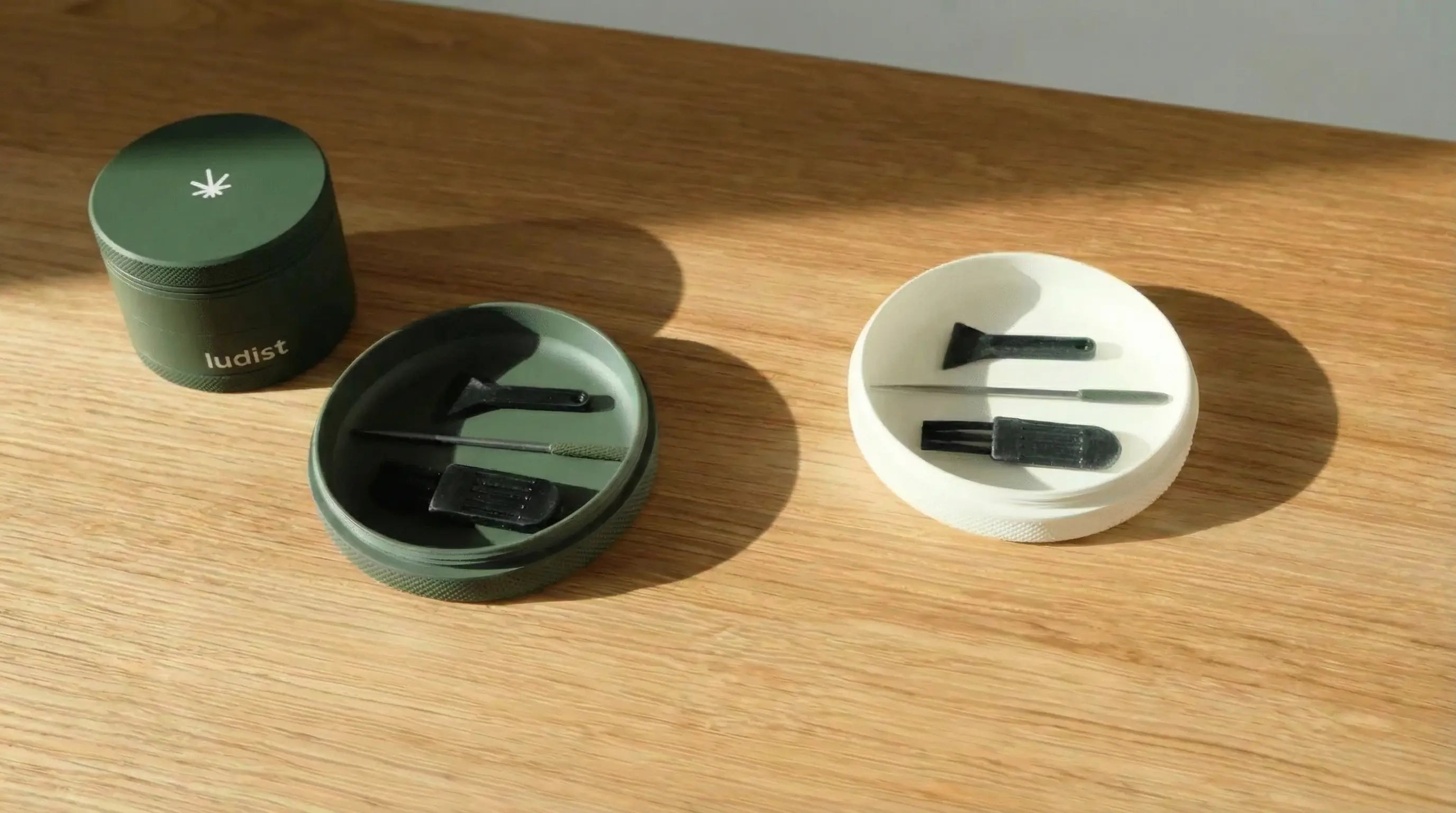
I keep a dedicated grinder cleaning kit in a small plastic container under my sink toothbrush, a dental pick, a jar of isopropyl, and paper towels. Having everything in one place means I actually clean my grinder regularly instead of postponing it because gathering supplies feels like too much effort.
Step 1: Disassemble and Freeze
Start by taking your grinder completely apart. Remove the lid, grinding chamber, screen, and kief catcher as separate pieces. Tap out all loose flowers and kief onto a clean surface. Save this material for immediate use since it's still potent; there's no need to waste good stuff.
Place all metal components in the freezer for 30-60 minutes. Freezing causes resin to contract and become brittle, separating it from metal surfaces. Cold temperatures make sticky buildup shatter instead of smear when brushed, which makes cleaning way easier.
Step 2: Brush and Soak in Alcohol
After freezing, tap each piece firmly over parchment paper or a rolling tray to dislodge frozen chunks. Use a stiff brush, like an old toothbrush, to sweep remaining particles from teeth and threads. Work over your collection surface to catch every kief particle.
When you clean grinder with alcohol, use a 90%+ isopropyl concentration for maximum effectiveness. Fill a glass jar or Ziploc bag with the alcohol and submerge all grinder parts. This freezer-plus-alcohol method represents the best way to clean grinder components without damaging metal surfaces or losing collected kief. The higher the alcohol percentage, the faster and more thoroughly it dissolves resin. Soak for 20-30 minutes, agitating occasionally to loosen stubborn buildup.
Step 3: Scrub, Rinse, and Dry
Remove pieces from alcohol and scrub with a toothbrush under warm water. The alcohol will have softened the remaining resin, allowing it to wash away easily. Pay special attention to threading where resin accumulates and causes difficult twisting.
Rinse thoroughly with hot water to remove all alcohol residue. Dry completely with a clean towel, then air dry for 15-20 minutes before reassembly. Any moisture left in a grinder promotes mold growth when fresh flowers contact wet surfaces.
Our Ludist Grinder features precision-machined threading that resists resin buildup better than rough-cut alternatives. The smooth surfaces and tight tolerances mean less frequent deep cleaning while maintaining perfect rotation even after months of daily use.

How to Clean Your Grinder Without Alcohol?
If you don't have isopropyl alcohol on hand or prefer natural cleaning methods, you can still get your grinder sparkling clean. Learning how to clean your weed grinder without alcohol requires understanding which temperature-based and natural cleaning methods work best for your grinder's material.
The best way to clean a weed grinder without alcohol combines freezing, hot water, and natural cleaners to break down resin through temperature changes and good old-fashioned scrubbing.
Boiling Water Method (Metal Grinders Only)
For metal grinders specifically, boiling water provides an alcohol-free deep clean. Here's how to clean a metal grinder with boiling water:
Step-by-step process:
-
Completely disassemble your grinder into all separate pieces
-
Bring a pot of water to a rolling boil
-
Place all metal parts in the boiling water for 5-7 minutes
-
Use tongs to remove hot pieces (they'll be very hot!)
-
Scrub immediately under warm running water while the resin is still soft
-
Dry completely before reassembling
The heat softens the resin while the water physically washes it away. The key is scrubbing right away while everything's still warm. This is when the resin comes off easiest.
When to Avoid Alcohol-Free Methods
Some cleaning situations require isopropyl alcohol for thorough results:
-
Heavy resin buildup: Severely clogged grinders need alcohol's dissolving power
-
Mold or bacterial growth: Alcohol sanitizes surfaces that soap cannot fully disinfect
-
Time constraints: Alcohol cleans faster than natural alternatives
-
Stubborn screen clogs: Mesh screens often need alcohol soaks for complete cleaning
Natural methods work best for light to moderate buildup with regular cleaning frequency. Once resin becomes extremely compacted, alcohol provides the only practical solution short of replacing the grinder.
Never boil plastic or acrylic grinders. The high temperature will warp these materials permanently and ruin your grinder. For plastic grinders, use warm (not boiling) soapy water instead. Mix dish soap with water as hot as your hands can comfortably handle and soak the pieces for 15-20 minutes.
Natural Cleaning Alternatives
Comparison of alcohol-free methods:
|
Method |
Best For |
Time Required |
Effectiveness |
Scent After Cleaning |
|
White Vinegar + Salt |
Metal grinders, moderate buildup |
30-45 min soak |
High |
Strong vinegar (rinse well) |
|
Baking Soda Paste |
Spot cleaning, all materials |
10 min + scrubbing |
Medium |
Odorless |
|
Lemon Juice |
Light to moderate buildup |
10-15 min soak |
Medium |
Fresh citrus |
|
Boiling Water |
Metal only, heavy buildup |
5-7 min |
Very High |
Odorless |
White vinegar method:
White vinegar offers a natural alternative to alcohol for cleaning metal grinders.
What you'll need:
-
Equal parts white vinegar and warm water
-
1 tablespoon coarse salt (for abrasive action)
-
Container for soaking
-
Stiff brush for scrubbing
How it works:
-
Mix equal parts white vinegar and warm water in a container
-
Add a tablespoon of coarse salt for extra scrubbing power
-
Soak your grinder pieces for 30-45 minutes
-
Scrub with a stiff brush
-
Rinse thoroughly with warm water
The vinegar's acidity dissolves resin while the salt provides mechanical abrasion to scrub it away. Just make sure to rinse thoroughly afterward vinegar has a strong smell that can transfer to your flowers if you're not careful.
Baking soda paste:
For spot cleaning without soaking the whole thing, baking soda paste is your friend.
Quick recipe:
-
3 parts baking soda
-
1 part water
-
Mix to form a thick paste
Application:
-
Apply directly to the resin buildup
-
Let's sit for 10 minutes
-
Scrub with a stiff brush
-
Rinse thoroughly
The mild abrasive action removes deposits without scratching metal or plastic surfaces. This is perfect for targeting specific problem areas without doing a full deep clean.
Lemon juice treatment:
Lemon juice provides citric acid that naturally breaks down sticky residue.
Two ways to use:
-
Light cleaning: Squeeze fresh lemon juice onto a cloth or brush and scrub affected areas
-
Heavy buildup: Soak pieces in pure lemon juice for 10-15 minutes, then brush
This method leaves a fresh citrus scent instead of chemical odors, which is a nice bonus. Plus, it's completely food-safe and natural.
How to Clean a Weed Grinder Screen?
The best way to clean a grinder screen involves soaking it in isopropyl alcohol, followed by gentle brushing to clear clogged mesh without damaging delicate wires.
The screen clogs faster than any other grinder component. Fine kief particles wedge into mesh openings, eventually blocking them completely. A clogged screen prevents kief from falling into the collection chamber, wasting the most potent part of your flower.
Remove the screen from your grinder. Many 4-piece grinders feature removable screens held by small clips or threading. Screens that don't remove easily should stay installed, forcing removal risks tearing the mesh.
Understanding how to clean a weed grinder screen properly means recognizing that alcohol penetration matters more than aggressive scrubbing. Soak the screen in 90%+ isopropyl alcohol for at least 30 minutes. For severely clogged screens, extend soaking to 2-3 hours or overnight. The alcohol needs time to penetrate and dissolve a compacted kief stuck deep in mesh openings.
After soaking, hold the screen under warm running water and gently brush both sides with a soft-bristled toothbrush. Brush in multiple directions to dislodge particles from every angle. Avoid excessive pressure that could tear mesh wires.
For stubborn clogs that resist brushing, use compressed air to blow particles through the mesh from behind. This works especially well after alcohol soaking when particles are loosened but not fully removed. Hold the screen over a sink and blast air through the collecting side to push debris out.
The freezer trick works on screens as well. After alcohol soaking, freeze the wet screen for 15-20 minutes. The frozen alcohol expands slightly, pushing against stuck particles and breaking them free from mesh fibers.
A proper grinder with high-quality stainless steel mesh resists clogging longer than cheaper aluminum screens. Our testing shows stainless screens maintain 80%+ airflow after six months of daily use, while budget aluminum screens drop to 40-50% airflow in the same timeframe.

Cleaning Kief Catcher Screens
The bottom screen separating ground flower from collected kief requires special attention:
-
Frequency: Clean this screen every 3-4 weeks with heavy use, every 2-3 months with occasional use
-
Method: Soak in alcohol, brush gently, rinse thoroughly, dry completely before reinstalling
-
Warning: Never use metal brushes or abrasive scrubbers that tear delicate mesh
Tip: Tap the screen gently while brushing to help dislodge particles from the underside
Some users avoid cleaning kief screens entirely, arguing that a thin resin coating actually helps filter smaller particles. This works short-term but eventually clogs the screen completely, requiring intensive cleaning to restore function.
How Do You Clean a Grinder Without Waste?
The secret to cleaning a grinder without losing your precious kief is this: Do all your collection before you introduce any liquids. Cannabis stuck in your grinder is concentrated THC and terpenes, basically, potent material you've already paid for.
Here's how to save it all.
Step 1: Dry Collection First
Before you even think about alcohol or water, start with a complete dry collection:
-
Disassemble your grinder over a clean surface
-
Tap every piece firmly to knock out loose particles
-
Let everything fall freely (no scraping or brushing yet)
-
Collect all the loose kief on parchment paper
This first pass captures the easiest material to save.
Step 2: The Freezer Trick
Freeze the disassembled grinder for 45-60 minutes. Here's why this works: cold temperatures crystallize resin and kief, making them release from surfaces way more easily than sticky, room-temperature buildup.
What happens in the freezer:
-
Resin becomes brittle instead of sticky
-
Kief stops clinging to metal
-
Everything crumbles off cleanly instead of smearing
Step 3: Brush and Collect
After freezing, use a clean, dry brush to sweep all surfaces over parchment paper or into a small jar. The frozen material will crumble off in small clumps rather than smearing everywhere.
Collect everything that falls during this stage. This is your good stuff.
Step 4: Strategic Scraping
Now comes selective scraping with a small tool (toothpick, dental pick, etc.):
-
Target visible resin chunks stuck to teeth
-
Focus on concentrated buildup in corners
-
Scrape carefully to collect material in one place
-
Don't spread it around (keep it together)
This scraped material looks dark and compressed, but it's fully usable. Don't throw it away.
Step 5: Now You Can Clean
Only after you've completed dry collection should you introduce cleaning liquids. At this point, whatever's left is too integrated with the metal to salvage practically. The alcohol wash removes resin you genuinely can't collect through mechanical means.
Bonus: Reclaim from Cleaning Alcohol
Want to go even further? Some users save the alcohol used for cleaning:
-
Pour the dirty alcohol into a shallow glass dish
-
Let it sit uncovered for 24-48 hours
-
The alcohol evaporates completely
-
Scrape up the concentrated resin left behind
This produces dark, potent concentrate from material that would otherwise wash down the drain. It's not pretty, but it works.
Maximizing Kief Recovery
Specific techniques increase kief collection before cleaning:
-
Nickel trick: Place a clean nickel in the grinding chamber before freezing. Shake the frozen grinder vigorously, the coin knocks kief off the teeth and walls, sending it through the screen
-
Brush selection: Use very soft brushes initially to collect loose kief, then progressively stiffer brushes for stuck material
-
Multiple freeze cycles: Freeze, collect, thaw, freeze again. Each cycle releases additional material as ice crystals form in different patterns
-
Screen tapping: While brushing the screen, tap it from underneath to vibrate stuck kief through the mesh openings
I was skeptical about the nickel trick until I tried it on my heavily used grinder. Three minutes of shaking after freezing produced a quarter gram of kief that had been stuck for months. That's roughly $5-7 worth of concentrate I would have washed away during standard alcohol cleaning.
How to Clean Metal Grinder With Boiling Water?
To clean a metal weed grinder with boiling water, use sustained high heat to soften and dissolve resin, while mechanical agitation from the boiling action physically dislodges particles from surfaces.
This method suits metal grinders exclusively; never attempt boiling with plastic, acrylic, or wooden grinders that warp or melt at high temperatures.
-
Fill a pot with enough water to fully submerge all grinder pieces. Use more water than seems necessary since evaporation reduces volume during boiling.
-
Bring water to a full rolling boil before adding grinder parts. Dropping pieces into cold water, then heating, doesn't clean as effectively because resin doesn't soften until the water reaches a high temperature.
-
Carefully lower metal pieces into boiling water using tongs or a slotted spoon. Add pieces one at a time to avoid splashing and to maintain boiling temperature.
-
Boil for 10-15 minutes for moderate buildup, extending to 20-25 minutes for heavily clogged grinders. The sustained heat penetrates deep into compacted resin that surface cleaning cannot reach.
-
While boiling, use a wooden spoon to occasionally move pieces around. This prevents resin from settling and re-adhering as it softens. The mechanical movement helps separate loosened particles from metal surfaces.
-
After boiling, remove pieces with tongs and immediately scrub under hot running water. The resin remains soft for only 60-90 seconds after leaving boiling water, so work quickly. Use a stiff brush to remove softened buildup while it's still pliable.
For extremely stuck resin, return pieces to boiling water for an additional 5-minute soak, then scrub again. Multiple boil-scrub cycles work better than one extended boil.

Boiling Water vs. Alcohol Method
Each cleaning approach offers distinct advantages:
|
Method |
Speed |
Thoroughness |
Cost |
Safety |
|
Boiling water |
20-30 min |
Good for heavy buildup |
Free |
Hot water hazard |
|
Isopropyl alcohol |
30-40 min |
Excellent for sticky resin |
$3-5 per bottle |
Flammable liquid |
|
Freezing + brushing |
60-75 min |
Good for light buildup |
Free |
No hazards |
Boiling works best when you lack isopropyl alcohol or prefer avoiding chemicals. Alcohol cleans more thoroughly with less physical effort but costs money and creates disposal concerns.
I alternate between methods depending on circumstances. Boiling serves as a quick midday clean when I need my grinder back in service immediately. Alcohol soaks the handle, and makes deep evening cleans when overnight drying time doesn't matter.
How to Clean a Sticky Grinder?
A sticky grinder simply means heavy resin buildup mixed with plant oils. Standard cleaning won't cut it; you need an aggressive approach: freeze it to make the gunk brittle, then dissolve it with alcohol.
The Freeze + Scrape Method
Why freezing works: Frozen resin loses its adhesive properties and becomes brittle instead of sticky.
How to do it:
-
Disassemble completely
-
Freeze for a minimum of 60 minutes (overnight for extreme cases)
-
Work quickly while still cold
-
Use a metal dental tool to chip away thick deposits
-
Frozen material fractures cleanly instead of smearing
The Alcohol + Salt Soak
|
Ingredient |
Purpose |
Amount |
|
99% isopropyl alcohol |
Dissolves oils completely |
Enough to submerge |
|
Coarse salt (kosher/sea salt) |
Physical scrubbing action |
1 tablespoon |
|
Soak time |
Breaks down sticky residue |
45+ minutes |
Shake it up: Every 10 minutes, shake the container vigorously. Salt crystals scrub while alcohol dissolves.
For Stubborn Threading
Threads trap resin that soaking alone can't remove:
-
Apply alcohol directly to the threads
-
Let it penetrate for 5-10 minutes
-
Scrub with a stiff brush
Double-Soak Technique
For really sticky grinders, one soak isn't enough:
-
First soak: Breaks down surface layers (45 min + scrub)
-
Second soak: Penetrates deeper buildup (45 min + scrub)
Prevention Tips
A quality weed grinder with diamond-cut teeth and smooth anodized surfaces resists sticky buildup better than rough-machined alternatives. Precision engineering prevents microscopic crevices where resin anchors.

Preventing Future Stickiness
Maintenance habits reduce how quickly grinders become sticky:
-
Clean every 2-4 weeks instead of waiting months
-
Don't overload the grinding chamber—process smaller amounts more frequently
-
Grind slightly drier flower when possible—excess moisture increases resin production
-
Apply a tiny drop of food-grade mineral oil to the threading every few months
-
Store grinders upright to prevent resin from pooling in one area
Sticky grinders that seize completely sometimes require pliers to separate pieces. This risks stripping, threading, or cracking chambers. Regular cleaning prevents damage from forced disassembly.
How to Get Grinder Unstuck?
If your grinder is stuck, don't force it, as you'll strip the threads. Use temperature changes and gentle pressure instead.
Why grinders stick: Dried resin cements threads together. Forcing it = permanent damage.
Quick Fix Methods (Try in Order)
1. Rubber grip twist:
-
Wrap rubber bands around stuck sections
-
Apply steady rotational pressure (no jerking)
-
Use jar-opener grips for better purchase
2. Hot water method:
-
Run hot water over the stuck section for 30-45 seconds
-
Heat softens resin + expands metal slightly
-
Creates microscopic gaps that break the bond
3. Freezer method:
-
Freeze the entire grinder for 30 minutes
-
Metal contracts at different rates
-
Differential contraction breaks the resin seal
For Severely Stuck Grinders
Heat-cold cycling:
-
Hot water 30 sec → Freeze 10 min
-
Repeat cycle 3-4 times
-
Expansion/contraction works the resin loose
Tap + twist:
-
Tap around the circumference with a rubber mallet
-
Twist gently while tapping
-
Vibration disrupts resin adhesion
Last resort (metal only):
-
A drop of WD-40 around the seam
-
Let penetrate overnight
-
Clean thoroughly before use
When Grinders Need Replacement?
Some situations indicate that replacement makes more sense than repair:
-
Stripped threading: Smooth threads that no longer catch indicate permanent damage from forcing stuck pieces
-
Cracked chambers: Visible cracks compromise structural integrity and risk complete failure mid-use
-
Bent teeth: Damaged teeth no longer grind effectively and can't be straightened without specialized tools
-
Broken magnets: Weak or missing magnets fail to hold lids securely, spilling flower during use
Investing in a properly designed grinder, like our Ludist Grinder, prevents most sticking issues. The precision machining and quality materials resist common failure modes that plague cheaper alternatives.

Cleaning Different Grinder Materials
The best way to clean your grinder varies significantly based on construction materials; each type requires specific approaches to avoid damage while achieving thorough cleaning.
How to Clean Metal Weed Grinder?
Metal grinders tolerate the most aggressive cleaning methods. Aluminum and stainless steel withstand alcohol, boiling water, freezing, and abrasive scrubbing without damage. Use 90%+ isopropyl alcohol freely on metal grinders. The alcohol won't corrode metal surfaces or weaken structural integrity. Soak overnight for extremely dirty pieces without concern.
Boiling works exceptionally well on metal grinders. The sustained high heat causes no warping, discoloration, or weakening. Extended boiling times handle severe buildup that defeats other methods.
Abrasive tools like wire brushes or steel wool can clean metal grinders, though they may scratch surfaces. This creates microscopic grooves where future resin accumulates more readily. Stick to nylon or natural bristle brushes for regular maintenance.
How to Clean Plastic Grinder?
Plastic grinders require gentle treatment that avoids chemicals and temperature extremes:
-
Never use isopropyl alcohol on plastic grinders; the solvent weakens plastic bonds and causes cracking or disintegration over time. Acrylic windows in metal grinders also suffer alcohol damage.
-
Avoid boiling water entirely. Temperatures above 150°F warp most plastic grinders permanently. Use warm (not hot) soapy water instead, water that your hands can comfortably tolerate.
-
Freezing helps with plastic grinders, but use it sparingly. Frozen plastic becomes brittle and cracks if dropped or knocked. Handle frozen plastic pieces very gently during cleaning.
My experience from cleaning plastic grinders tells me that warm water with mild dish soap works best. In case you want to follow my advice, make sure to soak pieces for 20-30 minutes, scrub with soft brushes, rinse thoroughly, and dry completely. This gentle approach cleans adequately without making any damage to the plastic material.
How to Clean Wooden Grinders?
Wooden grinders present unique challenges since wood absorbs moisture and can warp.
Never soak wooden grinders in any liquid for extended periods. Water absorption causes swelling and warping that ruins precise tolerances.
Clean wooden grinders primarily through dry methods, brushing, scraping, and compressed air. Use minimal moisture only when necessary.
For stubborn buildup on wood, apply a small amount of isopropyl alcohol to a cloth and wipe affected areas quickly. Don't let alcohol sit on wood surfaces where it can penetrate the grain.
Food-grade mineral oil helps maintain wooden grinders. A light monthly oiling prevents drying and cracking while making future cleaning easier.
How Often Should You Clean Your Grinder?
How often you should clean a weed grinder depends entirely on your usage frequency and flower stickiness; If you use it daily, you’ll need to clean every 2-3 weeks, while occasional uses extend to monthly or bi-monthly maintenance without any performance loss.
Cleaning frequency directly impacts grinder performance and flower quality. Too infrequent cleaning causes buildup that affects every grinding session. Too frequent cleaning wastes time without meaningful benefit.
For daily users grinding 0.5-1 gram daily, clean thoroughly every 2-4 weeks. This frequency prevents heavy accumulation while avoiding excessive time investment. Quick brush-outs after each session extend deep clean intervals.
Moderate users grinding 2-4 times weekly should clean monthly. The slower accumulation rate allows longer intervals between intensive cleaning without noticeable performance degradation.
Occasional users grinding less than twice weekly can extend cleaning to every 6-8 weeks. Light use produces minimal buildup that doesn't immediately impact grinding quality.
Heavy users processing multiple grams daily may need weekly or even daily cleaning. The rapid resin accumulation from constant use quickly degrades performance without frequent maintenance.
Signs Your Grinder Needs Immediate Cleaning
Specific symptoms indicate that cleaning cannot wait:
-
Difficult rotation: Increased resistance when twisting indicates resin buildup on the threading
-
Reduced kief production: Clogged screens prevent kief from reaching collection chambers
-
Uneven grind: Resin-coated teeth produce inconsistent particle sizes instead of a uniform texture
-
Visible buildup: Dark deposits visible between teeth or on walls signal heavy accumulation
-
Sticking lid: Difficulty removing the lid suggests resin bonding pieces together
-
Flavor changes: Old resin contaminating fresh flower creates harsh, stale flavors
A well-maintained grinder from a reputable manufacturer like Ludist requires less frequent cleaning than budget alternatives. Our best weed grinder guide explains how quality construction reduces maintenance needs through superior materials and precision engineering.

I once delayed cleaning for six weeks during a busy period. The grinder still functioned but produced noticeably inferior results, including chunky, uneven grind, reduced kief collection, and harsh flavor from contaminated flowers. The 30-minute cleaning immediately restored perfect operation and smooth flavor.
Maintaining Your Clean Weed Grinder
The best way to clean your weed grinder extends beyond the actual cleaning process to include daily habits that minimize future buildup and extend intervals between those intensive deep cleans.
Proper Drying and Storage
After cleaning, dry all pieces completely before storage. This step is non-negotiable. Even microscopic moisture creates the perfect environment where mold spores thrive and multiply. Towel dry first to remove visible water, then air dry for a minimum of 30 minutes before reassembly. For extra protection, leave pieces on a clean towel overnight to ensure complete drying, especially in humid climates where moisture lingers longer.
Store grinders in cool, dry locations away from heat sources like ovens, radiators, or sunny windowsills. Heat softens resin and increases its transfer rate to grinder surfaces, making future cleaning much harder. Room temperature storage keeps resin solid and less adhesive, preventing that sticky buildup that eventually seizes threads and clogs screens.
Daily Maintenance Habits
Don't leave ground flowers sitting in grinders for extended periods. This is one of the biggest mistakes people make. Ground material continues releasing oils and moisture that coat internal surfaces even when the grinder sits closed. These oils act like glue, attracting more residue with each use. Grind only what you'll use immediately, then empty the chamber completely.
Brush out chambers after each use with a small, stiff brush. This simple 30-second habit prevents the compacted buildup that eventually requires intensive cleaning sessions. A quick brush removes approximately 80% of residue before it hardens and chemically bonds to metal surfaces. Think of it like flossing your teeth; a little daily effort prevents major problems later.
Advanced Prevention Techniques
The coin technique works surprisingly well for preventing screen clogging. Drop a clean nickel or dime into the grinding chamber and give it a few shakes before each use. The coin acts like a tiny agitator, knocking kief through the screen mesh instead of letting it compact on top and block airflow. Replace the coin every few months to keep it clean and effective.
Apply minimal lubricant to the threading every 3-4 months to prevent seizure. Use just a tiny drop of food-grade mineral oil on male threads, emphasis on "tiny" because excess oil can contaminate your flower. Spread it evenly, then wipe away any visible excess with a clean cloth before reassembly. This creates a protective barrier that prevents resin from bonding directly to threads.
Consider rotating between two grinders if you use cannabis daily. This rotation strategy allows one grinder to rest and be thoroughly cleaned while the other handles active duty. The alternating use significantly extends both grinders' functional lifespans by reducing wear and giving you time for proper maintenance without rushing. Plus, you'll never be stuck without a clean grinder when you need one.

Quick Maintenance vs. Deep Cleaning
Understanding the difference between a quick maintenance session and a full deep clean will save you a ton of time:
Quick maintenance (5 minutes):
-
Brush out loose particles
-
Tap pieces to dislodge kief
-
Wipe visible resin with a dry cloth
-
Check threading for early buildup
Deep cleaning (30-45 minutes):
-
Complete disassembly
-
Freezing or soaking
-
Intensive scrubbing
-
Alcohol treatment
-
Thorough rinsing and drying
Weekly quick maintenance significantly reduces deep cleaning frequency. Five minutes weekly prevents the accumulation that requires 45 minutes monthly to address.
Save Your Weed Grinder Investment
Knowing how to properly clean a weed grinder protects your investment in quality cannabis accessories while ensuring optimal performance that preserves flower potency and flavor.
Regular cleaning prevents the common problems that force grinder replacement, stripped threads from forcing stuck pieces, cracked chambers from excessive pressure, and damaged teeth from grinding against compacted resin instead of fresh flower.
The 20-40 minutes invested in proper cleaning extends grinder lifespan by years compared to neglected grinders that fail within months. This time investment pays dividends through consistent performance and avoided replacement costs.
Our Ludist Grinder exemplifies how quality construction reduces cleaning requirements while delivering superior performance that justifies the maintenance time you do invest. The precision machining and premium materials mean your cleaning efforts restore performance to factory-new standards rather than just "good enough."
The same discipline applies to the rest of your setup. If you also smoke from a pipe, our guide on how to clean a weed bowl covers every method for every material, from glass to silicone to metal.


Leave a comment
This site is protected by hCaptcha and the hCaptcha Privacy Policy and Terms of Service apply.