
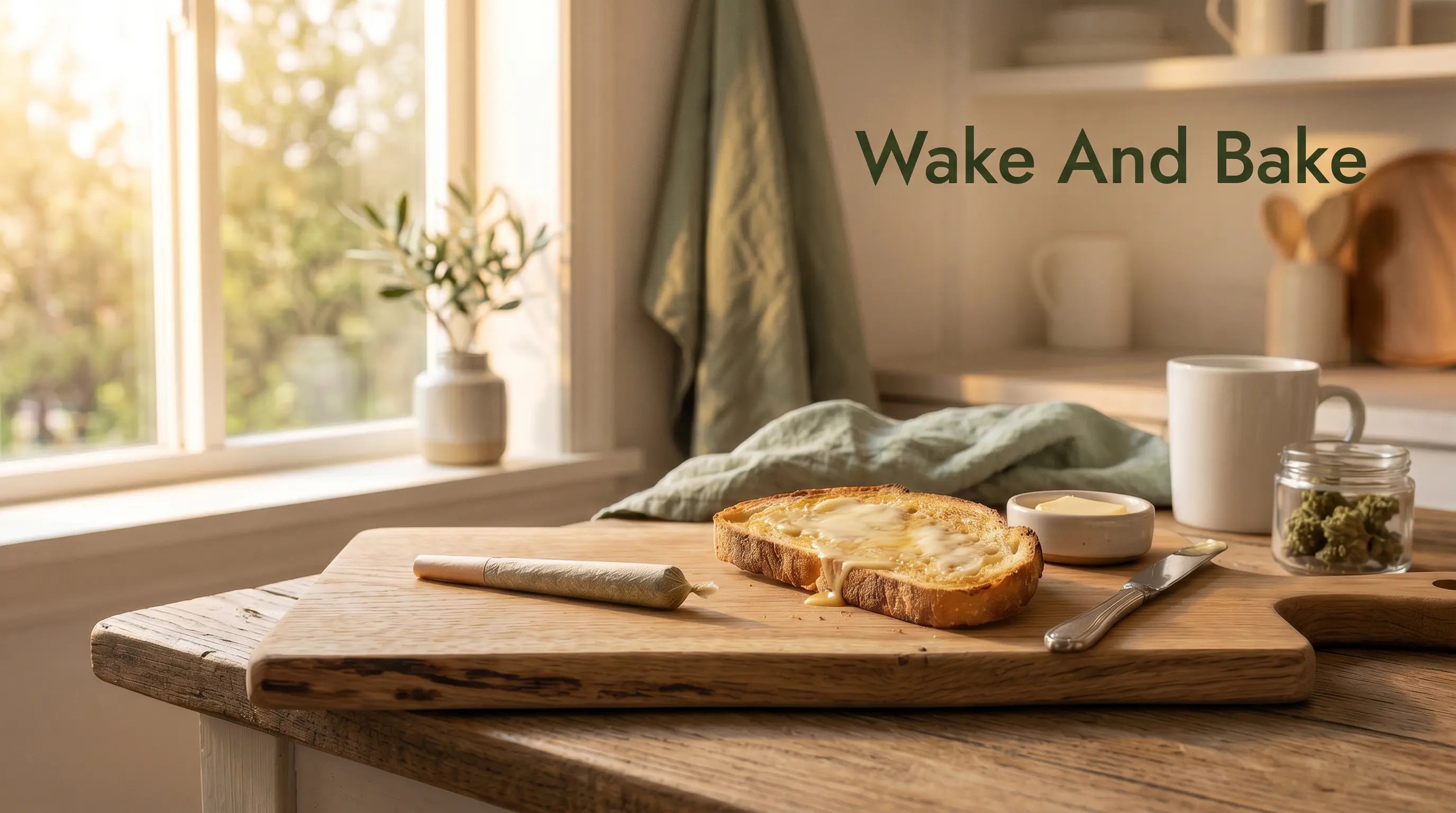
Wake and Bake - What It Means and How to Do It Right
Wake and bake is one of those phrases that sounds self-explanatory but carries more nuance than most people expect. If you've ever wondered why that first session of the day hits harder than any evening smoke, or whether making it a morning habit is actually a good idea, you're looking at the right article. I'll cover the meaning, the real science behind the stronger high, how to pick the right strain, and what to watch out for, including the risks most guides skip entirely.
Wake and Bake Meaning - What the Term Actually Means
Wake and bake means consuming cannabis shortly after waking up, typically before eating breakfast or starting your daily responsibilities. The "wake" part is obvious. The "bake" part comes from baked, longstanding slang for being high on cannabis. Put them together and you get a phrase that pretty much writes its own definition.
The term has a clear phonetic origin. Dictionary.com traces it to "Shake and Bake," the popular instant food coating product, with the phrase adapted into cannabis slang following that same rhythm. Merriam-Webster documents the first written use in 1987, though morning cannabis use itself predates the term by decades, loosely tied to the 1960s and 1970s counterculture. By the late 1980s and through the 1990s, it spread through stoner culture, music, and comedy until it became mainstream enough to earn a formal entry in Dictionary.com's slang dictionary.
Today, the term is genuinely mainstream. Kevin Smith launched an internet cooking show called "Wake & Bake" in 2017. Cannabis-friendly hotels in Colorado market "Bud + Breakfast" packages. The phrase appears in memes, GIFs, and on basically every cannabis forum you've ever visited.
Worth knowing: "bake and wake" (reversed order) occasionally appears online but is not a recognized search term and carries no distinct meaning. The only accepted form is wake and bake.
If you're new to cannabis consumption in general, our how to smoke weed guide covers the basics of different methods and what to expect from each.

Why Wake and Bake Feels Stronger - The Science Behind the Morning High
This is where things get genuinely interesting, and where most guides either oversimplify or get the science wrong.
The Empty Stomach Effect
The most reliable explanation for the stronger morning high is simple physiology: your stomach is empty. After six to eight hours without food, THC faces almost no metabolic competition in your gut and bloodstream. The mechanism mirrors what happens when you take any medication on an empty stomach - absorption is faster, onset is quicker, and peak effects are more intense.
Eating a meal, especially one high in healthy fats, slows THC absorption but also stabilizes and extends the experience. Eating after your session (rather than before) helps level out the high and sustain it longer without that jarring spike. Neither approach is wrong. It's more about how controlled you want the onset to feel.
Circadian Rhythms and Your Endocannabinoid System
Your body's endocannabinoid system follows a 24-hour circadian pattern, and this affects how morning cannabis lands. 2-arachidonoylglycerol (2-AG), one of the two primary endocannabinoids, reaches its lowest concentration during mid-sleep and then rises rapidly in the morning, peaking in the early-to-mid afternoon. Morning cannabis use lands right as 2-AG is on the rise, which may contribute to the heightened sensitivity some people notice.
One claim that circulates constantly in cannabis media is that anandamide (the so-called "bliss molecule") is three times higher after waking, which supposedly amplifies morning THC effects. This is not accurate. The Hanlon et al. 2020 peer-reviewed study measured 24-hour anandamide profiles and found its lowest point (nadir) occurs around 10:00 AM, with peaks at approximately 2:00 AM and 3:00 PM. The morning anandamide amplification story is appealing but not supported by the most rigorous research.
Cortisol and Tolerance
Cortisol spikes naturally within 30 to 45 minutes of waking as part of the Cortisol Awakening Response (CAR), which helps your body transition to alertness. Occasional cannabis users who consume in the morning may see an acute THC-driven cortisol elevation on top of that. Over time, habitual morning users tend to develop a blunted CAR, meaning the cortisol spike flattens out. This is part of how tolerance builds, and why the same morning dose that floored you six months ago now feels routine.
Wake and Bake Strains - How to Pick the Right One for the Morning
Not every strain is a good fit for the morning, and picking the wrong one is the fastest way to spend three hours glued to the couch when you had actual plans.
The Terpene Approach
The sativa/indica split is a familiar shorthand but an imprecise one. Terpene profile and cannabinoid ratios give you a much more useful guide for morning strain selection.
Look for strains high in:
-
Limonene - associated with uplifting effects through dopamine and serotonin influence; common in citrus-forward strains
-
Pinene - linked to memory support through acetylcholine influence; associated with clearer-headed effects
-
Terpinolene - often described as energizing with a bright, floral-herbal profile
Avoid strains dominant in myrcene, which is associated with sedative, couch-lock effects. High-myrcene strains are a much better fit for evening or sleep use.
Commonly Recommended Morning Strains
Based on terpene profiles and community consensus, these strains are regularly cited as good morning options:
-
Sour Diesel - limonene-forward, energizing, cerebral
-
Durban Poison - high terpinolene, often described as the "espresso" of cannabis
-
Jack Herer - balanced, pinene-rich, creative
-
Green Crack - sharp focus, strong limonene
-
Pineapple Express - lighter, mood-lifting, social
-
Strawberry Cough - gentle, uplifting, manageable potency
-
Alaskan Thunder Fuck - energizing, full-body without heavy sedation
If you're weighing strain choice alongside the right equipment for a smooth morning grind, our guide on the best weed grinder options breaks down what actually matters in a grinder for different use cases.

Is Wake and Bake Bad for You - The Honest Answer
"Is it bad?" is the question most people are really asking when they search this topic. The honest answer is: it depends on how you're doing it, how often, and why.
What the Research Shows
A 2023 longitudinal study of 409 young adults defined wake and bake as cannabis use within 30 minutes of waking. Key findings:
-
Wake-and-bake episodes occurred on 11.2% of all cannabis use days in the sample
-
35.4% of cannabis users reported at least one wake-and-bake episode during the study
-
Participants were high for an average of 2.65 hours on wake-and-bake days vs. 2.15 hours on other cannabis days, a 23% increase
-
Despite higher consumption, the study found no significant increase in acute negative consequences (nausea, anxiety, psychotic symptoms) on wake-and-bake days
-
Wake-and-bake use was 2.15 times more likely on weekends than on weekdays
-
Higher wake-and-bake frequency correlated with higher cannabis use disorder (CUD) scores and social anxiety as a motive for use
A separate 2016 study published in Addiction Research and Theory found that morning marijuana users had higher daily consumption rates, greater withdrawal risk, and more personal problems compared to non-morning users. This addresses long-term patterns rather than individual day-level outcomes, which is a meaningful distinction.
The takeaway: Occasional wake-and-bake sessions carry moderate risk for most people. Daily habitual morning use is a different picture, particularly when it's motivated by anxiety management or social numbing rather than deliberate recreation.
The Driving Risk Is Real
This one deserves its own paragraph. The 2023 study found that 35.8% of wake-and-bake days involved driving under the influence of cannabis, compared to 15.7% on regular cannabis use days. That is a 1.70 times greater odds of impaired driving on wake-and-bake days. THC's psychomotor impairment (reaction time, coordination) can persist for five or more hours after consumption. In 2018, approximately 12 million U.S. residents aged 16 and older reported driving under the influence of marijuana in the past 12 months. If your morning involves a commute, this matters.
For a balanced look at how cannabis interacts with productivity and cognitive function throughout the day, our article on weed and productivity covers what the evidence actually says.

Coffee, Cannabis, and the Morning Combination
A lot of people pair their wake and bake with coffee out of habit. It seems logical: cannabis for the mood lift, caffeine for the focus. Research suggests this combination is not as complementary as it feels.
One study found that the combination of caffeine and THC impaired memory more than THC alone. The stimulant effects of caffeine may amplify certain cognitive disruptions rather than counteract them. Our full breakdown of coffee and cannabis goes deeper into what the research shows about this combination and when it becomes counterproductive.
If you want to maximize a morning session for creativity or light tasks, you're better off skipping the coffee, or at least pushing it back an hour or two.
How to Wake and Bake - A Practical Guide
Doing this well is about preparation and honest self-assessment. Here's what I've found works, especially when pairing it with lower-demand creative mornings:
-
Choose the right day. Reserve wake and bake for days with no time-sensitive or high-stakes obligations. Weekends, work-from-home creative days, or genuine days off. Not a Monday before a 9 AM meeting.
-
Set up the night before. Have water on your nightstand, food accessible, and your setup ready. Morning friction is real, and fumbling around while already high is avoidable.
-
Pick a sativa-leaning, low-myrcene strain. Refer to the strain list above. Limonene and pinene terpenes are your friends in the morning.
-
Start with roughly half your usual dose. The empty-stomach effect is genuine. The stronger onset can catch you off guard if you go in at full volume.
-
Eat something with healthy fats before or shortly after. This slows and stabilizes absorption. A few bites of avocado toast, eggs, or nuts is enough. You don't need a full meal.
-
Drink water. Cannabis dehydrates. Cottonmouth is uncomfortable and dehydration amplifies fatigue. Keep a large glass nearby.
-
Skip the coffee, at least initially. The THC-caffeine memory impairment effect is worth avoiding if you have anything productive planned.
-
Plan low-demand activities. Music, a slow walk, reading, light creative work, or cooking all pair well with a morning session. Avoid anything requiring sharp decision-making, driving, or time pressure.
-
Do not drive. This is non-negotiable. Impairment lasts significantly longer than the subjective high.
A good grinder is worth having ready the night before. I keep our Ludist Grinder on my rolling tray specifically so the morning prep takes thirty seconds instead of five minutes of fumbling. The teeth stay sharp through consistent daily use, and it grinds clean every time with no sticking.

How to Store Your Wake-and-Bake Supply
If you're making morning sessions a regular part of your routine, how you store your flower matters more than most people realize. Cannabis degrades quickly when exposed to light, heat, air, or humidity fluctuations. A strain that was perfect two weeks ago can be noticeably less potent and flavorful if it's been sitting in a plastic bag on your nightstand.
For daily users, proper storage is a practical decision, not an aesthetic one. Our guide on keeping weed fresh covers the specific conditions that preserve potency and flavor, and why UV exposure is one of the main culprits in premature degradation.
The Ludist Stash Jar uses a borosilicate glass body with a soft-touch silicone sleeve that blocks all UV rays, an airtight aluminum cap, and holds up to an ounce of flower. It's designed specifically to solve the light and air exposure problem in a way that looks good sitting on a shelf. I've used ours for several months now, and the difference in how flower holds up compared to the clip-seal bags I was using before is not subtle.
If you're curious about how long your supply typically stays at its best under different storage conditions, our weed freshness timeline article breaks that down with practical numbers.

Wake and Bake Culture - Memes, Context, and How It Went Mainstream
The term "wake and bake" carries a specific cultural weight that goes beyond its literal meaning. In meme culture, it's shorthand for a particular kind of relaxed, low-pressure morning that most people associate with weekends and cannabis-friendly social circles. On TikTok, Pinterest, and Tenor, wake and bake content ranges from humor about being productively useless before noon to earnest morning ritual content.
The generational shift in how the term is used is notable. In the 1990s, it was purely countercultural slang. By the 2010s, it had entered mainstream comedy. By the 2020s, it appears in hotel marketing, cooking shows, and mainstream press. According to the 2017 Global Drug Survey, approximately 22% of American cannabis users consume cannabis within 10 minutes of waking, the highest rate of any country surveyed. Mexico (18.4%), Greece (15.9%), Canada (14.9%), and Brazil (14.3%) follow.
The normalization of the term does not erase the underlying behavioral patterns it describes. Culture mainstreaming a word does not change what the practice means for daily routines.
For a more complete morning setup, a dedicated rolling tray keeps your workspace organized and contained. The best rolling trays guide covers what to look for if you're comparing options.

The Wake-and-Bake Habit - When It Works and When It Doesn't
Morning cannabis use sits on a spectrum. On one end: an occasional, intentional weekend session with a good strain, no obligations, and genuine enjoyment. On the other end: a daily first-thing habit driven by anxiety, withdrawal avoidance, or the need to feel functional before facing the day.
The research distinguishes between these meaningfully. The 2023 PMC study found no significant spike in acute negative consequences on individual wake-and-bake days. The 2016 Addiction Research and Theory study found that habitual morning users showed higher consumption rates, greater withdrawal risk, and more personal problems over time. These findings address different time scales and should not be flattened into a single verdict of "bad" or "fine."
Medical cannabis patients represent a distinct category. Morning dosing for chronic pain, appetite stimulation in cancer and HIV treatment, and anxiety management are legitimate uses with different risk profiles than recreational daily habit formation. Healthcare consultation is always the right call in medical contexts.
The clearest behavioral signal worth monitoring is motivation. If morning cannabis use is something you look forward to occasionally, it tends to stay in the recreational category. If skipping it feels necessary rather than optional, that shift is worth paying attention to.
Our Ludist Stash Box is designed for daily users who want everything in one organized place - grinder, flower, papers, lighter, and long items - in a smell-proof, child-proof container that looks like a handsome wooden box from the outside. It helps keep the ritual intentional and the setup clean, which I've found makes a real difference in how a morning session starts.

Making the Most of Your Morning Sessions - What Actually Works
The best wake-and-bake sessions I've had share a few common qualities: low time pressure, a reliable setup that's ready the night before, good strain selection, and something low-demand but genuinely enjoyable to pair it with.
The worst ones have involved coffee on an empty stomach, too much product, and something that needed to get done within two hours. That combination is a reliable recipe for an anxious, uncomfortable morning.
A few things that consistently improve the experience:
-
Keep your setup minimal and ready. The fewer decisions you make in the moment, the better. Grinder, flower, tray, water, and a set playlist.
-
Calibrate dose downward from your evening baseline. The morning high is real and stronger. Start lower and wait before going further.
-
Pair with something absorbing but low-stakes. Cooking a slow breakfast, going for a walk, listening to an album start to finish, or doing something creative with your hands all work well.
-
Protect your sleep schedule. Daily morning cannabis use that shifts your wake time earlier (to get more session time in) is a warning sign worth noting.
If you want to understand your options for efficient morning prep without a traditional herb grinder, our article on grinding weed by hand covers the practical alternatives and where they fall short.

Leave a comment
This site is protected by hCaptcha and the hCaptcha Privacy Policy and Terms of Service apply.