
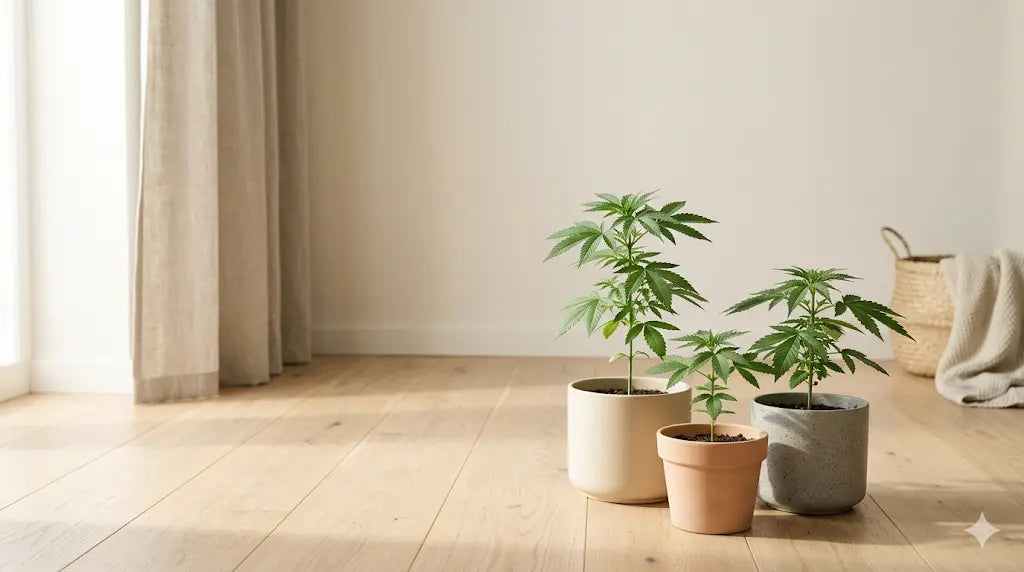
Weed Plants - A Complete Guide to Cannabis Types, Botany, and Growth Cycles
Weed plants have been cultivated for roughly 12,000 years, making cannabis one of the oldest domesticated crops in human history. Yet most people who use or grow them have only a surface-level understanding of what these plants actually are, how they produce cannabinoids, or why they differ so dramatically by variety. This guide covers the full picture: the botany, the life cycle, the chemistry, and what you need to know before you decide to grow your own.
Understanding Weed Plants - Botany, Classification, and Origins
Weed plants belong to the genus Cannabis, which sits inside the family Cannabaceae, also known as the hemp family. This family contains roughly 170 species, including Humulus (hops, the same plant used in beer brewing). Cannabis and hops share a common ancestor that diverged approximately 27.8 million years ago.
The Cannabaceae classification was consolidated through modern genetic analysis. Earlier taxonomists had split the family across Urticaceae and Moraceae, but DNA evidence moved everything under one umbrella.
The geographic origin of the genus is the northeastern Tibetan Plateau. Fossil pollen records show cannabis spreading to Europe somewhere between 1.2 and 1.8 million years ago. First domestication happened in East Asia during the early Neolithic period, and the earliest written record of cannabis use is attributed to Chinese Emperor Shen Nung in 2727 BC.
The word ganja itself traces back to Sanskrit (गञ्जा, gañjā), used in ancient South Asia. Our guide on the cannabis leaf anatomy breaks down the plant's physical anatomy in more detail if you want to go deeper on leaf structure and identification.
Weed Plants - Male, Female, and Why It Matters
Cannabis is dioecious, meaning it produces separate male and female plants. This distinction is critical if you're growing for consumption, because only female plants produce the cannabinoid-rich flowers you're after.
How to Identify Sex Early
Sex organs appear at the nodes (the points where branches meet the main stem) between weeks 4 and 6 of the vegetative stage. Here's what to look for:
-
Male plants: Small, round pollen sacs clustered at the nodes. No white hairs.
-
Female plants: Teardrop-shaped calyxes with two white hair-like stigmas (pistils) emerging from the node.
Remove male plants immediately unless you're intentionally breeding. A single male plant can pollinate an entire female crop, and pollination reduces cannabinoid content in female flowers by up to 56%.
Sinsemilla (Spanish for "without seeds") refers specifically to unfertilized female buds. These produce significantly higher THC concentrations than pollinated females, which is exactly why commercial and home growers keep males and females separated.
A common misconception is that male plants are worthless. They're not. Males are essential for breeding programs, and they can produce hemp fiber and seeds. The context matters.
Weed Plants - Types and Varieties
There are three main types of cannabis plants, each with distinct growth patterns.
Cannabis Sativa
Carl Linnaeus first formally classified Cannabis sativa in 1753. Sativa plants grow tall, sometimes reaching up to 20 feet in outdoor conditions. They have long, narrow fan leaves and longer flowering periods, typically 10 to 16 weeks. Sativa genetics tend to dominate in equatorial growing regions where long growing seasons support their extended development.
Cannabis Indica
Cannabis indica was named in 1785. Indica plants are shorter and bushier than sativas, with broader, darker leaves. Their flowering period is considerably shorter, usually 8 to 9 weeks. The compact growth structure makes them more practical for indoor growing.
One thing worth clarifying upfront: the popular belief that indica = sedating and sativa = energizing is a botanical oversimplification. These are growth-pattern classifications, not reliable predictors of effects. Actual effects depend on the cannabinoid and terpene profile of the specific cultivar, not just its taxonomic classification.
Cannabis Ruderalis
Cannabis ruderalis is the smallest type, rarely exceeding 2.5 feet. It originates from Russia and Eastern Europe and is unusual because it's autoflowering: it flowers based on age rather than changes in light cycle. This characteristic has made ruderalis genetics valuable in breeding programs because crossing ruderalis with photoperiod strains produces autoflowering hybrids that are easier to manage indoors.
Genetically, sativa and indica are nearly identical, with a mean genetic difference of just 0.406% - comparable to the difference between plant varieties of the same species. Our cannabis strain types guide goes deeper on how to choose between them based on your actual goals.

Weed Plants - Cannabinoids and What They Do
The cannabis plant contains approximately 483 identifiable chemical constituents, with over 100 cannabinoids identified across 11 subclasses. The two you need to understand first are THC and CBD.
THCA and the Decarboxylation Process
Here's something most people don't know when they first start learning about cannabis: fresh cannabis flowers don't contain THC. They contain THCA (tetrahydrocannabinolic acid) and CBDA (cannabidiolic acid), which are the acidic precursors. These compounds convert to THC and CBD only through decarboxylation, which happens when you apply heat. That's why eating raw cannabis doesn't produce psychoactive effects.
THC is the sole psychoactive cannabinoid. It binds strongly to CB1 receptors in the endocannabinoid system. CBD does not bind directly to CB1 or CB2 receptors - it modulates the endocannabinoid system indirectly and does not produce intoxication.
Plant Cannabinoids and the Endocannabinoid System
Plant cannabinoids (phytocannabinoids) interact with the human endocannabinoid system, which runs throughout the central and peripheral nervous system. CB1 receptors are concentrated in the brain and central nervous system. CB2 receptors are more prevalent in immune tissues.
Understanding how plant cannabinoids work together requires understanding the entourage effect - the idea that cannabinoids and terpenes work synergistically, producing effects that no single isolated compound replicates.
Weed Plants - Terpenes and Trichomes
Here are terpenes and trichomes explained.
Terpenes
Cannabis produces over 120 identified terpenes. These are the aromatic compounds that give different cultivars their distinctive smell and flavor profiles. Beyond sensory experience, terpenes appear to contribute to the overall effect through the entourage effect. Our terpenes guide covers the most important ones and what they actually do.

Trichomes
Trichomes are the resin glands on cannabis flowers and leaves. The plant produces three morphologically distinct types:
-
Bulbous trichomes - smallest, distributed across plant surfaces
-
Capitate-sessile trichomes - more numerous, with a small head
-
Capitate-stalked trichomes - the largest and most important; contain 12-16 secretory disk cells and produce the highest concentration of cannabinoids and terpenes
Trichomes serve a dual biological purpose: they protect the plant from UV light and defend against insects, fungi, and herbivores. For growers, trichome color during flowering is the most reliable harvest indicator. Clear trichomes mean too early. Milky white means peak THC. Amber means THC is beginning to degrade.
The Full Weed Plants Life Cycle
Growing cannabis indoors from seed to harvest takes anywhere from 10 to 32 weeks, depending on strain type. Here's the complete cycle:
-
Germination (3-14 days): The seed absorbs moisture and the taproot emerges. Needs warm, moist conditions.
-
Seedling stage (2-3 weeks): First true leaves appear. Optimal conditions: around 18 hours of light, approximately 77°F, 60% humidity.
-
Vegetative stage (3-16 weeks): Rapid growth - up to 2 inches per day under optimal conditions. Light requirement: 16-18 hours per day. Sex organs appear around weeks 4-6.
-
Flowering initiation: Triggered by a 12:12 light cycle (12 hours light, 12 hours dark) for photoperiod strains. Autoflowering strains switch based on age.
-
Early flowering (weeks 1-3): Buds begin forming. Trichomes become visible.
-
Mid flowering (weeks 4-5): Bud development accelerates. The plant shifts from needing nitrogen-heavy nutrients to requiring phosphorus and potassium.
-
Late flowering/ripening (week 6+): Trichomes shift from clear to milky to amber. Buds can swell up to 25% in weight during the final two weeks.
-
Harvest: Trichome color determines readiness.
-
Curing (2-8 weeks): Dried flower is stored in glass jars with periodic burping to release moisture and develop flavor.
Soil pH should stay between 6.0 and 6.5 throughout the grow for optimal nutrient uptake. pH outside this range causes nutrient lockout regardless of how much you're feeding.
The most common indoor growing mistake is overwatering. Soil should dry out to at least the first knuckle of your finger between waterings. More frequent watering is not better - it restricts oxygen to the roots and creates conditions for fungal problems. Our guide on preventing mold on cannabis covers how to identify and avoid the most common plant disease issues.

Weed Plants - Indoor Growing Essentials
Indoor weed plants require controlled conditions because you're replacing everything the natural environment would provide. The key variables are essential to manage:
|
Factor |
Vegetative Stage |
Flowering Stage |
|
Light hours |
16-18 hours |
12 hours |
|
Temperature |
70-80°F |
65-78°F |
|
Humidity |
50-70% |
40-50% |
|
Key nutrients |
Nitrogen-heavy |
Phosphorus/Potassium-heavy |
|
Soil pH |
6.0-6.5 |
6.0-6.5 |
Light selection is the most confusing decision for new growers. LED grow lights have largely replaced HID (HPS/MH) for indoor grows because they run cooler, use less electricity, and produce less heat stress. The quality difference between cheap blurple LED panels and full-spectrum LED fixtures is significant - the latter more closely mimics natural sunlight.
Nutrient timing matters more than nutrient quantity. A common beginner mistake is overfeeding, which causes nutrient burn (brown, crispy leaf tips). Starting at half the recommended dose and adjusting up is safer than starting aggressive. During the vegetative stage, cannabis needs more nitrogen. During flowering, it needs more phosphorus and potassium to develop dense, resinous buds.
For indica varieties, comparing indica strains before choosing a cultivar can save you from a mismatch between your setup and the plant's growth habits.
Once your harvest is ready, proper storage becomes the priority. A quality Ludist Stash Jar uses borosilicate glass with UV protection and an airtight, smell-proof seal - which preserves cannabinoid and terpene content far better than a plastic bag or a basic container. Degradation of THC to CBN (which causes that flat, tired feeling in old weed) is accelerated by UV light and air exposure.
[image 4 from drive]
Marijuana Plants Uses - Beyond Recreational
Cannabis plants have served multiple purposes across human history that most people overlook.
-
Recreational: The most common modern use in legal markets
-
Medical: Pain management, nausea reduction (especially for chemotherapy patients), appetite stimulation, management of spasticity in conditions like multiple sclerosis
-
Industrial hemp: THC below 0.3% by legal definition. Hemp fiber has been used for textiles, rope, and paper for millennia. Industrial hemp also produces seeds with high protein and omega fatty acid content.
-
Biofuel: Hemp biomass can be processed into biodiesel and other biofuels
-
Construction: Hempcrete (hemp hurd mixed with lime) is used as a building material in some markets
44.3 million Americans used cannabis monthly in 2024, and global cannabis use has surged approximately 65.2% between 2015 and 2024. The scale of adoption has driven significant research investment into cannabinoid medicine and agricultural applications.
A useful reference point for assessing what you're working with after harvest: our guide to what good weed looks like covers what distinguishes well-grown, properly cured cannabis from lower-quality product.

Storing Weed Plants - What to Use for Your Harvest
Harvesting is only half the job. How you store what you grow determines what it's worth months later. Here's what to prioritize:
-
Airtight seal: Minimizes oxidation, which degrades THC to CBN over time
-
UV protection: UV light breaks down cannabinoids and terpenes faster than almost anything else
-
Temperature stability: Around 60-65°F is ideal for long-term storage
-
Humidity control: 58-62% relative humidity inside the storage container prevents both drying out and mold development
A quality rolling tray also matters at the preparation stage - keeping your workspace clean and your ground material contained. Ground flower prepared on a flat surface with edges catches kief that you'd otherwise lose. Our guide to the best rolling trays covers what separates a good tray from a poor one.
When comparing container options, our smell-proof jar overview covers what separates a good storage jar from a poor one, including which materials maintain humidity and seal integrity over time.
For storage organization beyond a single jar, the Ludist Stash Box keeps everything in one place - your flower, accessories, and rolling gear - with a lid that doubles as a rolling tray. The dimensions work well for a standard home setup, and the wheatstraw composite base with hardwood lid makes it noticeably more durable than cheaper alternatives.

Preparing Weed Plants for Use - The Complete Workflow
Once you've grown and harvested, the preparation workflow matters. Grinding before rolling or packing a bowl produces more even burning, better airflow, and more efficient use of your flower. I've tested cheap plastic grinders, and the difference a quality metal grinder makes is obvious in the consistency of the grind and the kief collection.
Our best weed grinder guide covers the most important specs to look for. The Ludist Grinder is precision-machined anodized aluminum with a 4-section design and a kief catcher that collects roughly 2.5 times more kief than standard grinders - which, over months of use, adds up to a meaningful amount of recovered material. It comes in Standard (2.5") and Jumbo (3") sizes in three colors.
Understanding weed measurements and yield before your first harvest helps you calibrate expectations and track yield properly.


Leave a comment
This site is protected by hCaptcha and the hCaptcha Privacy Policy and Terms of Service apply.