
Can You Use a Coffee Grinder for Weed? Complete Guide
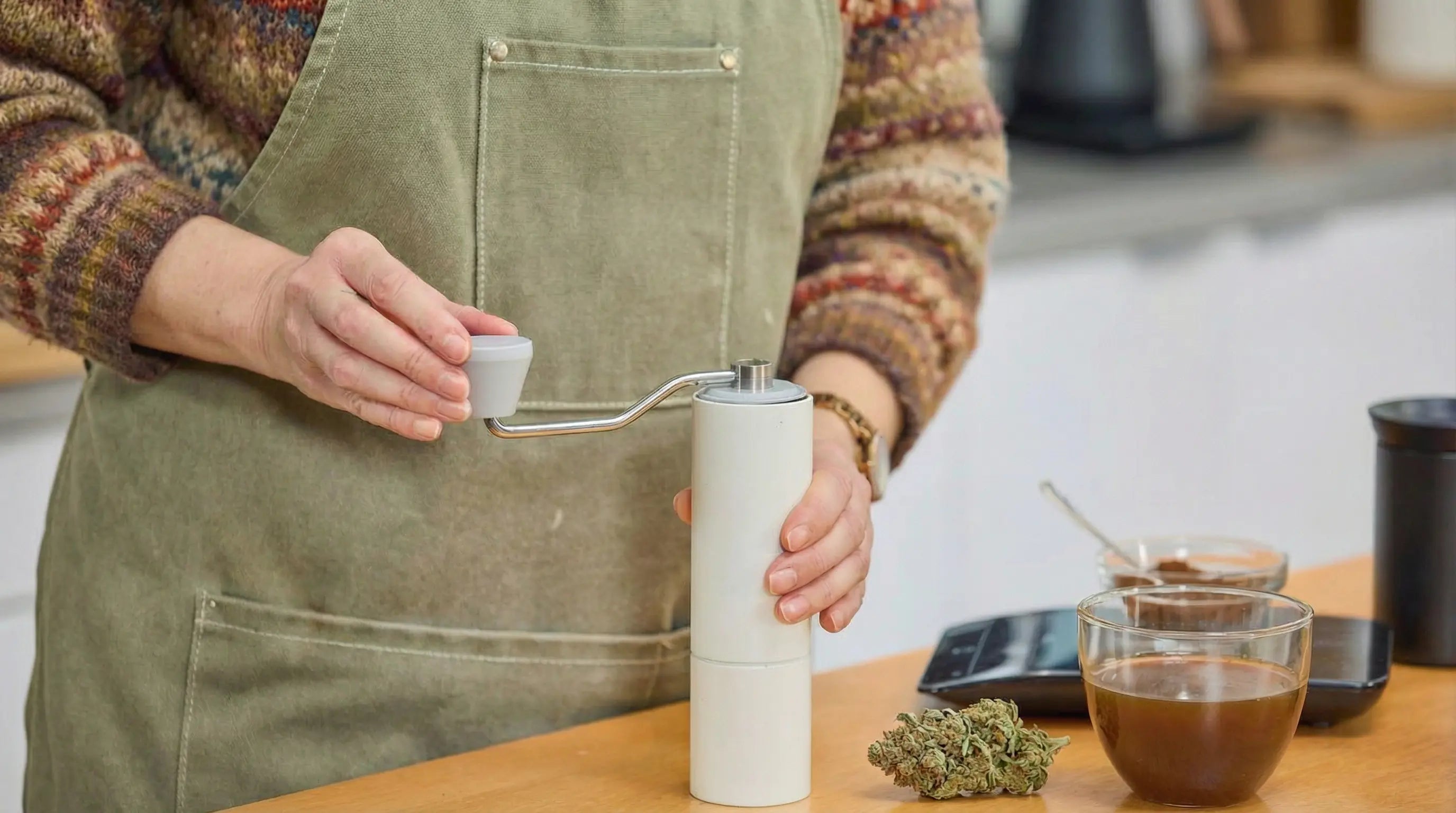
Can you use a coffee grinder for weed when your regular grinder breaks or goes missing? The quick answer is yes, but it comes with trade-offs. Coffee grinders can break down cannabis fast, which makes them useful for rolling joints or packing bowls in a pinch. However, they create uneven texture, turn your bud into powder, and require serious cleaning to prevent flavor transfer.
This guide covers everything you need to know about using coffee grinders for cannabis, including the types that work best, how they compare to proper weed grinders, and smarter alternatives when you need to grind without traditional equipment.
Can You Use a Coffee Grinder for Weed Without Problems
You can use a coffee grinder for weed, but expect quality issues that proper cannabis grinders avoid. Coffee grinders were designed for hard, dry coffee beans, not sticky, resinous cannabis buds.
The main issue is consistency. Coffee grinders create uneven results with some chunks remaining large while other parts turn to dust. This powder-like material burns too fast and can be harsh on your throat.

Heat generation is another concern. Blade-style coffee grinders spin at high speeds, which creates additional friction. This heat can degrade terpenes (the aromatic compounds that give cannabis its distinctive smell and flavor) and potentially affect cannabinoid content, especially during extended grinding sessions.
Sticky resin from cannabis clogs coffee grinder blades quickly. The residue builds up faster than with coffee beans, requiring thorough cleaning after each use. Skip the cleaning, and your morning coffee will taste like last night's smoke session, which is why learning how to clean a grinder properly becomes essential if you use this method regularly.
Coffee Grinder for Weed: Understanding the Differences
Coffee grinders come in two main types, and knowing which one you're working with matters when grinding cannabis.
Blade grinders use spinning metal blades that chop material into smaller pieces. The longer you run the grinder, the finer everything becomes. These are the most common types found in home kitchens.
Burr grinders crush coffee beans between two rotating surfaces called burrs. They create uniform particle sizes and offer adjustable settings. Professional coffee enthusiasts prefer these for brewing.
For cannabis, blade grinders work better despite their limitations. Burr grinders clog immediately when sticky trichomes gum up the crushing mechanisms. The resin sticks to everything, which also makes burr grinders nearly impossible to clean thoroughly.
The best weed grinders use sharp teeth arranged in patterns that shred cannabis into fluffy, even pieces. This design keeps trichomes intact while creating the perfect texture for smoking or vaping.
The grinding motion differs, too. Cannabis grinders use a twisting action that gently tears the flower apart. Coffee grinders pulverize material through rapid chopping, which is far more aggressive.
Understanding the different types of weed grinders available helps you appreciate why dedicated cannabis equipment outperforms improvised solutions like coffee grinders.
Best Coffee Grinder for Weed: What Actually Works
|
Grinder Type |
Speed |
Consistency |
THC Loss |
Cleanup Difficulty |
Best For |
|
Blade Coffee Grinder |
Very Fast |
Poor |
Moderate |
Hard |
Emergency situations only |
|
Burr Coffee Grinder |
Fast |
Fair |
High |
Very Hard |
Not recommended |
|
Manual Weed Grinder |
Moderate |
Excellent |
Minimal |
Easy |
Daily use |
|
Electric Weed Grinder |
Fast |
Excellent |
Minimal |
Moderate |
Large quantities |
If you must use a coffee grinder, blade models with removable parts work best. The ability to disassemble the grinder makes cleaning possible, though still tedious.

Look for coffee grinders with:
-
Wide grinding chambers that don't pack material too tightly
-
Removable blade assemblies for easier cleaning
-
Transparent lids so you can monitor grind progress
-
Pulse settings that give you control over texture
Budget blade grinders often outperform expensive burr models for cannabis. The simpler the design, the easier the cleanup. Complex burr mechanisms trap resin in places you can't reach without specialized tools.
Some users report success with spice grinders, which are essentially small blade grinders marketed for herbs and spices. These work identically to coffee grinders but come with the psychological benefit of not mixing coffee and weed equipment.
Using a Coffee Grinder for Weed: Step-by-Step Process
Here's how to use a coffee grinder for cannabis with the best possible results:
-
Clean your grinder thoroughly with isopropyl alcohol before the first use. Any coffee residue will transfer flavor to your weed.
-
Break buds into smaller chunks by hand first. Remove all stems to prevent blade damage and achieve better consistency.
-
Load the chamber loosely to about one-third full. Overfilling creates uneven grinding and stresses the motor.
-
Use short pulses of 1-2 seconds rather than continuous grinding. Check texture between pulses to avoid over-processing.
-
Shake the grinder between pulses to redistribute material and catch any large chunks that escaped the blades.
-
Stop when you achieve a fluffy texture, not powder. This usually takes 5-8 short pulses for most blade grinders.
-
Empty all material immediately to prevent resin buildup. Use a small brush to sweep out stuck particles.
-
Clean the grinder again with alcohol after use if you plan to make coffee with it later.
I tried using my old blade grinder for cannabis once when traveling. The first batch came out perfect after five quick pulses. Then I decided to leave it running for the second batch. The result was unusable powder that fell through my pipe screen and tasted awful.
The key lesson: short pulses give you control. Continuous grinding creates heat and turns everything to dust within seconds.
Can You Use a Coffee Bean Grinder for Weed
Yes, you can use a coffee bean grinder for weed since they're the same device as regular coffee grinders. The term coffee bean grinder just emphasizes what the tool was designed for, but the mechanism remains identical.
Blade coffee bean grinders work exactly like any other blade grinder. They chop material into smaller pieces through high-speed blade rotation. The beans versus buds distinction doesn't change how the machine operates.
The same challenges apply regardless of what you call it. Sticky cannabis resin clogs blades, heat builds up during operation, and achieving a consistent texture requires careful pulsing rather than continuous grinding.
Some people ask about using a weed grinder for coffee beans, which flips the question around. Technically possible, but nobody should do this. Cannabis residue permanently affects coffee flavor, and the grinding mechanisms in weed grinders aren't designed for hard beans.
How to Grind Weed Without a Grinder: Better Alternatives
Coffee grinders aren't your only option when a proper cannabis grinder isn't available. Several alternative methods provide better control and consistency.
Effective weed grinding alternatives:
-
Scissors and shot glass method: Place cannabis in a small shot glass and snip rapidly with sharp scissors. This gives you complete control over texture and creates minimal mess.
-
Knife and cutting board: Chop cannabis like herbs using a sharp kitchen knife. Rock the blade back and forth while gathering material into a pile repeatedly.
-
Mortar and pestle: The traditional herb-grinding tool works well for dried cannabis. Apply gentle pressure and rotate the pestle to break the material down gradually.
-
Cheese grater: Rub buds gently against a clean microplane or fine grater. This creates a fluffy texture similar to proper grinders but requires careful finger placement.
-
Pill bottle and coin method: Place cannabis and a clean coin in a small container, then shake vigorously. The coin acts like a grinding mechanism.
-
Hand breaking: Simply tear buds apart with your fingers over a clean surface. This wastes some trichomes but works when no tools exist.

For more detailed guidance on these techniques, check out our comprehensive guide on how to grind weed without a grinder (by hand).
Each method has advantages depending on your situation. Scissors provide the most control, while the mortar and pestle work best for achieving fine consistency for vaporizers.
Weed Coffee Grinder: Problems You'll Face
Multiple issues emerge when using coffee grinders regularly for cannabis. These problems compound over time and make the practice increasingly impractical.
THC loss through adhesion ranks as the biggest concern. Trichomes stick aggressively to metal blades and plastic chambers. Each grinding session leaves behind a film of cannabinoid-rich resin that you can't easily recover.
Many users wonder whether grinding destroys trichomes. Tthe answer depends heavily on your equipment choice. Quality grinders preserve trichomes, while coffee grinders waste them.
Some users try saving this buildup for later consumption, but the mixed residue from multiple strains rarely provides enjoyable effects. The flavor profile becomes muddled and harsh.
Blade degradation happens faster with sticky cannabis than with dry coffee beans. The constant stopping and pulsing required for proper cannabis grinding stresses the motor differently than continuous coffee grinding. Cheaper models fail within weeks of regular cannabis use.
Cross-contamination becomes unavoidable unless you dedicate the grinder exclusively to cannabis. Microscopic resin particles hide in threads and crevices that normal cleaning can't reach. Your coffee will permanently carry subtle cannabis undertones.
The texture inconsistency creates practical smoking problems. Large chunks waste weed by not burning completely, while powder-fine material pulls through screens and clogs vaporizers. You end up either wasting your precious weed or fighting with your consumption method.
Can You Grind Weed in a Coffee Grinder Long-Term
Technically yes, but it's not practical or economical long-term. The equipment degrades quickly, cleaning becomes a nightmare, and you'll waste more cannabis than you save by not buying a proper grinder.
Calculate the real cost over three months:
-
THC lost to grinder walls and difficult recovery
-
Time spent cleaning thoroughly after each session
-
Reduced coffee grinder lifespan from inappropriate use
-
Wasted cannabis from inconsistent texture
-
Replacement coffee grinder cost when it breaks
A quality weed grinder like our Ludist Grinder (read the Ludist Grinder review) costs roughly the same as a decent blade coffee grinder but lasts for years of daily cannabis use.

The specialized design prevents THC loss through kief catchers and keeps trichomes where they belong.
I know someone very close to me who insisted on using his coffee grinder for cannabis for six months. He eventually calculated that, between stuck resin and replacement costs, he spent more than a premium grinder would have cost.
Plus, his morning coffee never tasted right AGAIN.
Burr Grinder for Weed: Why It Doesn't Work
Burr grinders seem like they should work better due to their uniform grinding capabilities, but they're actually worse for cannabis than blade grinders.
The burr mechanism relies on crushing material between two surfaces with minimal clearance. Coffee beans are hard and dry, so they shatter cleanly. Cannabis is soft and sticky, so it smears across the burrs and gums up the mechanism immediately.
Once resin coats the burrs, the grinder stops functioning properly. The burrs can't grip new material effectively, and the motor strains under the load. Cleaning requires complete disassembly, which often voids warranties on expensive coffee equipment.
Temperature control becomes impossible with burr grinders processing cannabis. The crushing action generates more heat than blade chopping, and the sustained pressure required to push sticky material through creates even more friction.
Some commercial cannabis operations use modified burr grinders designed specifically for large-scale processing. These industrial units cost thousands of dollars and feature specialized cleaning systems that consumer models lack entirely.
Can You Use a Weed Grinder for Coffee Beans
Using a weed grinder for coffee beans makes even less sense than the reverse situation. Cannabis grinders aren't built to handle hard materials like coffee beans.
The teeth in cannabis grinders are designed to tear soft plant material, not crush hard seeds. Attempting to grind coffee beans will:
-
Dull or bend the grinding teeth permanently
-
Stress the threading mechanism
-
Potentially crack plastic or aluminum components
-
Create a terrible coffee texture unsuitable for brewing
Even if the grinder survived, cannabis residue permanently contaminates coffee flavor. The oils and terpenes that make cannabis enjoyable create foul-tasting coffee with chemical undertones.
Dedicated coffee grinders cost less than quality weed grinders in many cases. There's zero practical reason for you to use any of the cannabis equipment for coffee when appropriate tools are readily available and affordable.
Grinding Weed Without Grinder: Practical Solutions
When you need ground cannabis and have zero grinding equipment, several household items work surprisingly well. The goal is to create a consistent texture without specialized tools.
|
Method |
Texture Control |
Speed |
Cleanup |
Trichome Preservation |
|
Hand Breaking |
Poor |
Very Fast |
None |
Very Poor |
|
Scissors + Shot Glass |
Excellent |
Fast |
Easy |
Good |
|
Knife + Board |
Good |
Moderate |
Easy |
Good |
|
Mortar + Pestle |
Excellent |
Slow |
Moderate |
Fair |
|
Coffee Grinder |
Poor |
Very Fast |
Hard |
Poor |
|
Proper Weed Grinder |
Excellent |
Fast |
Easy |
Excellent |
The scissors and shot glass method consistently produces the best results among improvised techniques. Clean scissors, a tall shot glass, and 30 seconds of cutting create texture comparable to budget cannabis grinders.
Place the bud in the shot glass and insert the scissors tips. Make rapid cutting motions while rotating the glass occasionally. The confined space keeps material from flying around while the glass walls guide everything back toward the blades.
To completely avoid grinding hassles, many users prefer picking some of the best electric grinders designed specifically for cannabis. These provide one-touch operation without the drawbacks of repurposed coffee equipment.
Coffee Grinder vs Proper Weed Grinder: Real Differences
The engineering behind dedicated cannabis grinders addresses problems that coffee grinder designers never considered. These design choices matter significantly for regular cannabis users.
Learning how a weed grinder works reveals why these specialized tools deliver superior results compared to repurposed kitchen equipment.
Proper weed grinders feature:
-
Sharp, angled teeth that shred rather than chop
-
Screen systems that separate and collect kief
-
Magnetic lids that create airtight seals
-
Threading that prevents cross-threading and jamming
-
Materials that don't react with cannabis terpenes
Coffee grinders prioritize:
-
Speed over consistency
-
Handling hard, dry materials
-
Ease of pouring ground coffee
-
Compact kitchen storage
-
Multiple grind settings for different brew methods
The kief catcher alone justifies buying a real grinder. That fine powder collecting at the bottom of quality grinders is concentrated THC that coffee grinders lose to their internal surfaces.
Our Ludist Grinder solves every problem that coffee grinders create. The precision-cut teeth process cannabis into perfect consistency without creating powder. The magnetic lid seals completely between uses, and the kief catcher preserves potency that other methods waste.
Why You Shouldn't Use a Coffee Grinder for Cannabis
Coffee grinders represent false economy. The money saved initially costs more through wasted cannabis, replacement equipment, and poor smoking experiences.
Terpene degradation from heat reduces flavor quality noticeably. The high-speed blade operation generates more friction than manual grinding, and this heat affects the delicate aromatic compounds that make different strains distinct.
Professional usage remains impossible with coffee grinders. Anyone consuming cannabis regularly will quickly tire of the cleaning hassle, inconsistent results, and equipment failures that plague coffee grinder repurposing.
The social aspect matters too. Pulling out a coffee grinder at a smoke session with your friends broadcasts inexperience. It's like showing up to a wine tasting with box wine. The stigma may seem silly, but it exists within cannabis culture.
Most importantly, using coffee grinders prevents you from experiencing cannabis at its best. The uneven burn, harsh taste, and lost potency combine to create subpar sessions that don't showcase what the plant offers.
That’s why you should stick to reliable, practical, minimalistic, and stylish solutions like our Ludist Weed Grinder. It literally costs less than 40 bucks, and you won’t have to worry anymore about the boring and time-consuming (ENERGY DRAINING) grinding part.

Making the Right Choice for Your Cannabis Routine
Coffee grinders work in true emergencies when no alternatives exist and you need ground cannabis immediately. That emergency use case represents their only legitimate application.
For anyone who consumes cannabis more than occasionally, investing in proper equipment makes sense financially and practically. A quality grinder pays for itself within weeks through reduced waste and better experiences.
The initial cost difference between a cheap coffee grinder and an entry-level cannabis grinder is negligible. The long-term value difference is enormous. Cannabis grinders last for years, preserve potency better, create ideal texture consistently, and require minimal maintenance.
Consider your usage pattern honestly. Occasional users might tolerate coffee grinder drawbacks for a few months. Daily consumers will regret every session ground with inappropriate equipment.
Our Ludist Grinder delivers everything coffee grinders promise but never achieve. The diamond-cut teeth create fluffy, even texture every time without generating heat or turning your bud to powder. The four-piece design with a kief catcher ensures nothing goes to waste. Built from aircraft-grade aluminum, it handles daily use effortlessly while maintaining razor-sharp teeth that never dull.

Leave a comment
This site is protected by hCaptcha and the hCaptcha Privacy Policy and Terms of Service apply.