
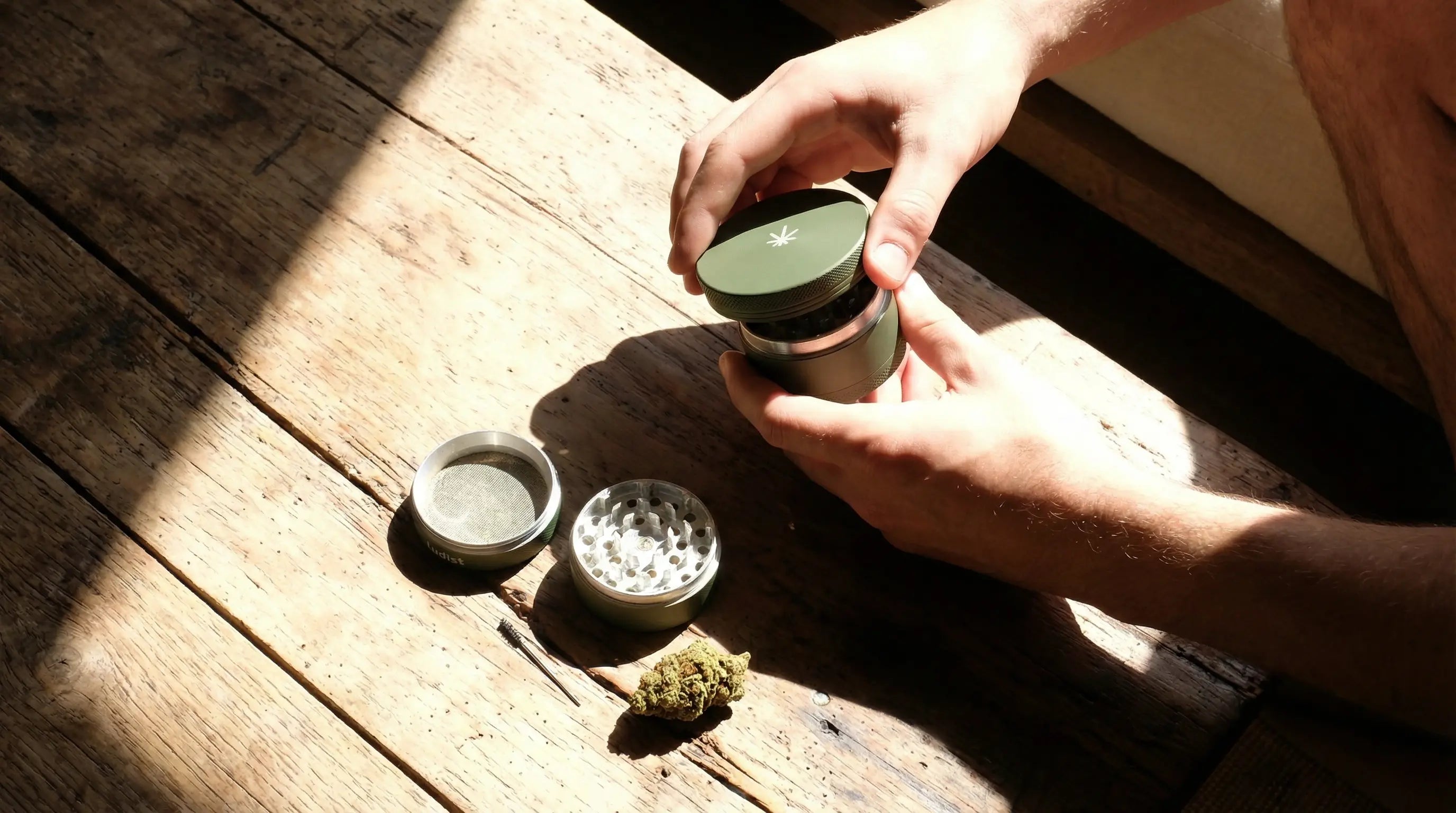
How to Make a Weed Grinder at Home: Save Money Before Buying Overpriced Ones
How to make a weed grinder when your regular one breaks or goes missing? You don't need to spend money on a new one right away. With a few household items most people already have, you can create an effective grinding solution that works surprisingly well. I've tested all these methods myself when I was traveling and forgot my grinder at home, and several of them work better than you'd expect.
Grinding cannabis properly makes a real difference in your smoking experience. It creates an even burn, improves airflow through joints and bowls, and helps extract more cannabinoids. But sometimes you need a solution fast. Maybe you're at a friend's place, traveling, or your grinder just gave out after years of service. The good news is you can make a functional DIY weed grinder from everyday items in about five minutes.
This guide covers multiple homemade grinder methods, from simple shake-and-grind techniques to building something more permanent. You'll learn which materials work best, what to avoid for safety, and how to get consistent results. Let's explore practical solutions that actually work.
How to Make a Weed Grinder - The Pill Bottle and Coin Method
The classic coin and bottle technique is one of the simplest homemade weed grinder methods. I discovered this method during a camping trip five years ago, and it's saved me countless times since then.
Here's how the pill bottle grinder works. Take a clean, empty pill bottle or any small plastic container with a secure lid. Drop your cannabis inside, but don't overfill it. You want room for movement. Add one or two heavy coins (quarters or nickels work best in the US). Close the lid tightly and shake vigorously for 20-30 seconds.
The coins bounce around inside, crashing against the cannabis and breaking it into smaller pieces. Check your progress every 20 seconds or so. When you see an even consistency, you're done. This makeshift grinder works especially well with drier cannabis, though sticky buds will eventually break down with enough shaking.
Benefits of this method:
-
No cutting or sharp tools required
-
Takes just 30-60 seconds
-
Creates a consistent grind
-
Easy to transport in your pocket
-
Zero cost if you already have the items
One important note: clean your coins first. Currency carries bacteria, so wipe them down with rubbing alcohol before use. After grinding, clean the bottle and coins again before storing them for next time.
This DIY grinder method produces a coarser grind that works perfectly for packing bowls or filling larger rolling papers. For joints that need finer material, you might want to combine this with another method or use one of the cutting techniques described below. When you're ready for more consistent results, consider checking out our Ludist Grinder, which delivers precision grinding without the arm workout.

Scissors and Shot Glass - A Controlled DIY Grinding Approach
The scissors and shot glass method gives you more control over grind consistency compared to shaking methods. I use this technique frequently at home because it's quiet, precise, and doesn't require any special equipment.
Find a small shot glass and a pair of clean, sharp scissors. Kitchen scissors work fine, but smaller nail scissors give you better precision. Drop your cannabis into the shot glass and insert the scissors. Keep the glass steady with one hand while you make cutting motions with the scissors in your other hand.
Start with larger cuts to break down the bud, then switch to smaller, more precise snips as the pieces get smaller. The glass walls contain everything, so you won't lose any material. Keep cutting until you reach the desired texture.
When learning how to make a makeshift weed grinder, I learned this method from a friend who used it exclusively for two years before finally buying a proper grinder. She preferred it because it gave her complete control over how fine she wanted the grind. For joints, she'd cut for an extra 30 seconds to get a finer consistency. For bowls, she'd stop sooner for a chunkier texture.
The main advantage is precision. You can see exactly what you're doing and adjust as needed. The downside is time. Grinding enough for multiple joints takes a few minutes, which adds up if you're preparing for a group session.
This method works particularly well when combined with our rolling tray, giving you a clean, organized workspace for the entire rolling process. The raised edges prevent any ground material from escaping onto your table or floor.

Kitchen Tools - Cheese Grater and Knife Methods
Your kitchen holds several viable options when learning how to make a herb grinder. The cheese grater approach might sound unusual, but it actually works remarkably well for dry cannabis.
Using a cheese grater: Hold the grater over a plate or cutting board. Take a nug and run it across the finest grating surface, just like grating parmesan cheese. Use light pressure to avoid hurting your fingertips. The result is a finely ground herb that works perfectly for rolling thin joints or loading smaller bowls.
Watch your fingers carefully. Cannabis resin makes buds sticky, which can cause your fingers to slip toward the grater teeth. Work slowly and keep a firm grip on the nug. When it gets too small to hold safely, stop and use those remaining pieces in a different grinding method.
The knife and cutting board technique gives you even more control. Place your cannabis on a clean cutting board. Use a sharp chef's knife to chop the buds into smaller pieces, using the same motion you'd use for chopping herbs like basil or cilantro.
Start by cutting the larger nugs into quarters. Then gather the pieces and chop through them repeatedly, using a rocking motion with the knife. The consistency you achieve depends on how long you spend chopping. For a finer grind, keep going. For chunkier pieces suitable for bowls or bongs, stop sooner.
I once watched a chef friend prepare cannabis for making edibles using this exact method. He chopped two ounces in about ten minutes, creating perfectly uniform pieces. His technique was all in the wrist motion and keeping the knife tip on the board as a pivot point.
These kitchen methods work, but they require attention and care. If you find yourself using knife-and-board techniques regularly, it might signal that investing in a dedicated grinder makes sense. Our best weed grinder guide compares different options to help you choose the right one for your needs.
Coffee Grinder and Blender - Power Tools for Larger Quantities
Electric appliances can process larger amounts of cannabis quickly, making them useful when you need to grind significant quantities at once. Coffee grinders work especially well as a DIY herb grinder tool.
Coffee grinder method: First, thoroughly clean your coffee grinder. Any leftover coffee grounds will mix with your cannabis and affect the flavor. Wash it with soap and water, then dry it completely. Moisture will make your cannabis stick to the interior surfaces.
Break your cannabis into smaller chunks first. Don't fill the grinder more than halfway. Use short pulses instead of continuous grinding. Check the consistency after every few pulses. Stop before it turns into powder – you want fluffy, evenly ground material, not dust.
The biggest challenge with coffee grinders is over-grinding. I learned this the hard way years ago when I turned a quarter ounce into powder so fine it was nearly impossible to use. The joints burned too fast, and the powder fell through pipe screens. Since then, I always used 2-3 second pulses and checked frequently.
Blender approach: Blenders work similarly but with less precision. Clean the blender thoroughly, dry it completely, and add your cannabis in small batches. Pulse gently and check often. The larger chamber makes it harder to get an even grind, so you might need to shake the blender between pulses to redistribute the material.
After using either appliance, clean it immediately. Cannabis resin builds up quickly on blades and walls. Use isopropyl alcohol to dissolve the sticky residue, then wash with dish soap and water. Don't forget to clean it again before making your morning smoothie.
These powdered methods shine when preparing cannabis for edibles or when you need to grind large amounts for pre-rolling multiple joints. For regular daily use, they're overkill and more difficult to clean than necessary. If you're processing significant quantities regularly, you might be interested in learning more about how a weed grinder works to understand the mechanics behind proper grinding.

Building a Permanent DIY Grinder from Wood and Hardware
For those interested in a more lasting solution, you can build an actual homemade grinder for weed using basic woodworking materials. This takes more time and skill but creates something you can use repeatedly.
Materials you'll need:
-
Two pieces of hardwood (2-3 inches in diameter)
-
Small nails or screws
-
Sandpaper (various grits)
-
Wood glue (optional)
-
Food-safe wood finish
-
Drill and drill bits
-
Hammer or screwdriver
Start by cutting two circular pieces of wood at the same diameter. Sand them smooth on all surfaces. Find the center of each piece and mark it clearly. This center point becomes the pivot for your grinder.
Creating the grinding teeth: Hammer small nails into one wooden disk, spacing them evenly in a circular pattern around the center. Leave about half an inch of nail exposed. These nails act as the grinding teeth. On the second disk, create a complementary pattern so the nails can pass between each other when the pieces are pressed together and twisted.
Alternatively, carve small grooves or teeth directly into the wood using a carving tool. This requires more skill but avoids any metal that might corrode or come loose over time.
Sand everything smoothly to remove any rough edges or splinters. Apply a food-safe wood finish to seal the wood and prevent it from absorbing moisture or cannabis oils. Let it cure completely before first use.
To use your wooden grinder, place cannabis between the two disks and twist them against each other. The nails or carved teeth will shred the material. You can adjust the grind coarseness by how much pressure you apply and how many times you twist.
I met a woodworker at a festival who made custom wooden grinders as a hobby. He'd been using the same one for eight years, and it still worked perfectly. The wood had developed a patina from the oils, and he said it actually improved the grinding action over time. He made about twenty grinders total and gave them as gifts to close friends.
If you're interested in how to make a grinder at home, building a wooden grinder takes several hours, but the result is a unique, functional tool that reflects your craftsmanship. It's more of a project than a quick solution, but some people enjoy that aspect. If woodworking isn't your thing but you appreciate quality materials, explore our types of weed grinders to see what professional options exist.

Hand Grinding - The Manual Method
Sometimes the simplest approach is just using your hands. Hand grinding requires no tools at all, making it the ultimate emergency backup when nothing else is available.
Break off a small piece of cannabis from the main bud. Use your thumb and forefinger to pull the bud apart into smaller pieces. Continue breaking them down until they reach the size you need. Work over a clean surface so you can easily collect all the ground material.
Advantages of grinding by hand:
-
Works anywhere, anytime
-
No equipment needed
-
Complete control over consistency
-
Immediate availability
Disadvantages:
-
Resin builds up on your fingers
-
Takes longer than other methods
-
Creates uneven pieces
-
Not practical for large amounts
-
Makes your fingers sticky and smelly
The sticky resin that accumulates on your fingers is actually a potent material called finger hash. Don't wash it off immediately. Instead, you can scrape it off and add it to your bowl or joint for extra strength.
Hand grinding works best with cannabis that's been properly dried. Fresh, sticky buds are much harder to break apart by hand and create more mess. If your cannabis feels too moist, leave it out for an hour to dry slightly before attempting to grind by hand.
This method was standard before grinders became popular in the 1970s and 1980s. Older cannabis enthusiasts sometimes prefer it because it connects them to the traditional experience. They claim you can better feel the quality and structure of the flower when breaking it by hand.
For modern convenience and consistency, most people eventually graduate to proper tools. When you're ready for that upgrade, our stoner gifts guide includes grinder options that make excellent additions to any smoking kit.
Safety Guidelines for Making and Using DIY Grinders
Creating a DIY grinder for weed means working with improvised tools, so safety deserves serious attention. Following proper precautions protects both your health and the quality of your cannabis.
Material safety rules:
-
Never use painted or coated surfaces that can flake
-
Avoid plastic that might shed particles
-
Skip anything with unknown chemicals or adhesives
-
Don't use rusty metal objects
-
Stay away from treated wood with unknown finishes
I once made the mistake of using a painted metal container for a shake-and-grind method. Tiny paint chips ended up mixed with the ground cannabis. Smoking contaminated material can introduce harmful chemicals into your lungs. I had to throw out the entire batch and start over with clean materials.
Clean everything thoroughly before first use. Wash items with soap and hot water, rinse completely, and dry them well. This removes manufacturing residues, dust, and any contaminants. Clean your tools again after each use to prevent mold growth and maintain quality.
Proper technique matters:
-
Work on stable surfaces
-
Keep fingers away from sharp edges
-
Use appropriate lighting to see clearly
-
Take your time rather than rushing
-
Stop if anything feels unsafe
When using knives or scissors, always cut away from your body. Keep your free hand behind the blade, never in front of it. A single moment of carelessness can result in a serious injury.
Check your grinding tools regularly for wear. Nails coming loose from wooden grinders can fall into your material. Dull blades make you use more force, increasing accident risk. Replace or repair anything showing signs of damage.
Store DIY grinders in clean, dry places. Moisture encourages mold growth on organic materials. Keep them away from areas where children or pets might access them. Even simple items like scissors and shot glasses need proper storage when used for cannabis preparation.
These safety practices apply equally to homemade solutions and professional equipment. Understanding whether aluminum grinders are safe helps you make informed decisions about both DIY and purchased options.

Tips for Achieving the Best Grind Consistency
Getting the right consistency matters more than you might think. Too fine and your cannabis burns too quickly or falls through screens. Too coarse, and it doesn't burn evenly. Here's how to nail the perfect texture with homemade methods.
Adjust based on consumption method:
-
Joints and thin papers: Fine, even grind
-
Blunts and larger papers: Medium grind
-
Bowls and bongs: Slightly chunkier pieces
-
Vaporizers: Very fine, uniform consistency
-
Edibles: As fine as possible for even distribution
Start with properly dried cannabis. Moisture level dramatically affects grinding ease. Too wet and it clumps and sticks. Too dry and it turns to dust. Ideal cannabis should feel slightly springy when squeezed but still break apart cleanly.
For consistency across multiple grinding sessions, develop a technique and stick with it. Count your scissor snips or shakes. Time your coffee grinder pulses. This creates muscle memory that produces repeatable results.
Work in small batches rather than trying to grind large amounts at once. Overloading any DIY method reduces effectiveness and creates uneven results. Process enough for immediate use, then grind more as needed.
Common consistency problems and solutions:
|
Problem |
Cause |
Solution |
|
Too powdery |
Over-grinding or too dry |
Use shorter grinding time, moisten slightly |
|
Too chunky |
Under-grinding or too wet |
Grind longer, let dry more |
|
Uneven pieces |
Inconsistent technique |
Work more systematically, check frequently |
|
Excessive loss |
Poor containment |
Use better vessels, work carefully |
Test your grind quality by trying to pack a joint or bowl. The material should pack easily without falling through, but still have structure and form. If it feels like dust or powder, you've gone too far. If chunks fall out, you need to grind more.
Pay attention to your specific cannabis as well. Dense indica buds grind differently from fluffy sativas. Resinous strains require different handling than drier ones. Adjust your technique based on what you're working with.
Understanding these nuances helps determine whether you need some of the DIY methods or to explore professional options. Our guide on how to grind weed by hand covers additional techniques for improving consistency.
Common Mistakes to Avoid with Homemade Grinders
Even experienced cannabis users make errors when creating and using DIY weed grinders. Knowing these pitfalls helps you avoid frustration and wasted material.
Over-Grinding Ruins Texture
This is the number one mistake I see people make with coffee grinders and blenders. They assume more grinding equals better results. Wrong. Cannabis ground too fine burns too quickly in joints and falls through bowl screens. Stop while the material still has some texture and body.
Neglecting Cleanliness
Neglecting cleanliness causes problems fast. Cannabis resin builds up quickly on any surface it touches. One friend of mine never cleaned his scissors-and-shot-glass setup. After three weeks, the buildup was so thick the scissors barely opened. Worse, old resin can grow mold if it stays damp. Clean your tools after every few uses at a minimum.
Using Unsafe Materials
Using unsafe materials is dangerous. I've heard horror stories about people using random household items without thinking about what they're made from. Coated pans that flake. Rusty metal. Painted surfaces. These materials can contaminate your cannabis with harmful particles. Stick to food-safe materials only.
Rushing Through the Process
Rushing through the process leads to accidents and poor results. Take your time. There's no prize for fastest grinding. Working quickly with knives or scissors increases injury risk. It also produces inconsistent results because you're not paying attention to what you're doing.
Ignoring Moisture Content
Ignoring moisture content causes frustration. Too-wet cannabis gums up everything. It sticks to scissors, clogs graters, and makes hand-breaking nearly impossible. Leave slightly damp buds out for 30-60 minutes before grinding. Conversely, overly dry cannabis crumbles into powder too easily. Find the middle ground.
Poor Storage Practices
Poor storage practices waste your effort. Maybe you made a nice wooden grinder or dedicated a coffee grinder to cannabis. Then you leave it sitting out where it collects dust, or you store it somewhere damp where mold can grow. Treat your DIY grinders with the same care you'd give purchased equipment.
Forgetting About Portability
Forgetting about portability can leave you stuck. Some DIY methods work great at home but completely fail when traveling. You can't exactly bring a cheese grater and a cutting board camping. Think about where and how you'll use your homemade grinder before committing to a particular method.
Learning from these mistakes saves time and materials. They also highlight why many people eventually invest in proper equipment. Quality grinders eliminate most of these issues entirely. When you're ready to upgrade, check out our best weed accessories for comprehensive gear recommendations.

Comparison - DIY Methods vs. Professional Grinders
After trying every homemade weed grinder method, I can honestly evaluate how they compare to using actual grinders. Each approach has specific strengths and weaknesses worth understanding.
|
Method |
Speed |
Consistency |
Cleanup |
Portability |
Cost |
|
Pill bottle & coin |
Fast |
Good |
Easy |
Excellent |
Free |
|
Scissors & glass |
Medium |
Excellent |
Easy |
Good |
Free |
|
Cheese grater |
Fast |
Good |
Moderate |
Poor |
Free |
|
Coffee grinder |
Very fast |
Fair |
Difficult |
Poor |
$20-40 |
|
Hand breaking |
Slow |
Poor |
None |
Excellent |
Free |
|
Professional grinder |
Very fast |
Excellent |
Easy |
Excellent |
$15-100 |
DIY methods excel in emergency situations and cost savings. When your grinder breaks, you're traveling without one; these techniques save the session. They require no special equipment and work with items most people already own.
Professional grinders deliver superior consistency, speed, and convenience. The difference becomes obvious when you use both regularly. A quality grinder produces uniform pieces every single time in seconds. It collects kief automatically. It requires minimal effort and cleanup.
When DIY makes sense:
-
You're traveling light and forgot your grinder
-
Your regular grinder just broke
-
You want to save money in the short term
-
You're curious and enjoy experimenting
-
You need to grind right now with no time to shop
When to invest in a real grinder:
-
You consume cannabis regularly
-
Consistency matters for your consumption method
-
You value time and convenience
-
You want to collect kief efficiently
-
You're tired of improvising
I used various DIY methods for about six months before buying my first proper grinder. The convenience difference felt dramatic. What took 3-4 minutes with scissors now took 10 seconds. The grind quality improved noticeably, making joints burn more evenly.
That said, I still keep the pill-bottle-and-coin method in my mental toolkit for emergencies. It's saved me multiple times when traveling or visiting friends who didn't have grinders available.
The Ludist Grinder Review details what sets professional options apart from improvised solutions. Understanding these differences helps you decide when DIY suffices and when quality equipment makes sense.

When to Upgrade from DIY to a Quality Grinder?
Several signs indicate you've outgrown DIY grinding methods and would benefit from investing in proper equipment. Recognizing these moments saves frustration and improves your overall experience.
Frequency of use matters most. If you're grinding cannabis daily or multiple times per week, DIY methods become tedious quickly. The time you spend preparing cannabis adds up. Five minutes daily equals 30 hours yearly. A quality grinder reduces that to seconds per session.
Consistency issues cause frustration. Maybe you notice your joints burn unevenly or your bowls don't pack right. DIY methods often produce irregular pieces. Sometimes the grind is too fine, sometimes too coarse. This inconsistency directly affects smoking quality. Professional grinders deliver the same results every time.
You're losing material. Homemade methods often waste cannabis. Material sticks to scissors, falls off cutting boards, and gets lost in coffee grinder chambers. A dedicated grinder contains everything and collects kief that would otherwise be lost.
Cleanup becomes annoying. Washing scissors, cleaning shot glasses, and scrubbing coffee grinders get old fast. These items serve other purposes, so you can't leave them set up dedicated to cannabis. A proper grinder stays ready to use and requires minimal maintenance.
Portability matters to your lifestyle. If you frequently smoke at different locations, DIY methods often prove impractical. You can't easily transport cheese graters or coffee grinders. A compact grinder fits in any bag or pocket.
I knew I needed to upgrade when I found myself dreading the grinding process. What should have taken seconds was consuming several minutes of my time. I was also noticing how much better my friend's joints smoked compared to mine, despite using the same cannabis. Their grinder created perfectly consistent material every time.
The investment pays off quickly. Even a basic $20 grinder eliminates the hassle and improves results dramatically. Mid-range options between $30-50 offer excellent build quality and features. Premium grinders above $50 provide exceptional performance and durability.
If you're looking for a reliable option that balances quality and value, the Ludist Weed Grinder offers consistent performance with a four-piece design and a kief catcher. It handles daily use without the maintenance headaches of makeshift methods. The diamond-shaped teeth create a uniform texture whether you're preparing joints or bowls, and the magnetic lid keeps everything contained during grinding.
Storage solutions complement your grinding setup. Our Ludist Stash Box keeps your grinder, cannabis, and other accessories organized and protected. Proper storage extends equipment life and maintains product quality.
For detailed comparisons, read our best stash box guide to see how proper storage works with quality grinding equipment.

Understanding Grind Consistency for Different Uses
Different consumption methods require specific grind consistencies for optimal results. Understanding these relationships helps you get the most from your cannabis, whether using DIY or professional methods.
-
Rolling papers and joints need fine, uniform material. The grind should look like oregano or coarse-ground coffee. Too fine and it falls through the paper. Too coarse and it burns unevenly or doesn't stay packed. Aim for consistency where pieces are similar in size with no large chunks or powder.
-
Blunts work with a slightly coarser grind than joints. The thicker tobacco wrapper tolerates chunkier pieces. Medium consistency, similar to what you'd use for herbs in cooking, performs well. This allows good airflow while preventing material from falling through.
-
Bowls and pipes actually benefit from somewhat chunky material. You need pieces large enough not to get pulled through the hole when you inhale. Too fine and you'll end up with a mouthful of ash and weed. Break the cannabis into pieces roughly the size of match heads or slightly larger.
-
Bongs and water pipes require similar consistency to regular pipes, though you can go slightly finer since water provides filtration. The goal is to burn evenly without pieces falling into the water chamber. Medium to medium-fine works well.
-
Vaporizers demand the finest, most uniform grind possible. Dry herb vaporizers work by heating material evenly. Inconsistent particle sizes mean some pieces overcook while others remain underheated. Grind very fine, similar to sand or fine ground pepper, for the best vaporization.
-
Edibles preparation requires the finest possible grind to ensure even distribution and complete decarboxylation. When making cannabutter or oil, a powdery consistency maximizes surface area for extraction. More surface area means more efficient transfer of cannabinoids into your cooking medium.
I learned about these distinctions through trial and error. Early on, I used the same medium grind for everything. My joints burned inconsistently. My vaporizer performed poorly. My edibles had hot spots where too much cannabis clustered together. Adjusting grind consistency to match the use case improved everything dramatically.
Temperature also plays a role. Finer grinds increase surface area, which affects how quickly material burns or vaporizes. This connects to our guide on how to keep weed fresh, since properly stored cannabis maintains ideal moisture levels for consistent grinding.
If you're exploring different consumption methods, our article on things to smoke weed with covers various options and their specific preparation requirements.

Creating Your Perfect Grinding Setup
Establishing an effective grinding routine improves efficiency, whether using DIY methods or professional equipment. Here's how to organize your setup for best results.
Choose your primary method based on frequency and needs. Daily users benefit from dedicated grinders. Occasional consumers can rely on DIY approaches. Pick what matches your actual usage patterns rather than aspirational ones.
Designate clean tools exclusively for cannabis if using DIY methods. Don't alternate between grinding weed and chopping garlic with the same scissors. This prevents cross-contamination and keeps everything ready when needed.
Create a dedicated workspace. Use a clean surface in good lighting. Keep a small brush nearby for collecting loose material. Have a container ready to catch your ground cannabis. Organization prevents waste and speeds the process.
Store materials properly. Keep your cannabis in airtight containers at stable temperatures. Proper storage maintains ideal moisture levels, making grinding easier and more consistent. Our stash jar options protect your cannabis from air, light, and humidity.
Clean regularly on a schedule. Don't wait until tools are completely caked with resin. Clean after every few uses for DIY tools, or weekly for dedicated grinders. This maintains performance and prevents bacterial growth.
Keep backup methods available. Even with a reliable primary grinder, have a DIY alternative in mind for emergencies. Murphy's Law guarantees your grinder will break right before an important session.
My personal setup evolved over years of experimentation. I use our Ludist Grinder as my primary tool at home, with ultra-sharp teeth that deliver consistent results every time. For travel, I bring a small backup grinder. In emergencies, I default to the scissors-and-glass method since those items are almost universally available.
The key is matching your setup to your lifestyle rather than trying to force a lifestyle onto your setup. Someone who smokes once a week needs different equipment than someone who smokes multiple times daily.
The Best Solution - Ludist Grinder for Consistent Results
After testing every DIY method and owning multiple grinders over the years, I can state with confidence that having proper equipment transforms the entire grinding experience. DIY solutions work in a pinch, but they can't match the precision and convenience of a well-designed grinder.
Our Ludist Grinder represents everything I learned to look for through years of trial and error. The ultra-sharp teeth shred cannabis evenly without excessive force. The smooth turning action makes grinding effortless. The build quality means it withstands daily use for years.

What really sets it apart is the kief collection chamber. Every time you grind, fine crystals fall through the screen and accumulate. This material would be lost with DIY methods or cheaper grinders. After a few weeks, you'll have collected enough kief to significantly enhance a bowl or joint.
The difference in consistency is immediately noticeable. Place a nug inside, give it a few turns, and you get perfectly ground material every single time. No powder. No chunks. Just the ideal fluffy consistency for rolling tight joints or packing even bowls.
I recommend keeping your Ludist Grinder as your daily driver while maintaining knowledge of DIY methods for travel or emergencies. This combination provides reliability without leaving you helpless if equipment fails.
Pair it with our Ludist Rolling Tray for the complete grinding and rolling experience. The raised edges contain any loose material, and the smooth surface makes collecting everything easy. Together, they create a complete grinding station that makes preparation feel professional rather than improvised.

Leave a comment
This site is protected by hCaptcha and the hCaptcha Privacy Policy and Terms of Service apply.